
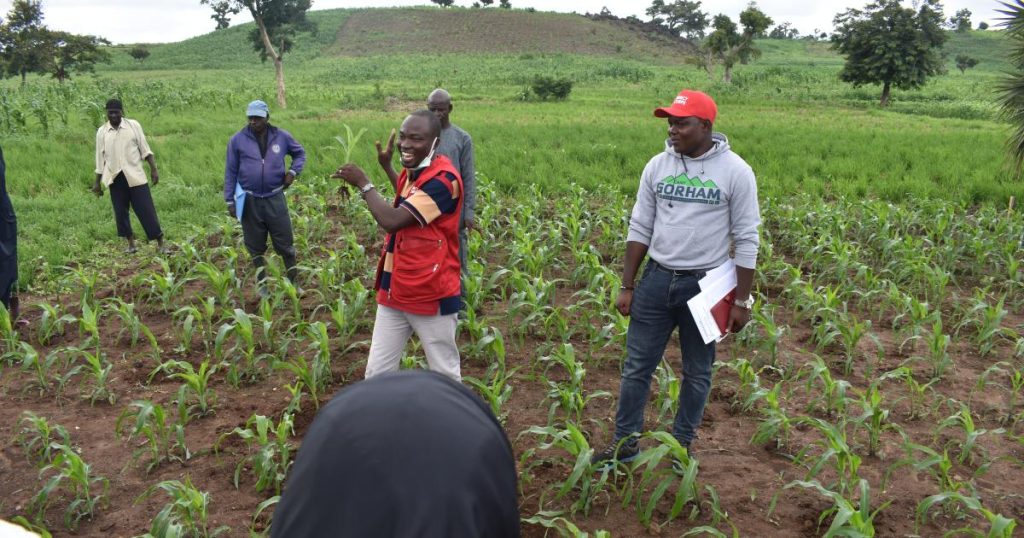
Agriculture remains the backbone of Nigeria’s economy, yet its true face is not found in policy documents or high-level conferences. It is found at the grassroots — among farmers who rise before dawn, women who process food in rural markets, youths experimenting with small-scale innovations, and communities whose livelihoods depend entirely on the land. Understanding agriculture from this level reveals both the promise and the peril shaping its future.
At the grassroots, agriculture is still largely driven by smallholder farmers who rely on simple tools, indigenous knowledge, and unpredictable weather patterns. These farmers contribute more than 80 percent of Nigeria’s food supply, yet they remain among the most underserved participants in the agricultural value chain. Limited access to credit, poor rural infrastructure, rising input costs, and weak extension services continue to define their daily realities. The face of agriculture in rural Nigeria is therefore one of resilience — farmers striving to survive within a system that rarely works in their favour.
However, the fate of Nigerian agriculture is not defined solely by its challenges. It is equally shaped by the vast opportunities embedded in the nation’s natural and human resources. Nigeria possesses over 70 million hectares of arable land, abundant water resources, a youthful and energetic population, and a rapidly growing food market. Yet these assets remain largely underutilized. True agricultural transformation will only occur when development efforts prioritize grassroots participation, where the real drivers of food production operate.
A grassroots-driven approach to Nigeria’s agricultural future requires three critical shifts.
First, there must be renewed investment in rural infrastructure, including irrigation systems, accessible road networks, storage facilities, and reliable energy supply. Without these essential components, productivity will remain low while post-harvest losses continue to erode farmers’ earnings.
Second, agricultural policies must focus on empowering smallholder farmers through affordable credit facilities, farmer-friendly insurance schemes, and efficient extension services that deliver modern techniques directly to rural communities. Empowering farmers with knowledge, financial support, and risk protection will significantly improve productivity and sustainability.
Third, the participation of youth and women must be deliberately strengthened. Youths represent innovation, energy, and technological adaptation, while women remain central to farming, processing, and food distribution. Despite their contributions, both groups often face structural barriers that limit their access to land, finance, and decision-making platforms.
Encouragingly, community-led initiatives across Nigeria are already demonstrating the potential of grassroots agricultural transformation. Cooperative farming models, climate-smart agricultural practices, small-scale aquaculture ventures, and organic waste recycling projects are providing sustainable and inclusive solutions. These initiatives reveal that local actors possess the creativity and commitment needed to transform the sector. What they lack is not determination, but institutional support.
When government agencies, private sector investors, and development partners align their strategies with grassroots realities, agriculture becomes more than an economic sector. It becomes a powerful instrument for job creation, food security, environmental sustainability, rural development, and social stability.
The true face of agriculture in Nigeria is the hardworking farmer. The true fate of the sector depends on whether the nation chooses to recognize, support, and invest in that farmer. If Nigeria builds its agricultural development strategy from the grassroots upward, the sector will not only survive — it will thrive, feeding the population and driving long-term economic transformation.



https://plroscaralicante.mystrikingly.com/
https://realitatea.md/atac-tehnic-discreditare-publica-si-izolare-istoria-unei-companii-it-din-moldova-impinsa-in-afara-pietei-europene/
https://dzone.com/users/5499520/carfyjordan.html
купит номер телефона для смс