
Stakeholders warn inefficiencies in Nigeria’s food supply chain are worsening food insecurity
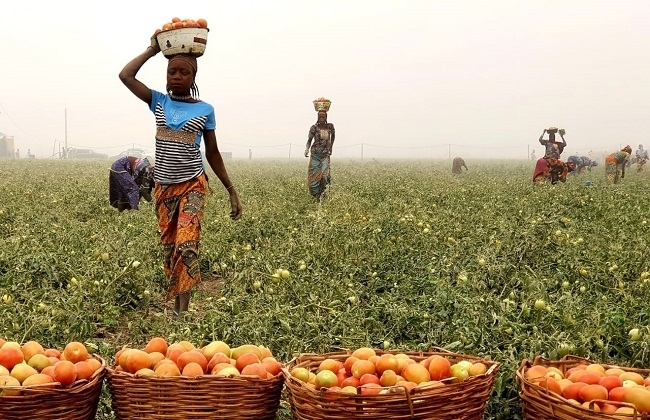
Nigeria may be losing as much as 50 percent of the food produced within its agricultural system before it reaches consumers, a development experts say highlights deep inefficiencies in the country’s food supply chain and the urgent need for large-scale commercial farming.
The revelation was made during the unveiling of a new corporate farming initiative in Lagos aimed at improving agricultural productivity, reducing post-harvest losses and strengthening Nigeria’s food security.
Stakeholders from government, agribusiness, financial institutions and farming communities gathered at the event stressed that Nigeria must transition from fragmented smallholder farming systems to more coordinated commercial agriculture capable of producing food at scale.
According to industry experts, poor logistics, inadequate storage facilities, weak transportation networks and low mechanisation are among the major factors contributing to massive food losses across Nigeria’s agricultural value chain.
Corporate farming model introduced to attract investment
At the event, Origin Tech Group unveiled its Corporate Farm Model, a structured agricultural investment platform designed to support large-scale farming operations across the country.
The Executive Chairman of the company, Prince Samuel, said inefficiencies in Nigeria’s supply chain are responsible for enormous food losses, particularly in urban markets such as Lagos.
“About 50 percent of the food produced in Lagos never gets to consumers due to inefficiencies in the supply chain,” he said.
Samuel explained that the new corporate farming model aims to address key challenges that have historically discouraged investors from participating in agriculture, including poor farm management, lack of technical expertise and absence of reliable markets.
Under the model, farms will operate on a minimum of 1,000 hectares, allowing agricultural production to be conducted at commercial scale. Investors will provide between 20 and 30 percent equity, while the remaining financing will come from banks and the company itself.
The initiative will also provide farmland access, technical farm management, structured financing and guaranteed market off-take for farm produce.
Samuel added that participating farms will receive technical support for two farming cycles and advisory services for up to five cycles, helping ensure sustainability and productivity.
Nigeria’s mechanisation gap remains a major challenge
Experts also highlighted Nigeria’s extremely low level of mechanised farming as a major barrier to increased food production.
The Chief Operating Officer of Origin Automobile Works, Leo Edwards, cited data from the Food and Agriculture Organization showing that the global benchmark for agricultural mechanisation is 1.5 horsepower per hectare.
However, Nigeria currently operates at just 0.0027 horsepower per hectare, one of the lowest mechanisation levels globally.
This gap, Edwards noted, significantly limits farm productivity and contributes to inefficiencies that increase food losses along the agricultural supply chain.
Post-harvest losses costing Nigeria trillions
Post-harvest losses remain one of the most critical challenges facing Nigeria’s agricultural sector.
According to agricultural experts and international organisations, Nigeria loses between 30 and 50 percent of its agricultural produce after harvest, largely due to poor storage, inadequate processing facilities and inefficient transportation systems.
These losses affect perishable commodities such as tomatoes, fruits, vegetables and fish the most.
Industry reports estimate that Nigeria loses between ₦3 trillion and ₦5 trillion worth of food annually due to post-harvest inefficiencies across the value chain.
Apart from economic losses, the situation also worsens food inflation and reduces farmers’ incomes.
Government calls for transformation of Nigeria’s farming model
Also speaking at the event, the Lagos State Commissioner for Agriculture and Food Systems, Abisola Olusanya, said Nigeria’s agricultural model must evolve if the country hopes to achieve food security.
She noted that despite having millions of smallholder farmers across rural communities, Nigeria continues to experience food shortages and high levels of waste.
According to her, adopting large-scale commercial agriculture, improved mechanisation and structured financing will be critical to building a resilient food system.
Path to improving Nigeria’s food security
Experts believe that reducing food waste and improving production capacity will require coordinated investment in several areas, including:
-
Modern farm mechanisation
-
Cold-chain storage infrastructure
-
Efficient transportation and logistics systems
-
Agricultural processing and value-addition facilities
-
Structured financing for commercial farming
Nigeria has more than 70 million hectares of arable land, yet less than half of it is currently cultivated, highlighting the enormous untapped potential within the country’s agricultural sector.
If properly harnessed, stakeholders say large-scale farming combined with modern technology could significantly reduce food losses, increase national food supply and create millions of jobs across Nigeria’s agricultural value chain.
Discover more from Commodity Nigeria
Subscribe to get the latest posts sent to your email.



PH23Login made it super smooth to get into my account. No hassles, just straight to the games! If you are trying to log in, check out ph23login