Food security has become one of the most urgent issues facing Nigeria today, not only because of rising hunger and food prices, but because it is directly tied to economic stability, national security and social development. Increasing evidence continues to show that agriculture remains one of the strongest contributors to Nigeria’s economy, meaning that any attempt to strengthen national growth must begin with serious investment in the agricultural sector.
Despite Nigeria’s vast agricultural potential, including fertile land, favourable climate and a large labour force, the country still struggles with food shortages, inflation and dependence on food imports. The problem is no longer about capacity, but about the lack of consistent policies, strategic investment and effective implementation.
One of the biggest threats to food production remains insecurity in farming communities. Across several agricultural regions, many farmers have abandoned their farms or reduced cultivation due to fear of attacks, banditry and communal violence. This has reduced food production significantly, discouraged investment in agriculture and contributed to rising food prices across Nigerian markets.
Economic instability has also worsened the situation. Inflation and exchange rate fluctuations continue to increase the cost of farm inputs such as fertilizers, machinery, chemicals and improved seedlings. For millions of smallholder farmers who already operate with limited resources, these rising costs reduce productivity and make commercial farming more difficult.
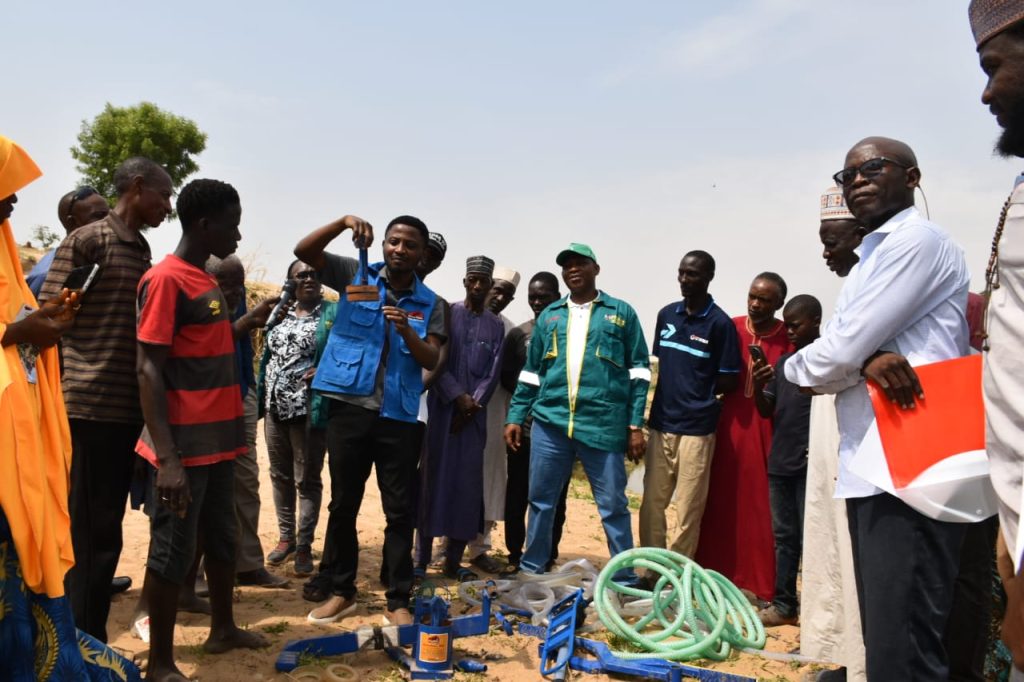
The article emphasizes that solving Nigeria’s food crisis requires urgent and targeted interventions. Mechanized farming, irrigation systems and improved seed technology are identified as critical tools needed to modernize agriculture and improve productivity. Irrigation, in particular, would help farmers cultivate crops throughout the year instead of relying solely on seasonal rainfall.
The importance of securing rural communities was also strongly highlighted. Without safety in farming areas, even the best agricultural policies may fail because farmers cannot confidently access their farmlands. Protecting farming communities is therefore essential for restoring confidence in the sector and stabilizing food production nationwide.
Beyond production, the article stresses the need to strengthen agricultural value chains. Nigeria continues to lose a large percentage of food after harvest due to poor storage, weak transportation systems and limited processing capacity. Investing in storage facilities, logistics, agro-processing and distribution networks would help reduce waste, improve food availability and create additional employment opportunities.
The piece also highlights the growing importance of data-driven agricultural planning. Reliable agricultural data can help government and private investors make better decisions, improve forecasting, allocate resources efficiently and respond quickly to emerging food shortages or market disruptions.
Another major concern raised is the gradual movement of labour away from agriculture into other sectors of the economy. While this transition is natural in developing economies, the article argues that Nigeria must create more opportunities within agribusiness, agro-processing and rural enterprises to absorb young people and sustain economic activity in rural areas.
The central message of the article is that food security is not simply an agricultural issue but a national economic and security issue. A country that cannot feed itself becomes vulnerable to inflation, unemployment, poverty and social instability. Rising food prices affect households, businesses and the broader economy, making food security essential for long-term national prosperity.
Commodity.ng Insight
The article reinforces a growing reality across Nigeria’s agricultural sector: food security can no longer be treated as a seasonal farming discussion but as a strategic national survival issue. Nigeria’s agricultural challenges are deeply interconnected — insecurity reduces production, inflation increases farming costs, poor infrastructure causes post-harvest losses, while weak data systems limit planning and investment efficiency.
One major insight is that Nigeria’s food crisis is increasingly shifting from a production problem to a systems problem. In many cases, farmers are still producing, but inefficiencies across storage, transportation, pricing, financing and market coordination continue to weaken the sector’s overall performance. This explains why food inflation remains high even in periods of harvest.
The article also reveals the urgent need for agricultural modernization. Countries that achieve stable food systems do not rely heavily on manual farming or unpredictable rainfall. They build structured agricultural ecosystems driven by mechanization, irrigation, technology, logistics and accurate market intelligence. Nigeria is gradually reaching a point where traditional farming methods alone may no longer sustain its rapidly growing population.
Another important takeaway is the role of rural insecurity in shaping national inflation and economic hardship. Attacks on farming communities are no longer isolated security concerns; they now directly affect food supply, commodity prices and national economic stability. Food production and national security have become closely linked.
The emphasis on data-driven agriculture is also significant. Modern agricultural economies depend heavily on accurate data for forecasting production, managing supply chains, tracking commodity prices and guiding investment decisions. Without reliable agricultural data systems, planning becomes reactive instead of strategic.
Finally, the article highlights the importance of repositioning agriculture as a full economic ecosystem rather than only crop cultivation. The future of Nigeria’s food security will depend not just on farmers, but also on processors, transporters, storage operators, agritech innovators, financial institutions and market coordinators working together within a more efficient agricultural value chain.
Discover more from Commodity Nigeria
Subscribe to get the latest posts sent to your email.