
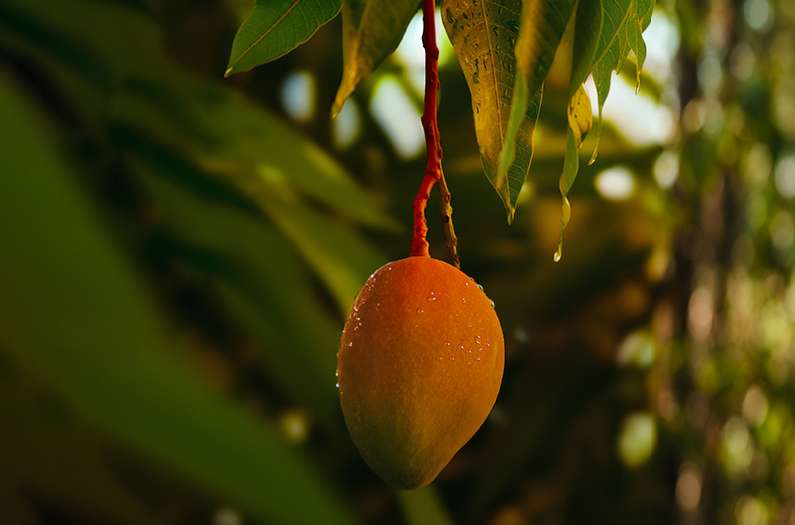
Fruit-based agroforestry is emerging as a powerful solution for both climate resilience and farmer profitability, with new research from India showing that integrating fruit trees into cropland can increase farmer income by nearly 5X compared to conventional farming systems.
🌍 Key Finding: Agroforestry Dramatically Boosts Farmer Income
The study reveals that farms combining fruit trees with crops—particularly mango intercropped with wheat and mung beans—generated over $4,800 per hectare annually, nearly five times higher than traditional monocropping systems.
Commodity.ng Insight:
This reinforces a critical shift in agriculture—from yield-focused farming to value-per-hectare optimization. For Nigerian farmers, especially in semi-arid regions like the North, agroforestry could become a high-income diversification strategy, reducing dependence on volatile single-crop markets.
🌱 Carbon Storage: Trees Transform Farms into Climate Assets
Tree-based systems significantly outperformed conventional farms in carbon storage:
- Mango orchards stored up to 46.63 tonnes of carbon per hectare
- Guava orchards recorded the highest sequestration rates at nearly 8 tonnes CO₂ equivalent per hectare per year
Commodity.ng Insight:
This positions agroforestry as a potential entry point into carbon credit markets. With global demand rising for verified carbon offsets, Nigerian farmers adopting tree-based systems could unlock new revenue streams beyond crop sales—a major opportunity if properly structured and verified.
🌾 Traditional Cropping Falls Behind
Conventional farms relying solely on annual crops like wheat and legumes showed:
- Lowest soil organic carbon
- Lowest carbon density overall
- Significantly lower profitability
Commodity.ng Insight:
This highlights the long-term risk of soil degradation and declining farm productivity in monocropping systems. For Commodity.ng users, this signals the importance of soil regeneration strategies as a core part of farm investment planning.
🌳 Best System Depends on Farmer Goals
While pure orchards excelled in carbon storage, mixed systems (fruit trees + crops) delivered the best financial returns, showing that optimal farm design depends on priorities:
- Climate impact → orchard systems
- Profitability → mixed agroforestry systems
Commodity.ng Insight:
Farmers and agri-investors should approach land use as a portfolio strategy, balancing:
- Cash flow (short-term crops)
- Asset growth (trees)
- Environmental value (carbon storage)
This aligns with Commodity.ng’s vision of data-driven farming decisions, where land is managed not just for yield, but for multi-layered returns.
🌍 Context: Built for Tough Farming Conditions
The study was conducted in India’s semi-arid Vindhyan region, characterized by:
- Low rainfall
- Poor soil quality
Commodity.ng Insight:
This is highly relevant for regions across Northern Nigeria. It suggests that agroforestry is not just for fertile zones—it can unlock productivity in marginal lands, turning underperforming farms into profitable and climate-resilient assets.
📊 Commodity.ng Market Outlook
- Agroforestry could become a next-generation farming model across Africa
- Strong potential for integration with:
- Carbon markets
- Climate financing
- Sustainable agriculture programs
- Early adopters may gain first-mover advantage in premium markets
Discover more from Commodity Nigeria
Subscribe to get the latest posts sent to your email.



caliente-mx is where all my friends make their bets. It’s easy to use. If you are into this, check caliente-mx!
Tried my luck on cwibak. Actually quite enjoyed it. User-friendly site, good range of games, and the bonuses are alright. Might stick around for a bit. Give it a burl: cwibak