
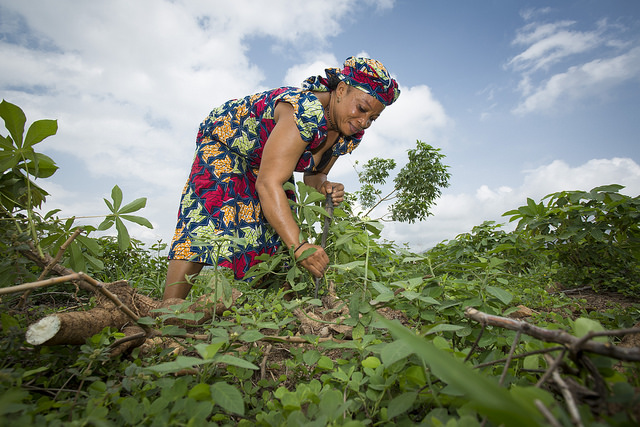
Introduction and Economic Importance
Agriculture remains the single most important sector in Africa’s economy, not only because of its contribution to gross domestic product but also due to its central role in employment, poverty reduction, and food security. According to global development institutions, agriculture contributes approximately 32% of Africa’s GDP and employs nearly 65% of the continent’s labour force. In several countries, particularly in Sub-Saharan Africa, the proportion of the population engaged in agriculture rises to as high as 80–85%, underscoring the sector’s critical importance in sustaining livelihoods.
Beyond its macroeconomic contribution, agriculture plays a disproportionately large role in poverty reduction. Studies from international organizations suggest that growth in agriculture is between two and four times more effective at reducing poverty than growth in other sectors globally, and up to eleven times more effective in Sub-Saharan Africa. This is largely because the majority of the poor reside in rural areas and depend directly or indirectly on farming activities. As such, improvements in agricultural productivity have immediate and widespread welfare effects.
Africa’s Vast Agricultural Potential
Despite its importance, Africa’s agricultural sector remains significantly underdeveloped relative to its potential. The continent possesses nearly 60% of the world’s uncultivated arable land, offering an unmatched opportunity for expansion. However, much of this land remains underutilized due to structural constraints such as limited infrastructure, weak institutions, and inadequate access to finance.
Productivity levels across the continent remain low, with per capita agricultural output estimated at just over half of the global average. This gap is largely attributable to outdated farming techniques, minimal mechanization, and heavy reliance on rain-fed agriculture. Irrigation infrastructure remains extremely limited, with only between 5% and 7% of cultivated land benefiting from irrigation systems. As a result, agricultural output is highly vulnerable to climate variability, including droughts and floods.
Furthermore, agriculture in Africa is dominated by smallholder farmers, most of whom operate on less than one hectare of land. These farmers often lack access to credit, modern inputs, and reliable markets, limiting their ability to scale production or adopt productivity-enhancing technologies.
Structural Challenges Facing African Agriculture
A range of structural challenges continues to constrain agricultural growth across the continent. Chief among these is the severe infrastructure deficit, particularly in rural areas. Poor road networks, inadequate storage facilities, and limited access to processing infrastructure contribute to significant post-harvest losses. Estimates suggest that up to 40% of food produced in developing regions is lost before it reaches consumers, primarily due to logistical inefficiencies.
Access to finance remains another major barrier. Smallholder farmers often lack collateral, especially in countries where land ownership is restricted or governed by customary systems. This limits their ability to obtain loans for inputs such as fertilizers, improved seeds, and machinery. Consequently, productivity remains low and farming operations remain largely subsistence-based.
The use of fertilizers in Africa is among the lowest in the world, averaging approximately 8 kilograms per hectare compared to a global average exceeding 100 kilograms per hectare. This contributes to declining soil fertility and limits yield potential. At the same time, climate change is intensifying risks, with increasing frequency of extreme weather events affecting agricultural output.
Policy, Government, and Institutional Role
Governments across Africa have recognized the importance of agriculture in driving economic growth and have introduced various policy frameworks to support the sector. A key milestone was the Maputo Declaration of 2003, in which African Union member states committed to allocating at least 10% of national budgets to agriculture and achieving annual growth rates of 6% in the sector.
Initiatives such as the Comprehensive Africa Agriculture Development Programme (CAADP) have aimed to coordinate efforts across countries, focusing on improving productivity, enhancing market access, and strengthening resilience. However, implementation has been uneven, with many countries falling short of their investment targets.
In recent years, there has been a shift from traditional aid models toward empowerment-based approaches. These emphasize capacity building, knowledge transfer, and community involvement, rather than direct aid. This transition reflects a broader recognition that sustainable agricultural development must be driven by local stakeholders supported by enabling policies and institutions.
Value Chains, Infrastructure, and Market Systems
One of the most critical areas for improvement in African agriculture is the development of efficient value chains. Currently, weak linkages between production, processing, and markets result in significant inefficiencies. Farmers often struggle to access reliable buyers, while poor storage and transport infrastructure lead to substantial losses.
Agro-processing remains underdeveloped across much of the continent. The lack of processing facilities means that raw agricultural products are often exported with minimal value addition, limiting income potential and economic diversification. Expanding agro-processing capacity could significantly enhance the value captured within African economies.
Trade also plays a crucial role, yet intra-African agricultural trade remains low due to tariff and non-tariff barriers, regulatory inconsistencies, and logistical challenges. Efforts to establish a continental free trade area have the potential to improve market integration, though significant structural obstacles remain.
Investment, Technology, and Future Growth Drivers
Investment in agriculture is increasing, driven by both public and private sector actors. Foreign direct investment is particularly important in developing large-scale farming operations, agro-processing facilities, and supply chain infrastructure. However, attracting investment requires improvements in the business environment, including regulatory transparency and infrastructure development.
Technology adoption is another key driver of future growth. Innovations such as precision agriculture, digital advisory services, and climate-smart farming techniques have the potential to significantly improve productivity. At the same time, expanding access to microfinance and insurance products can help farmers manage risks and invest in their operations.
Youth engagement is also critical. While agriculture employs a significant portion of the workforce, younger generations are increasingly moving toward urban areas. Encouraging youth participation through education, technology, and entrepreneurship opportunities will be essential for sustaining long-term growth.
Future Outlook and Strategic Importance
Looking ahead, Africa’s agricultural sector is poised for significant transformation. With the right combination of policy reforms, investment, and technological innovation, the continent has the potential to become a major global agricultural powerhouse. Key growth markets include Nigeria, Ethiopia, Kenya, Ghana, and Mozambique, among others, each offering unique opportunities based on their resource endowments and policy environments.
However, realizing this potential will require coordinated efforts across multiple fronts. Governments must prioritize agricultural development, improve infrastructure, and create enabling environments for private investment. At the same time, international organizations and development partners will continue to play a supportive role in facilitating knowledge transfer and funding.
Nigeria Cost of Living Intelligence
Monitor food prices, fuel costs, salaries, and inflation trends across Nigeria from 2015–2026 with regional insights and economic intelligence.
