How to Grow Cocoa in Nigeria: A Practical Guide to Cocoa Farming, Cost, Yield and Profit
Cocoa is one of Nigeria’s most important agricultural commodities and a major contributor to the country’s non-oil export economy. Unlike crops such as maize, rice and cassava that are primarily associated with domestic food consumption, cocoa has a strong connection to international markets and the global chocolate industry.
Nigeria has a long history of cocoa production, particularly in the South-West, where states such as Ondo, Cross River, Osun, Oyo, Ogun and Ekiti have suitable conditions for the crop. Cocoa farming supports farmers, labourers, traders, aggregators, processors and exporters, creating economic activity far beyond the farm.
The crop also offers an interesting long-term investment opportunity. Unlike annual crops, cocoa is a perennial tree crop that can continue producing for many years when properly established and managed. However, cocoa farming requires patience, careful farm management and significant attention to post-harvest quality.
For anyone considering cocoa farming, the objective should not simply be to plant trees. It should be to establish a productive plantation capable of producing high-quality cocoa beans that meet the requirements of premium domestic and international markets.
Why Cocoa Farming Matters in Nigeria
Cocoa has played an important role in Nigeria’s agricultural history and remains one of the country’s most valuable agricultural export commodities.
The crop provides income to farming communities while supplying raw material to processors and manufacturers. Cocoa beans are eventually transformed into products such as cocoa liquor, cocoa butter and cocoa powder, which are used in chocolate, beverages, confectionery, cosmetics and other industries.
This makes cocoa a particularly interesting commodity because its value chain extends from the farmer in a rural community to manufacturers and consumers around the world.
Nigeria’s cocoa industry also has significant room for expansion. Increasing productivity on existing farms, rehabilitating ageing plantations, improving post-harvest handling and expanding local processing could help the country capture more value from the global cocoa market.
For farmers, cocoa can provide long-term income, but the economics are different from those of annual crops. A farmer must be prepared to invest in the plantation before receiving substantial returns.
How to Grow Cocoa Successfully
Cocoa requires a suitable climate and environment. It generally performs best in warm, humid areas with adequate rainfall and soils capable of supporting healthy root development.
Site selection is therefore extremely important. Farmers should choose land with suitable soil, adequate moisture and protection from harsh environmental conditions. Cocoa seedlings can be sensitive during their early stages, so establishing the plantation under appropriate shade can help young trees develop successfully.
Quality planting material is one of the most important investments a cocoa farmer can make. Farmers should obtain healthy seedlings or suitable planting material from reputable sources and select varieties appropriate for their location and production objectives.
The early stage of cocoa production requires careful management. Young cocoa trees need protection from excessive sunlight, weeds and moisture stress. Shade management should gradually be adjusted as the trees develop.
Spacing is also important because mature cocoa trees require sufficient room for their canopy and root systems. Farmers should follow recommended spacing for the variety and local production conditions rather than overcrowding the plantation.
Weed management should be carried out regularly, especially around young trees. Excessive weeds compete for water and nutrients and can create favourable conditions for pests and diseases.
Cocoa also requires good soil fertility management. Organic matter, appropriate fertiliser application and soil conservation can help maintain productivity over time. Farmers should ideally conduct soil testing to determine the nutritional condition of their plantation.
Pest and disease management is particularly important. Cocoa can be affected by diseases such as black pod and pests that damage pods, leaves and other parts of the tree. Regular inspection allows farmers to identify problems early and take appropriate action.
Pruning is another important operation. Removing unnecessary branches and maintaining a well-structured canopy can improve air circulation, light penetration and overall farm management.
Unlike annual crops, cocoa requires continuous management throughout the year. A neglected cocoa plantation can gradually lose productivity even if the trees remain alive.
Where and When to Grow Cocoa
Cocoa production is concentrated mainly in Nigeria’s humid forest zones. Ondo State is particularly important in the country’s cocoa industry, while Cross River, Osun, Oyo, Ogun and Ekiti also have significant cocoa production.
The crop requires adequate rainfall and generally performs best in environments where moisture is available for much of the growing season.
Farmers establishing new plantations should pay close attention to rainfall patterns and the availability of water during the establishment stage. Young trees are particularly vulnerable to moisture stress.
Cocoa is a long-term investment, so climate considerations should extend beyond the first year. Before planting, farmers should consider whether the location is likely to remain suitable for cocoa production over the productive life of the plantation.
Climate change is increasingly relevant to cocoa farming. Changes in rainfall patterns, higher temperatures and increased pest and disease pressure can affect productivity.
Good shade management, soil moisture conservation, drainage and appropriate varieties can help farmers improve resilience.
Cost, Yield and Profitability of Cocoa Farming
Cocoa requires a different financial approach from crops such as maize, rice or groundnut because farmers generally have to wait several years before a newly established plantation produces substantial commercial harvests.
Initial costs can include land preparation, seedlings, planting, shade establishment, labour, fertiliser, weed management, pest and disease control and maintenance.
Farmers should therefore prepare a multi-year financial plan rather than expecting immediate returns.
Once the plantation becomes productive, the basic calculation remains:
Profit = Total Revenue − Total Cost
Revenue depends on the quantity and quality of dried cocoa beans sold and the prevailing market price.
Cocoa prices can fluctuate significantly because the commodity is traded internationally. Global supply, weather conditions in major producing countries, demand from chocolate manufacturers, exchange rates and international market conditions can all influence prices.
Quality can also have a major impact on the price received by farmers. Proper fermentation and drying can improve bean quality and make the produce more attractive to buyers.
Farmers should also calculate:
Break-Even Price = Total Cost ÷ Quantity Sold
For an established plantation, farmers should distinguish between maintenance costs and the initial investment used to establish the farm.
One of cocoa’s major attractions is that a well-managed plantation can continue producing for many years. This means the initial investment can potentially generate returns over an extended period.
However, farmers should not assume that every cocoa plantation will automatically become profitable. Productivity, tree age, farm management, labour costs, disease pressure and market prices all influence the final outcome.
Harvesting, Processing and Marketing
Cocoa quality is strongly influenced by what happens after the pods are harvested.
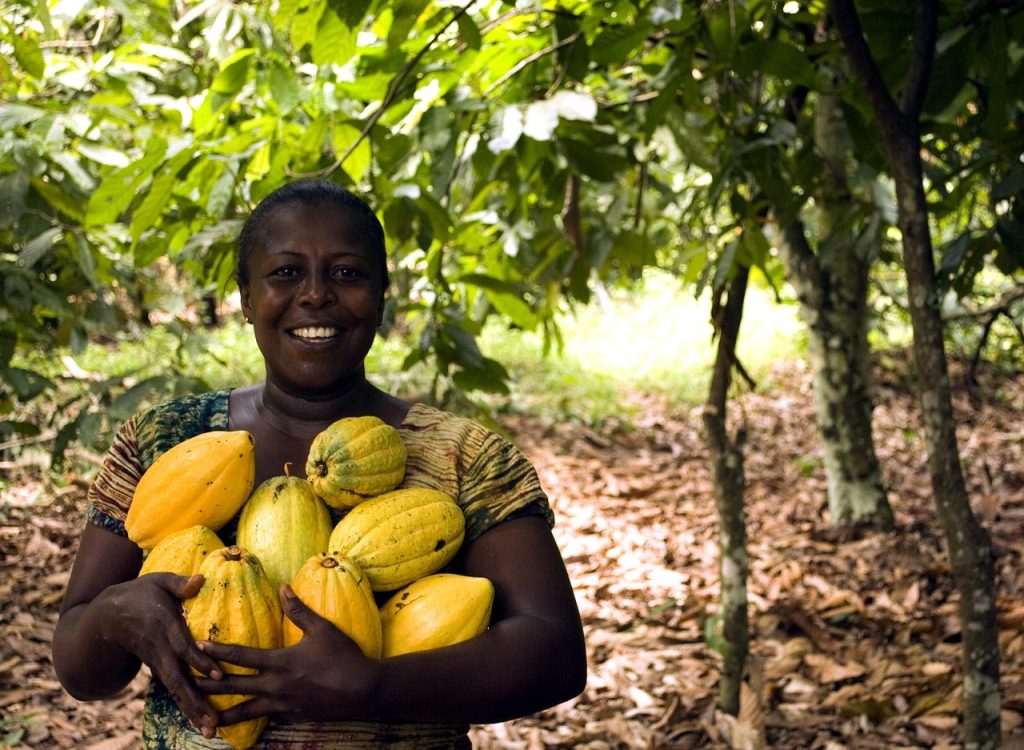
Mature cocoa pods are harvested from the trees and opened to remove the beans. The beans are then fermented, dried and prepared for sale.
Fermentation is particularly important because it develops the characteristics required for high-quality cocoa. Poorly fermented beans may receive lower prices or fail to meet certain buyer requirements.
Drying must also be carefully managed. Beans should be dried sufficiently to reduce moisture while protecting them from contamination, rain and other sources of damage.
Farmers should avoid mixing poor-quality beans with good-quality produce. Maintaining quality throughout harvesting, fermentation, drying and storage is essential.
Cocoa can be sold to aggregators, licensed buyers, cooperatives, processors and exporters. Farmers who organise into cooperatives may have greater opportunities to aggregate volumes, improve quality control and negotiate with buyers.
The international nature of cocoa means that Nigerian farmers are ultimately connected to global market conditions. A change in international supply or demand can influence the price received within Nigeria.
This is why cocoa farmers need access to reliable market information.
Challenges and Common Mistakes
One of the biggest challenges in Nigerian cocoa farming is the prevalence of ageing plantations. Old trees can become less productive, particularly when they are poorly maintained.
Replanting or rehabilitating ageing farms can improve productivity, but this requires investment and patience.
Pests and diseases are another major challenge. Black pod disease and other crop-health problems can cause substantial losses if not managed effectively.
Poor post-harvest handling is equally damaging. A farmer can produce good cocoa but lose value through poor fermentation, inadequate drying or improper storage.
Labour availability is another concern, particularly during harvesting and other labour-intensive operations. Rising labour costs can affect the profitability of small and medium-sized farms.
Farmers may also face difficulties accessing finance because cocoa is a long-term investment. Unlike annual crops, newly established cocoa farms do not provide immediate income, making patient and appropriately structured agricultural finance particularly important.
Finally, farmers should avoid planting cocoa without first understanding the market and long-term requirements of the crop. Cocoa is not a crop for someone looking for a quick agricultural return.
The Future of Cocoa Farming in Nigeria
Nigeria’s cocoa industry has significant potential, particularly if the country can increase productivity and capture more value through processing.
One major opportunity is the rehabilitation of old plantations. Replacing unproductive trees and adopting improved planting materials could increase output without requiring equivalent expansion of farmland.
Another opportunity is local processing. Instead of exporting predominantly raw cocoa beans, Nigeria can capture greater value by expanding the production of cocoa butter, cocoa powder, cocoa liquor, chocolate and other derivatives.
Quality improvement will also become increasingly important. International markets are becoming more demanding regarding traceability, sustainability, food safety and production standards.
This creates opportunities for farmers who can consistently produce high-quality beans and participate in organised supply chains.
There is also room for greater use of technology. Digital platforms can help farmers access market prices, weather information, agricultural advice and potential buyers.
The future of Nigerian cocoa farming will therefore depend not only on producing more cocoa but on producing better cocoa and capturing more value from it.
Frequently Asked Questions
Is cocoa farming profitable in Nigeria?
Cocoa farming can be profitable, particularly over the long term, but it requires patience and proper farm management. Returns depend on productivity, production costs, bean quality and market prices.
Which states produce cocoa in Nigeria?
Major cocoa-producing states include Ondo, Cross River, Osun, Oyo, Ogun and Ekiti.
How long does cocoa take to start producing?
Cocoa is a perennial crop and newly established trees generally require several years before they begin producing meaningful commercial quantities. The exact timing depends on the planting material, management and growing conditions.
Can cocoa be grown in Northern Nigeria?
Cocoa generally requires warm and humid conditions, making Nigeria’s forest and rainforest zones more suitable than the drier northern regions.
What is cocoa used for?
Cocoa beans are processed into cocoa liquor, cocoa butter and cocoa powder, which are used in chocolate, beverages, confectionery, cosmetics and other products.
Why is fermentation important in cocoa production?
Fermentation helps develop the flavour and quality characteristics of cocoa beans. Proper fermentation is an important part of producing beans suitable for higher-value markets.
How can cocoa farmers increase profitability?
Farmers can improve profitability through quality planting materials, good farm management, effective pest and disease control, proper harvesting and fermentation, improved drying, cooperative marketing and access to reliable market information.
Commodity.ng Insight
Cocoa shows why Nigeria’s agricultural opportunity extends far beyond what we grow—it is also about what we sell, how we process it and where we sell it.
The cocoa farmer is connected to an international market that includes traders, processors, chocolate manufacturers and consumers across the world.
That means the price of cocoa in a Nigerian farming community can ultimately be influenced by events far beyond the farm.
A farmer therefore needs to understand more than agronomy. They need to understand prices, quality requirements, market demand, global supply, processing and export opportunities.
This is precisely the kind of connection that Commodity.ng seeks to make easier to understand.
By providing commodity prices, market intelligence and agricultural insights, Commodity.ng aims to help farmers, traders, processors and investors understand the markets behind Nigeria’s agricultural commodities.
For cocoa farmers, the opportunity is not simply to plant more trees.
It is to build productive plantations, improve bean quality, reduce losses and participate more effectively in the value chain.
Nigeria has the land, the farmers and the agricultural potential.
The bigger question is whether we can build the systems that allow Nigerian farmers to capture a greater share of the value created from the commodities they produce.
For cocoa, the opportunity is not just in the bean. The opportunity is in the entire value chain.
Discover more from Commodity Nigeria
Subscribe to get the latest posts sent to your email.