
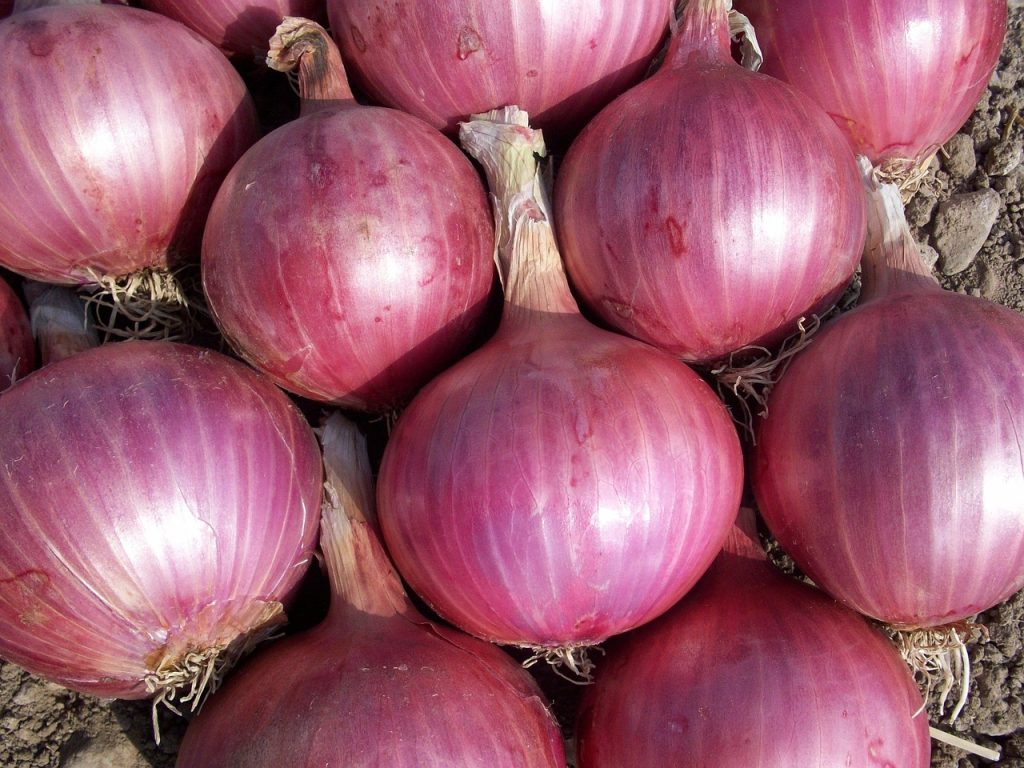
How to Grow Onions in Nigeria: A Practical Guide to Onion Farming, Cost, Yield and Profit
Onion is one of Nigeria’s most important vegetable commodities and a major ingredient in everyday Nigerian cooking. From homes and restaurants to food processors and market traders, demand for onions remains strong throughout the year.
Nigeria has a well-established onion-producing belt, particularly across the northern states, where farmers take advantage of suitable soils, dry-season irrigation and favourable climatic conditions. The crop provides income for thousands of farming households and supports a wider value chain involving seed suppliers, labourers, transporters, aggregators, wholesalers, retailers and processors.
However, onion farming can be highly sensitive to production and market conditions. Poor-quality seed, inadequate irrigation, disease, excessive moisture, poor storage and price fluctuations can quickly affect profitability. For commercial farmers, therefore, growing onions successfully requires both good agronomic practices and good market intelligence.
Why Onion Farming Matters in Nigeria
Onion is a relatively high-value vegetable with strong domestic demand. It is consumed across virtually every part of Nigeria and is an essential ingredient in many meals, making it one of the vegetables with a particularly active market.
The crop is especially important in northern Nigeria. States such as Kebbi, Sokoto, Kano, Kaduna, Jigawa, Katsina and Zamfara have significant onion-growing communities, while other parts of the country also produce onions under suitable conditions.
Dry-season production is particularly important because irrigation allows farmers to cultivate onions when rainfall is limited. This can create attractive commercial opportunities, although irrigation also increases production costs and requires reliable access to water.
Onions also have an important trading dimension. Because production is concentrated in particular areas and harvests can be seasonal, prices can change significantly depending on supply, demand, transportation and storage conditions.
For Commodity.ng, onion is therefore an important commodity because it illustrates how weather, production, logistics, storage and market prices interact to determine agricultural profitability.
How to Grow Onions Successfully
Successful onion production starts with selecting suitable land. Onions generally perform well in fertile, loose and well-drained soils. Heavy or poorly drained soils can create problems because excessive moisture around the bulbs can encourage diseases and affect bulb development.
Farmers should ideally conduct a soil test before planting. Soil testing provides information about nutrient availability and can help farmers determine the appropriate soil amendments and fertiliser programme.
Seed selection is one of the most important decisions in onion farming. Farmers should obtain quality seed from reliable suppliers and select varieties suited to their location, season and target market. Different varieties can vary in bulb size, maturity period, storage ability and tolerance to particular environmental conditions.
Onions can be established from seed through a nursery and subsequent transplanting, or through direct-seeding systems where appropriate. Nursery management requires careful attention because weak seedlings can lead to poor field establishment.
For transplanted onions, seedlings should be healthy and sufficiently established before being moved to the main field. Proper spacing is important because overcrowding can restrict bulb development, while excessive spacing can reduce the number of plants per unit of land.
Water management is particularly important. Onions require regular moisture during active growth, but excessive watering can cause problems such as root and bulb diseases. Irrigation should therefore provide adequate moisture without leaving the soil continuously saturated.
Weed management is another major consideration. Onion plants can be vulnerable to competition from weeds, particularly during their early growth stages. Farmers should establish a timely weed-management programme rather than allowing weeds to become heavily established.
Farmers should also monitor their fields regularly for pests and diseases. Thrips, fungal diseases and other crop problems can damage leaves and reduce bulb development. Early identification is important because some onion pests and diseases can spread quickly under favourable conditions.
Good farm hygiene, appropriate spacing, proper irrigation, crop rotation and responsible use of approved crop-protection products can help reduce production risks.
Where and When to Grow Onions
Nigeria’s major onion-producing areas are concentrated largely in the northern part of the country. Sokoto, Kebbi, Kano, Kaduna, Jigawa, Katsina and Zamfara are among the important production areas.
The crop can be cultivated during both rainy and dry seasons depending on local conditions, but dry-season production supported by irrigation is particularly important commercially.
The planting calendar should not be treated as identical across Nigeria. Farmers need to consider their location, variety, temperature, water availability and expected market window.
One advantage of irrigation is that it gives farmers greater control over water availability. However, irrigation does not eliminate climate risk entirely. Excessive heat, poor water quality, water shortages and extreme weather can still affect production.
Farmers should therefore pay attention to weather forecasts and local water availability when planning the production cycle.
Timing can also influence profitability. If large numbers of farmers harvest at the same time, market supply may increase and prices can fall. Conversely, periods of lower supply can produce stronger prices.
Understanding this relationship between production timing and market timing can make a major difference to commercial onion farmers.
Cost, Yield and Profitability of Onion Farming
Onion farming can generate attractive returns, but it can also require significant investment, particularly for irrigated production.
Major costs may include land preparation, seed, nursery establishment, transplanting, irrigation, fertiliser, crop protection, labour, harvesting, sorting, packaging, transportation and storage.
Irrigation can be one of the largest expenses for dry-season farmers. Farmers using pumps or other irrigation equipment need to account for fuel, maintenance and labour costs when calculating their true production cost.
The basic profitability formula is:
Profit = Total Revenue − Total Cost
Revenue depends on the quantity of marketable onions harvested and the price received.
For example, if a farmer spends ₦1.5 million on production, harvesting, transportation and marketing and generates ₦2.5 million in sales, the estimated profit would be ₦1 million.
This is only an illustration. Actual onion farming costs and returns can vary significantly depending on farm size, location, irrigation method, seed variety, yield, labour costs and market prices.
Farmers should also calculate:
Break-Even Price = Total Cost ÷ Quantity Sold
This tells the farmer the minimum average price required to recover the total investment.
Yield should also be measured in terms of marketable onions, not simply the total amount harvested. Damaged, diseased, undersized or poorly cured bulbs may sell for substantially less than good-quality produce.
This is why quality management is an important part of profitability.
Harvesting, Storage and Marketing
Onions should be harvested when the bulbs have reached appropriate maturity. The crop should not simply be harvested according to a fixed number of days because maturity varies according to variety, environmental conditions and management practices.
After lifting, onions need to be properly cured. Curing allows the outer layers of the bulb and neck to dry, improving storage quality and reducing the risk of deterioration.
Poor post-harvest handling can result in significant losses. Onions exposed to excessive moisture, physical damage, poor ventilation or unsuitable storage conditions can rot or lose quality.
Good storage is therefore one of the most important opportunities in the onion value chain.
Farmers who are able to store onions properly may have greater flexibility to avoid selling immediately during periods of peak supply. However, storage should not be viewed as automatically profitable. Farmers must compare expected future prices with storage costs, expected losses and financing requirements.
Onions can be sold through farm-gate buyers, aggregators, wholesalers, retailers and major urban markets. Some commercial farmers may also supply restaurants, food businesses and processors directly.
Transportation is another important consideration because onions are bulky and can be damaged during handling. Farmers should consider the distance to their target market before production and factor transportation costs into their pricing decisions.
Challenges and Common Mistakes
One of the biggest challenges in onion farming is the cost and reliability of irrigation. Dry-season production can be profitable, but farmers who depend on expensive fuel-powered pumps may see their margins reduced when fuel prices rise.
Poor water management is another common problem. Both insufficient irrigation and excessive watering can affect the crop.
Disease and pest pressure can also cause significant losses. Farmers should inspect their fields regularly rather than waiting until symptoms become severe.
Another mistake is using poor-quality seed. Because the seed represents a relatively small portion of total production costs, attempting to save money by using unreliable planting material can ultimately become expensive if germination and yield are poor.
Farmers can also underestimate the importance of harvesting and storage. Producing a high-quality crop but allowing a large proportion of it to deteriorate after harvest is effectively losing part of the farm’s investment.
Perhaps the biggest business mistake is failing to understand the market before planting. Onion prices can change considerably between production periods, and farmers who rely entirely on the price they received in the previous season may make poor investment decisions.
Commercial onion farming should therefore begin with a market and production budget, not simply the availability of land.
The Future of Onion Farming in Nigeria
Nigeria’s onion sector has considerable potential for growth through improved seed, irrigation, mechanisation, storage and market infrastructure.
One of the greatest opportunities is reducing post-harvest losses. Better storage facilities can help farmers preserve quality and potentially reduce the pressure to sell immediately after harvest.
Improved irrigation systems can also make dry-season production more efficient. Solar-powered irrigation and other energy-efficient technologies may provide opportunities to reduce dependence on conventional fuel-powered pumps where the economics are suitable.
There is also room for greater organisation among farmers. Cooperatives and producer groups can help farmers access inputs, share equipment, aggregate produce and negotiate with larger buyers.
Processing represents another potential area of development. While fresh onions dominate the market, opportunities exist for products such as dehydrated onions, onion powder and other processed forms that can extend shelf life and serve different markets.
The future of onion farming in Nigeria will therefore depend not only on increasing production but also on reducing losses, improving quality, strengthening storage and connecting farmers more efficiently with markets.
Frequently Asked Questions
Is onion farming profitable in Nigeria?
Yes, onion farming can be profitable, particularly where farmers have good yields, efficient irrigation and access to strong markets. However, profitability can change significantly with input costs and market prices.
Which states are major onion producers in Nigeria?
Important onion-producing areas include Sokoto, Kebbi, Kano, Kaduna, Jigawa, Katsina and Zamfara, alongside production in other suitable parts of the country.
Can onions be grown during the dry season?
Yes. Dry-season onion production is common in northern Nigeria, particularly where farmers have access to irrigation.
How long does onion take to mature?
The maturity period depends on the variety, planting method, climate and production system. Farmers should follow the recommendations for the specific variety they plant.
What is the best soil for onion farming?
Onions generally perform well in fertile, loose and well-drained soils. Soil testing is recommended to identify nutrient requirements before planting.
Why is onion storage important?
Proper storage can reduce post-harvest losses and give farmers greater flexibility in deciding when to sell. However, storage costs and expected price movements should be considered before storing large quantities.
How can onion farmers increase profitability?
Farmers can improve profitability through quality seed, efficient irrigation, good soil fertility management, timely pest and weed control, proper curing, improved storage and better knowledge of market prices.
Commodity.ng Insight
Onion is a perfect example of why agricultural profitability does not end at the farm gate.
A farmer can produce an excellent crop and still lose money if irrigation costs are too high, transportation is expensive, prices collapse during harvest or a large portion of the onions deteriorates in storage.
This means the successful onion farmer needs two kinds of knowledge: agricultural knowledge and market knowledge.
Before planting, the farmer should understand production costs and expected market conditions. During production, weather and water availability become critical. At harvest, prices, transportation and storage determine how much of the value created on the farm can actually be captured.
This is the type of agricultural intelligence that Commodity.ng is designed to provide.
By making commodity prices, market information and agricultural insights easier to access, Commodity.ng aims to help farmers, traders, processors and investors make better decisions across Nigeria’s agricultural value chains.
For onion farmers, the objective should not simply be to produce more bulbs.
It should be to produce efficiently, reduce post-harvest losses, understand price movements and sell into the right market at the right time.
In agriculture, information can be as valuable as an input.
The farmer who understands the market is better positioned to turn a good harvest into a profitable business.
Discover more from Commodity Nigeria
Subscribe to get the latest posts sent to your email.



Good read! Sharing MiniMax H3 Video Generator (/) — handy for 4–15s cinematic clips. MiniMax H3 Video Generator