How to Start Guinea Fowl Farming in Nigeria: A Practical Guide to Breeds, Housing, Feeding, Cost, Profit and Market
Guinea fowl farming is an alternative poultry enterprise with potential for Nigerian farmers looking to diversify beyond chickens, turkeys and ducks. Guinea fowls are valued for their meat and eggs, while farmers can also earn income from selling fertile eggs, keets (young guinea fowls) and breeding stock.
In Nigeria, guinea fowls are commonly associated with traditional and smallholder farming systems, particularly in areas where birds can forage around homesteads and farms. However, the enterprise can also be developed into a more organised commercial business with suitable housing, feeding, health management and access to reliable buyers.
A 2024 study of guinea fowl farmers around the Oba Hills Forest Reserve in Osun State found that the enterprise was profitable among the farmers surveyed, although feeding and labour costs affected returns. The findings highlight the opportunity for improved production, but individual results will depend on location, management and market conditions. (Read the study)
Choosing the Right Guinea Fowl Breed
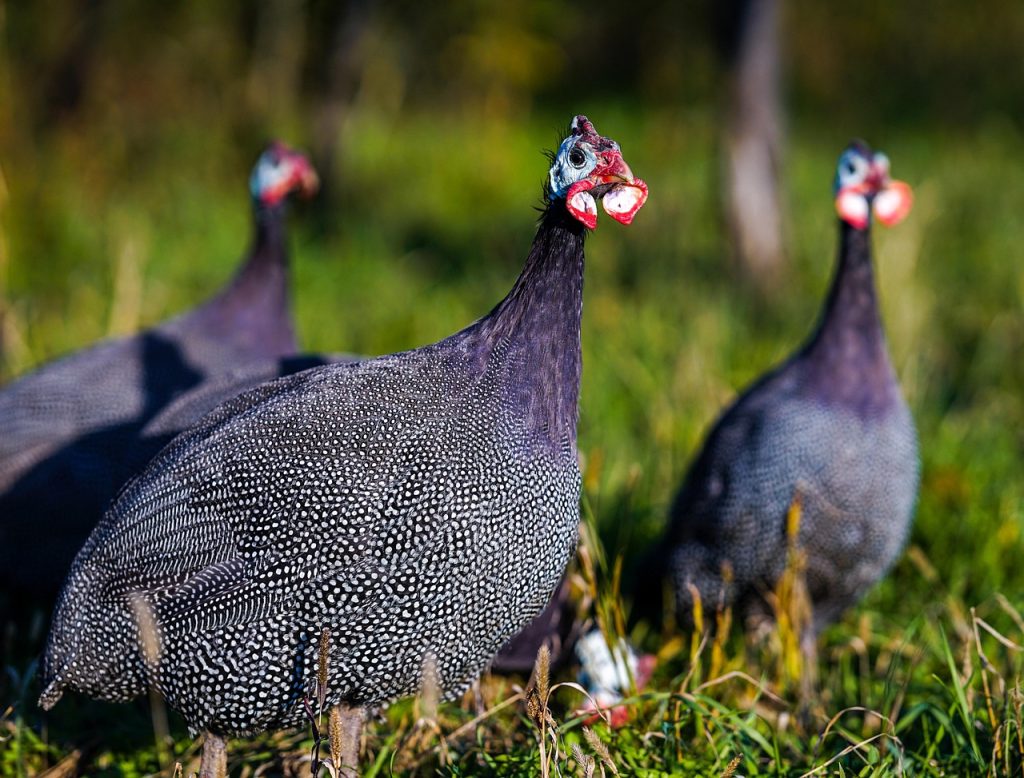
The indigenous helmeted guinea fowl (Numida meleagris) is the principal type raised in Nigeria. It is recognised by its helmet-like casque, spotted plumage and distinctive calls.
Indigenous guinea fowls occur in different plumage varieties, including pearl, lavender, black and white. Farmers may encounter other colour variations depending on the source of their birds.
When choosing breeding stock, focus on health, growth, survival, fertility and the performance of the parent flock rather than colour alone. Buy from a reputable breeder who can explain the birds’ age, breeding history and management requirements.
Guinea fowls are generally active and alert birds. Their natural behaviour can be an advantage in suitable free-range environments, but it also means they require secure housing and careful management to prevent losses.
Setting Up Guinea Fowl Housing
Housing is particularly important during the early stages of production. Although adult guinea fowls can forage effectively, leaving birds entirely to roam exposes them to predators, theft, harsh weather, parasites and disease.
The National Agricultural Extension and Research Liaison Services (NAERLS) discusses three broad production systems in its guide to guinea fowl production in Nigeria:
- Free-range system: Birds roam and forage over a wide area. This can reduce some feeding costs but increases exposure to predators, theft and disease.
- Semi-intensive system: Birds have secure housing and access to a fenced outdoor run or pasture. This offers a practical balance between foraging and controlled management.
- Intensive system: Birds are kept in a managed housing environment, allowing closer control of feeding, health, reproduction and production records.
For many small and medium-sized Nigerian farms, a well-managed semi-intensive system can be a practical starting point.
The housing should be dry, well ventilated and protected from rain and predators. Provide adequate floor space, clean bedding, sufficient feeders and drinkers, and secure doors or fencing. Avoid overcrowding because it can increase stress, injuries and disease transmission.
Guinea fowls can be noisy, particularly when disturbed. Consider the effect on neighbours when choosing a farm location.
Feeding Guinea Fowls
Feeding has a direct effect on growth, egg production, breeding performance and profitability.
Young keets require suitable starter feed containing adequate protein, energy, vitamins and minerals. As the birds grow, their diet should be adjusted to meet their changing nutritional needs.
Adult birds may forage for insects, seeds, grasses and other natural food sources. However, free-ranging alone may not provide consistent nutrition for commercial production, particularly during periods when natural food is scarce.
Depending on availability and proper formulation, farmers may use ingredients such as maize, sorghum, millet, soybean meal and other suitable feed materials. These ingredients should be combined according to the birds’ nutritional requirements rather than mixed randomly.
Provide clean drinking water at all times. Feed should be stored in a dry place to prevent mould and contamination, while feeders should be positioned to minimise wastage.
Farmers should monitor feed consumption, growth and egg production. If feed costs increase without a corresponding improvement in bird performance, profitability may decline.
Guinea Fowl Breeding and Hatching
Breeding can create additional income opportunities through the sale of fertile eggs, keets and mature breeding birds.
The first eggs may be produced at around 18 weeks under some well-managed conditions, although indigenous birds raised under traditional systems may mature and begin laying later. Production depends on age, nutrition, season, genetics and management.
In West Africa, guinea fowl laying is often seasonal and influenced by rainfall and the availability of suitable feed. Farmers should therefore avoid assuming that egg production will remain constant throughout the year.
Guinea fowl eggs generally require approximately 26–28 days of incubation. They may be incubated naturally under a suitable broody hen or with an appropriate incubator. Guinea hens are not always reliable sitters, so collecting eggs for incubation under a broody hen is one option used in traditional systems. (FAO small-scale poultry production guide)
For artificial incubation, follow the equipment manufacturer’s recommendations for temperature, humidity, ventilation and egg turning.
Maintain records of eggs laid, eggs selected for incubation, fertility, hatchability and keet survival. These figures help farmers identify breeding problems and evaluate the performance of their flock.
Caring for Guinea Fowl Keets
The early stages of guinea fowl production require particular attention because young birds can suffer substantial losses when brooding and feeding are poorly managed.
Before the keets arrive, prepare a clean, dry and secure brooding area. Provide suitable warmth, ventilation, clean water and appropriate starter feed. Ensure that drinkers allow the birds to drink safely without becoming trapped or excessively wet.
Keets should be protected from rain, cold, excessive heat, predators and damp bedding. Their behaviour can provide useful clues: birds crowding together may be too cold, while birds moving far away from the heat source and panting may be too hot.
Monitor them frequently, especially during the first few weeks. Weak birds, poor appetite, diarrhoea or unexpected deaths should prompt an immediate review of management and consultation with a qualified veterinary professional.
A Nigerian review of guinea fowl production identifies early mortality, low hatchability and shortages of technical support as longstanding challenges. Good brooding and reliable sourcing of young birds are therefore essential to improving commercial performance. (World’s Poultry Science Journal)
Guinea Fowl Health and Biosecurity
Guinea fowls may be hardy under suitable conditions, but they remain vulnerable to diseases, parasites and poor management.
A good health programme should include:
- Regular cleaning of housing and equipment
- Clean drinking water
- Dry bedding and good drainage
- Protection from predators and wild birds
- Separation of sick birds
- Careful management of newly purchased birds
- Safe disposal of dead birds
- Routine monitoring for unusual behaviour or mortality
Work with a veterinarian or livestock extension officer to determine the appropriate disease-prevention and vaccination programme for your location.
Do not assume that guinea fowls require exactly the same health programme as chickens. Disease risks and management requirements may differ, and treatment should be guided by professional advice.
How Much Does It Cost to Start Guinea Fowl Farming in Nigeria?
The cost depends on the number of birds, whether you buy eggs, keets or mature birds, the housing system and the level of equipment required.
Major startup and operating expenses include:
- Purchase of breeding birds or keets
- Housing construction and fencing
- Feeders and drinkers
- Brooding equipment
- Starter, grower and breeder feed
- Water supply
- Bedding materials
- Veterinary care and medication
- Incubation equipment, if breeding commercially
- Labour
- Transport
- Security
- Marketing and packaging
- Contingency funds
A beginner can start with a manageable flock and expand after gaining experience. However, it is important to budget for the full production cycle rather than only the initial cost of purchasing birds.
Before investing, obtain current local quotations for keets, feed, housing materials and veterinary services. Costs vary by location and supplier, so there is no single startup figure that applies to every Nigerian farm.
Is Guinea Fowl Farming Profitable in Nigeria?
Guinea fowl farming can be profitable when production costs are controlled and birds or eggs can be sold at prices that cover the cost of raising them.
A 2024 study of 120 rural households around the Oba Hills Forest Reserve in Osun State reported a benefit-cost ratio of 1.78 for the guinea fowl enterprise studied. This indicates positive returns in that particular sample, but the result should not be treated as a guaranteed return or applied directly to today’s prices. (Study details)
A simple calculation is:
Profit = Total Revenue − Total Production and Marketing Costs
For example, if a farmer spends ₦800,000 raising and marketing a batch of guinea fowls and generates ₦1,100,000 in sales, the illustrative profit is ₦300,000.
This is a hypothetical example, not a current market quotation or a guaranteed profit. Actual results depend on the number of birds surviving, feed consumption, egg production, selling prices, labour and other costs.
Farmers should calculate the economics of meat production, egg production and breeding-stock sales separately because each model has different costs, risks and cash-flow patterns.
Finding a Market for Guinea Fowls
Market research should begin before the farmer purchases a large number of birds.
Potential customers include:
- Households
- Restaurants and hotels
- Caterers
- Meat retailers
- Poultry traders
- Other guinea fowl farmers
- Hatcheries and breeding-stock buyers
- Food processors
- Farmers purchasing manure for crop production
Guinea fowls can be sold live or processed for meat. Fertile eggs and keets may provide additional revenue where other farmers are interested in raising the birds.
However, demand varies by location. Farmers should ask potential buyers about preferred bird sizes, quantities, prices and delivery arrangements before expanding production.
Building relationships with repeat buyers can help improve cash flow and reduce the risk of keeping mature birds longer than planned.
Additional Opportunities in Guinea Fowl Farming
Beyond meat and eggs, farmers can develop related business opportunities.
Selling keets and breeding birds can be attractive where local producers have difficulty sourcing healthy young stock. However, this requires reliable breeding, hatching and brooding practices.
Guinea fowl manure can also be used as an organic soil amendment when handled and applied appropriately.
There may also be opportunities to aggregate birds from smallholder producers and supply restaurants, traders and processors in larger quantities. Such a business would require reliable quality standards, transportation and consistent sourcing.
These opportunities illustrate why guinea fowl farming can be viewed as a value chain rather than simply keeping birds on a farm.
Major Challenges Facing Guinea Fowl Farmers in Nigeria
Despite its potential, guinea fowl farming faces several constraints.
Research in Nigeria has identified high mortality among young birds, low hatchability, limited access to technical advice and shortages of reliable sources of eggs and keets as longstanding problems. More recent research also highlights the importance of improving feeding and veterinary support.
Other challenges include:
- High feed prices
- Predators and theft
- Seasonal egg production
- Poor brooding management
- Inadequate housing
- Limited access to finance
- Inconsistent availability of quality breeding stock
- Uncertain market prices
- Limited consumer awareness in some areas
- Weak links between farmers and bulk buyers
These risks mean that farmers should not rely entirely on the birds’ ability to forage or survive under traditional conditions. Commercial production requires consistent feeding, health management and records.
How to Make Guinea Fowl Farming More Commercial
A commercial farm should track performance from the day the birds arrive until the final sale.
Important records include:
- Number of birds purchased or hatched
- Number of birds surviving
- Feed consumption and costs
- Growth and average selling weight
- Egg production
- Fertility and hatchability
- Keet mortality
- Veterinary expenses
- Labour and transport costs
- Selling price
- Total revenue and profit
These records help farmers determine whether their biggest losses come from feed costs, mortality, poor breeding performance or low selling prices.
Farmers should also compare suppliers, improve biosecurity, plan for seasonal changes in egg production and establish relationships with buyers before expanding.
The aim is to develop a production system where each bird, egg or breeding unit contributes to a measurable commercial return.
Frequently Asked Questions
Is guinea fowl farming suitable for beginners?
Yes. Beginners can start with a small flock, but they should learn proper housing, feeding, brooding and health management before expanding.
How long do guinea fowl eggs take to hatch?
They generally require approximately 26–28 days of incubation under suitable conditions.
Are guinea fowls suitable for free-range farming?
They can forage effectively, but free-ranging exposes them to predators, theft, harsh weather and disease. A secure semi-intensive system may offer a better balance for many small and medium-sized farms.
What do guinea fowls eat?
They eat a variety of natural foods, including seeds, insects and plant materials, but commercial birds also need suitable balanced feed to support growth and reproduction.
Can guinea fowls be raised in Abuja?
Yes, provided the farmer has suitable housing, reliable feed and water, veterinary support and access to buyers. Local demand and current input costs should be assessed before investing.
Is guinea fowl farming more profitable than chicken farming?
Not automatically. Profitability depends on feed costs, mortality, growth performance, egg production, selling price and market demand. Farmers should compare actual production budgets before choosing an enterprise.
Commodity.ng Insight
Guinea fowl farming demonstrates the potential of alternative livestock enterprises in Nigeria, but it also shows why production must be connected to market intelligence.
A farmer may successfully raise birds and still make limited returns if mortality is high, feed is expensive or buyers are difficult to find. Commercial success depends on understanding both the production process and the economics of the value chain.
Commodity.ng’s focus on commodity prices, agricultural market intelligence and digital trading infrastructure is relevant to this challenge. Farmers, traders, processors and investors need better information to compare production costs, assess market opportunities and make informed decisions.
For guinea fowl farmers, the most useful indicators include cost per bird raised, keet survival rate, feed cost per marketable bird, eggs produced per breeding hen, hatchability, selling price and profit per production cycle.
Farmers should also compare the returns from meat, eggs, keets and breeding stock before deciding which business model to expand.
The opportunity is not simply to produce more guinea fowls. It is to build a stronger value chain where farmers can obtain quality breeding stock, manage production efficiently, connect with reliable buyers and make decisions using credible information.
Better production records, improved extension support, organised marketing and reliable price information can help move guinea fowl farming from small-scale household production towards a more commercially sustainable livestock enterprise.
Discover more from Commodity Nigeria
Subscribe to get the latest posts sent to your email.