
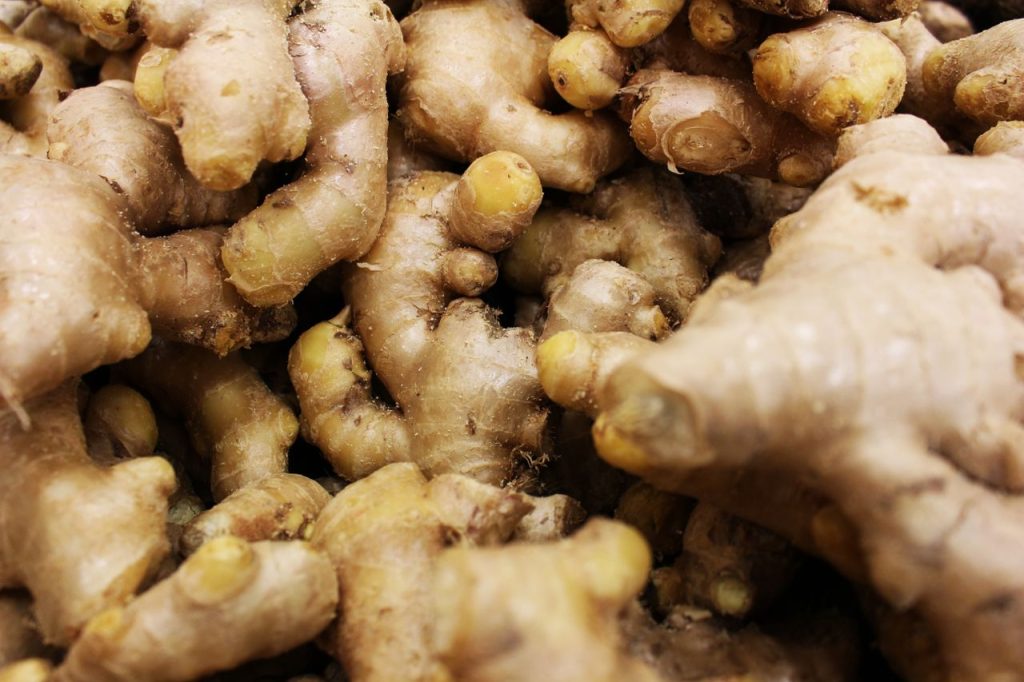
How to Grow Ginger in Nigeria: A Practical Guide to Ginger Farming, Cost, Yield and Profit
Ginger is one of Nigeria’s most important high-value agricultural commodities. Known for its distinctive flavour, aroma and pungency, Nigerian ginger is used domestically and internationally in food, beverages, spices, pharmaceuticals, cosmetics and other products.
For decades, Kaduna State has been at the centre of Nigeria’s ginger industry, with Nasarawa, Benue, Bauchi, Niger and other areas also contributing to production. Official agricultural data have historically identified Kaduna as the country’s dominant producer. In the 2022 Agricultural Performance Survey, Kaduna accounted for the overwhelming majority of recorded national ginger production, while Nasarawa and Benue were also significant producers.
The crop is commercially attractive because of its relatively high value per unit of land and its strong demand. But ginger farming is also considerably more demanding and risky than simply planting a crop and waiting for harvest. The devastating ginger blight outbreak that affected major producing communities demonstrated just how quickly disease can destroy an agricultural value chain.
For anyone considering ginger farming in Nigeria, therefore, the right question is not simply “How much can I make?” It is “How can I produce high-quality ginger while managing production, disease, market and price risks?”
How to Grow Ginger Successfully
Ginger is a rhizome crop that performs best in warm conditions, fertile and well-drained soils, and an environment with adequate moisture. It does not perform well in waterlogged fields, making drainage one of the most important considerations when selecting land.
Before planting, farmers should prepare the soil properly. The field should be cleared, loosened and shaped in a way that encourages drainage and allows the rhizomes to develop properly. Raised beds or ridges can be useful where drainage is a concern.
The quality of planting material is critical. Ginger is normally propagated using healthy rhizomes rather than botanical seed. Farmers should therefore obtain clean, disease-free planting material from reliable sources. Using infected rhizomes can introduce disease to an otherwise healthy farm and potentially spread problems from one production area to another.
This is particularly important following Nigeria’s recent ginger disease crisis.
The 2023 ginger blight outbreak devastated farms in major producing communities in Kaduna and caused losses estimated at more than ₦12 billion. Reports indicate that some affected farmers lost the majority of their harvests.
The lesson is straightforward: quality seed is not an expense to minimise; it is an investment in risk management.
Planting generally begins around the start of the rainy season, although the appropriate timing depends on the production location and rainfall pattern. Nigeria’s ginger season traditionally runs from approximately May to October, according to the Nigerian Export Promotion Council.
Farmers should plant when there is sufficient soil moisture to support establishment rather than simply following a calendar date.
After planting, good weed management is essential. Ginger develops relatively slowly during its early stages and can face strong competition from weeds. Regular weeding, mulching and appropriate agronomic practices can help conserve soil moisture and improve crop establishment.
Fertiliser requirements should be determined by soil fertility and production objectives. Farmers should avoid blindly applying fertiliser because excessive expenditure on inputs can quickly reduce profitability. Where possible, soil testing and professional agronomic advice should guide nutrient management.
Disease monitoring must be treated as a routine farm activity. Yellowing leaves, wilting, stunted growth and rotting rhizomes should not be ignored. A farmer who waits until an entire field begins to collapse may already have lost the opportunity for effective intervention.
Farmers should also maintain good field hygiene, avoid planting infected rhizomes, manage drainage properly and seek professional advice when disease symptoms appear.
Where Is Ginger Grown in Nigeria?
Kaduna remains Nigeria’s most prominent ginger-producing state, particularly communities across Southern Kaduna. Nasarawa, Benue, Bauchi and Niger are also important production areas, while other states and the FCT have potential for expanded production.
The National Root Crops Research Institute’s ginger programme is also researching production across different Nigerian agro-ecologies, including disease management, irrigation and improved varieties. The institute reports current yields of approximately 12–15 tonnes per hectare for UG1 and 9–11 tonnes per hectare for UG2 under its programme conditions.
These figures should not be interpreted as guaranteed commercial farm yields. Actual performance depends on planting material, soil, rainfall, disease pressure, farm management and other factors.
Ginger is also gaining attention outside the traditional production belt. Research and agricultural development initiatives are exploring its commercial potential in areas such as the Federal Capital Territory. A 2025 study of ginger farmers in Abuja found the enterprise to be economically viable under the conditions studied, although farmers identified limited access to finance and start-up capital among their constraints.
This demonstrates that ginger’s commercial potential is not restricted to one state. However, expansion should be accompanied by proper disease surveillance and agronomic planning.
Cost, Yield and Profitability of Ginger Farming
Ginger is a relatively high-cost crop because planting material, labour, fertiliser, land preparation and disease management can require significant investment.
The cost of planting rhizomes can be particularly important. Recent market reporting from Kaduna indicated that a 100kg bag of ginger seed was selling for approximately ₦560,000 in 2026, illustrating how dramatically planting-material costs can affect the economics of production.
Because input prices can change rapidly, farmers should prepare their budgets immediately before planting rather than relying on an old production-cost estimate.
An important way to analyse ginger farming is to calculate the cost per kilogram produced.
For example, suppose a farmer spends ₦1.5 million to establish and manage one hectare and eventually produces 10 tonnes of marketable ginger. The production cost would be approximately ₦150 per kilogram before financing and certain post-harvest expenses.
If the farmer sells at an average of ₦400 per kilogram, gross revenue would be ₦4 million and the difference before additional expenses would be ₦2.5 million.
But if disease reduces marketable production to 5 tonnes, the economics change dramatically. At the same ₦400 selling price, gross revenue falls to ₦2 million.
This illustrates one of the most important realities of ginger farming:
Yield protection can be more important than simply increasing yield.
Recent research from Nigeria’s National Root Crops Research Institute shows the production potential of improved ginger varieties, but commercial farmers must understand that experimental or institutional yields cannot automatically be transferred to every farm.
Profitability also depends heavily on what happens after harvest. Farmers who sell fresh ginger immediately may have a different margin from those who dry, clean, process, store or aggregate the product for larger buyers.
Harvesting, Processing and Marketing Ginger
Ginger is generally harvested when the plant reaches maturity and the above-ground leaves begin to yellow and dry. The exact harvesting time depends on whether the farmer intends to sell the crop as fresh ginger, mature ginger for drying or as planting material.
After harvesting, the rhizomes need to be properly cleaned and handled. For dried ginger, processing may include washing, peeling or scraping where appropriate, slicing and drying before packaging.
Quality is extremely important.
Nigeria’s ginger has historically been valued internationally for its pungency and relatively high oleoresin content. The Nigerian Export Promotion Council identifies these characteristics as part of the product’s competitive advantage.
This means that farmers and processors should not think of ginger simply as a commodity sold by weight. Quality can determine the market available to the product and the price that buyers are willing to pay.
There are several levels of the ginger value chain:
Production → aggregation → cleaning → drying → grading → processing → packaging → domestic distribution → export.
Each stage creates an opportunity.
A farmer does not necessarily need to become an exporter to participate in the ginger economy. Businesses can make money through aggregation, warehousing, drying, processing, transportation, packaging and supplying industrial buyers.
In fact, research into the Kaduna ginger value chain has found significant value addition opportunities in processing, suggesting that the largest commercial opportunities may extend beyond primary farming.
The Ginger Blight Problem: A Warning for Farmers
No serious discussion about ginger farming in Nigeria today should ignore disease.
The 2023 ginger blight outbreak was one of the most damaging agricultural shocks to the commodity in recent years. Reports indicate that farms in parts of Kaduna and surrounding production areas suffered severe losses, with some farmers losing most or nearly all of their crops.
The consequences went far beyond individual farms.
Reduced production caused shortages. Shortages pushed prices higher. Higher prices affected processors and exporters. Export competitiveness weakened. Farmers struggled to afford new planting material. And the entire value chain experienced disruption.
Nigeria’s ginger exports subsequently fell sharply. NBS data cited by BusinessDay showed exports declining from ₦23.76 billion in the first nine months of 2023 to ₦6.28 billion during the corresponding period of 2024, a 74% decline.
By 2025, BusinessDay reported that Nigeria recorded no ginger export earnings, citing disease, high production costs and domestic prices that made exports commercially difficult.
This should not be interpreted as evidence that ginger has lost its potential. Quite the opposite.
It demonstrates that agricultural commodities need risk-management systems.
Farmers need disease-resistant or better-adapted planting materials, reliable extension services, early disease detection, research support, crop insurance and better access to information.
Investors also need to understand that a commodity can be highly profitable and highly risky at the same time.
The Future of Ginger Farming in Nigeria
Ginger remains strategically important to Nigeria because it combines domestic consumption with significant international demand.
The Nigerian Export Promotion Council says that around 90% of domestic ginger production has historically been exported and identifies the sector as predominantly smallholder-driven.
That structure creates opportunities for better organisation.
Farmer cooperatives and aggregation platforms can help smallholders achieve scale, access better planting material, negotiate with buyers and meet quality requirements.
Processing is another major opportunity. Instead of exporting or selling only dried ginger, Nigeria can increase value through ginger powder, extracts, essential oils, beverages, seasonings and other processed products.
The Federal Capital Territory is also being promoted as a potential hub for ginger processing and export, with agricultural stakeholders highlighting areas such as Bwari, Kuje, Kwali and Abaji.
The bigger opportunity is therefore not simply ginger farming.
It is building a competitive ginger value chain.
Frequently Asked Questions
Is ginger farming profitable in Nigeria?
Yes, ginger farming can be profitable, but it is also capital-intensive and exposed to disease and price risks. Profitability depends on planting-material costs, yield, quality, selling price, labour, post-harvest losses and market access.
Which state produces the most ginger in Nigeria?
Kaduna has historically been Nigeria’s leading ginger-producing state, particularly Southern Kaduna. Nasarawa and Benue are also significant producers.
How long does ginger take to mature?
Ginger commonly requires several months to reach maturity, with the exact period depending on variety, climate and management. Farmers should follow the recommended maturity period for their planting material.
How much ginger can one hectare produce?
Yields vary significantly. The National Root Crops Research Institute reports approximately 12–15 tonnes per hectare for UG1 and 9–11 tonnes for UG2 under its programme conditions. Commercial farm results may be lower or higher depending on management and environmental conditions.
What is the biggest challenge facing ginger farmers in Nigeria?
Disease, particularly ginger blight/rot, has been one of the most serious recent challenges. High input costs, expensive planting material, labour costs, limited finance and market volatility are additional concerns.
Can ginger be grown in Abuja?
Yes. Research has found ginger production to be economically viable in the FCT, and agricultural development initiatives are exploring the territory’s potential for production and processing.
Is Nigerian ginger good for export?
Historically, yes. Nigerian ginger has an established export market and is valued for characteristics such as pungency and oleoresin content. However, quality, disease, production costs and international price competitiveness are critical to export success.
Commodity.ng Insight
Ginger may be one of the clearest examples of why agricultural intelligence is as important as agricultural production.
Nigeria already knows how to grow ginger. The country has farmers with generations of experience, suitable agro-ecological conditions, established domestic demand and a history of international buyers.
The problem is that production alone does not guarantee a successful commodity industry.
The recent ginger crisis demonstrated how quickly disease can reduce supply, increase prices, destroy farmer incomes and undermine exports.
This is where better market and agricultural intelligence becomes critical.
A ginger farmer needs to know more than the price of ginger today.
The farmer needs to understand weather conditions, disease risks, planting-material availability, production costs, market prices, buyer demand, storage economics and expected market direction.
An aggregator needs to know where supply is available.
A processor needs to know where quality ginger can be sourced.
An exporter needs to understand international prices and quality requirements.
And an investor needs to understand where value is being created across the entire chain.
That is the opportunity Commodity.ng is built around.
Commodity.ng connects agricultural production with market intelligence, helping farmers, traders, processors and investors look beyond the farm gate.
For ginger, that means understanding the relationship between production, disease, supply, prices, processing and export demand.
The lesson from Nigeria’s ginger crisis is powerful:
A commodity can be valuable and still be vulnerable.
The future of Nigerian ginger will depend not only on planting more hectares, but on producing healthier crops, improving planting materials, managing disease, reducing post-harvest losses, expanding processing and connecting farmers to reliable markets.
Nigeria should not simply aim to become a major producer of ginger again.
It should aim to build a resilient, data-driven and globally competitive ginger industry.
And that begins with better information.
Commodity.ng — turning agricultural data into market intelligence and better commodity decisions.
Discover more from Commodity Nigeria
Subscribe to get the latest posts sent to your email.



The content is really great