How to Start Goat Farming in Nigeria: A Practical Guide to Breeds, Feeding, Breeding, Cost, Profit and Market
Goat farming is one of the most accessible livestock businesses in Nigeria. Goats require considerably less space and capital than cattle, can feed on a wide range of vegetation, reproduce relatively quickly and have strong demand for meat, especially during religious celebrations, festivals, weddings and other occasions.
The scale of the sector is substantial. Nigeria’s 2024 Agricultural Performance Survey estimated the national goat population at approximately 114.3 million animals. Zamfara had the largest reported population at about 8.6 million, followed by Katsina, Benue and Jigawa. The distribution of goats across both northern and southern Nigeria reflects their ability to adapt to different environments and production systems.
For a farmer, however, keeping goats and running a profitable goat enterprise are two different things. Commercial success depends on choosing suitable animals, controlling mortality, providing adequate nutrition, managing reproduction, preventing disease and, importantly, knowing when and where to sell.
Choosing the Right Goat Breed
Breed selection should depend on the purpose of the farm and the environment in which the goats will be raised.
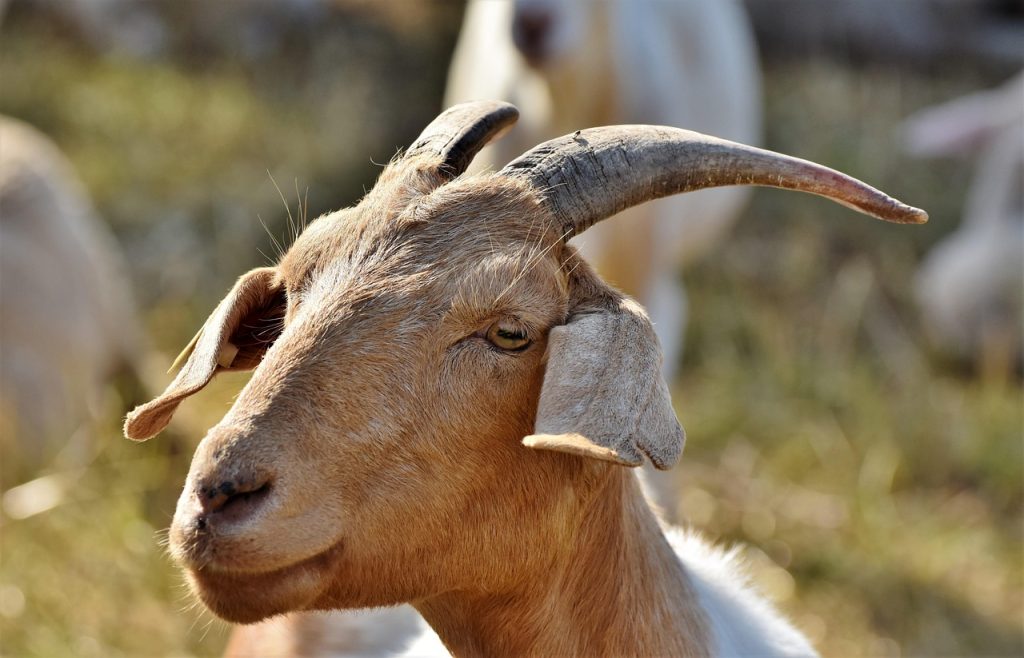
The West African Dwarf (WAD) goat is common in southern Nigeria and the humid forest zone. It is a relatively small breed but is known for hardiness, adaptability and resistance to some diseases and parasites. It is also capable of producing twins and triplets, making reproductive performance one of its important characteristics.
The Red Sokoto, also called the Maradi goat, is particularly associated with northwestern Nigeria, including Sokoto, Zamfara and Katsina. It is valued for meat and its skin, which has historically been important to the leather industry. It generally performs better in drier environments than in humid southern conditions.
The Sahel goat is adapted to the northern dry and semi-arid environment. It is larger and longer-legged than the WAD and is suited to hot, dry conditions.
A farmer should therefore avoid choosing a breed simply because it looks large or commands a high market price. A goat that performs well in one ecological zone may not perform equally well in another. Breed, climate, feed availability and disease pressure should be considered together.
Systems of Goat Farming
Goat production in Nigeria can generally be divided into extensive, semi-intensive and intensive systems.
In the extensive system, goats roam and obtain much of their feed from natural vegetation, crop residues and available grazing areas. It requires relatively little capital, but uncontrolled grazing can result in slower growth, exposure to disease and parasites, theft, accidents and seasonal shortages of feed.
The semi-intensive system combines grazing with housing and supplementary feeding. Goats may browse during the day and return to a secure shelter at night. This approach can provide a useful balance between lower feeding costs and better control of the animals.
In an intensive system, goats are kept largely or completely within a controlled environment and the farmer provides their feed, water and healthcare. This requires greater investment in housing and feeding but gives the farmer much greater control over breeding, nutrition, growth and security.
For many commercial farmers, a well-managed semi-intensive system can be a practical starting point because it reduces some of the disadvantages of unrestricted grazing while avoiding the full cost of intensive production.
Feeding Goats for Growth and Profit
One of the major advantages of goats is their ability to utilise a wide variety of browse plants, grasses and agricultural residues. Goats are browsers by nature and can consume a broad range of vegetation.
However, low-cost feeding should not be confused with inadequate feeding.
A goat intended for breeding, growth or fattening needs adequate energy, protein, minerals and clean water. Depending on the production system, farmers can use grasses, legumes, tree leaves, crop residues and supplementary concentrates.
Young goats require particular attention because poor nutrition during early growth can reduce their eventual performance. Pregnant and lactating does also require better nutrition than animals maintained only for survival.
Feed costs can be reduced by producing or conserving forage on the farm. Farmers can also take advantage of crop residues after harvesting. This creates an important link between crop and livestock farming: maize stalks, cowpea residues, groundnut haulms and other agricultural by-products can become livestock feed when properly managed.
The objective should not simply be to minimise feeding expenses. It should be to achieve the lowest reasonable cost of producing marketable weight and healthy offspring.
Breeding Goats as a Business
Breeding is one of the most attractive features of goat farming because the enterprise can expand through reproduction rather than requiring the farmer to purchase every animal.
Good breeding stock should have sound body structure, good reproductive history, good maternal characteristics and no obvious disease or deformity. NAERLS recommends selecting does for characteristics such as early maturity, good maternal ability and healthy reproductive history, while bucks should be healthy, fertile, active and free from deformities. It also recommends avoiding close relationships between breeding animals to reduce inbreeding.
A farmer should maintain records of:
- Date of mating
- Buck used
- Expected kidding date
- Number of kids born
- Kid survival
- Birth weight where possible
- Growth performance
- Health treatments
- Breeding history of each doe
NAERLS gives a general mating guideline of approximately one healthy, proven buck for 20–30 does, although actual requirements depend on the buck, management system and breeding programme.
The objective of a breeding farm should therefore be more than simply increasing the number of goats. The goal is to progressively build a herd with better reproductive performance, growth, health and market characteristics.
Goat Fattening: A Shorter Commercial Model
Farmers who do not want to maintain a large breeding herd can concentrate on goat fattening.
The basic model is straightforward:
Buy under-finished goats → Feed and manage them → Increase body condition and weight → Sell when market conditions are favourable.
This model can be particularly attractive before periods of high demand. Goats may command stronger prices around major religious celebrations and festive periods, although prices vary considerably by location, breed, size and market conditions.
The important calculation is not simply how much the farmer paid for the goat. The farmer should calculate:
Total Cost = Purchase Price + Feed + Veterinary Costs + Labour + Transport + Housing + Other Expenses
Then:
Profit = Selling Price – Total Cost
For example, a farmer might hypothetically purchase a goat for ₦120,000, spend ₦20,000 on feed and supplements, ₦5,000 on veterinary care and ₦5,000 on transport and other expenses. The total cost would be ₦150,000. If the goat is eventually sold for ₦180,000, the difference would be ₦30,000 before considering any additional overheads.
This is an illustrative example, not a current market price or guaranteed return. Actual goat prices in Nigeria vary significantly by location, season, breed, size and market demand.
The farmer’s real skill lies in buying correctly, controlling costs and selling at the right time.
Housing and Health Management
Good goat housing does not have to be expensive, but it must keep animals dry, secure and reasonably comfortable.
The shelter should have adequate ventilation, protection from rain and excessive heat, good drainage and sufficient space. Raised or well-drained flooring can help reduce prolonged exposure to moisture and manure.
Housing also helps the farmer control breeding, monitor sick animals, protect young kids and reduce theft.
Health management is equally important. Goats can suffer from parasites, respiratory diseases, gastrointestinal problems and other conditions. Peste des petits ruminants (PPR) is particularly important in small-ruminant production, and farmers should work with veterinary professionals on appropriate vaccination and disease-control programmes.
A goat that looks healthy today can quickly become a financial loss if disease or parasites reduce its growth or reproductive performance.
The Goat Value Chain in Nigeria
The commercial opportunity in goats extends beyond selling live animals.
The value chain includes:
Breeding → Kid production → Growing/fattening → Aggregation → Transportation → Live-animal markets → Slaughter → Meat distribution → Restaurants/retail → Hides and skins
There are also opportunities in goat milk, breeding stock, processed meat, leather and manure.
This means entrepreneurs do not necessarily need to become large goat farmers to participate in the industry. Someone with good market access could become a goat aggregator. Another entrepreneur could specialise in feed production, veterinary services, transportation, slaughter and processing, cold-chain logistics or retail.
The Red Sokoto goat, for example, has particular relevance beyond meat because its skin has been recognised for its leather value.
This wider value chain creates opportunities for businesses that can connect producers with processors and consumers.
Where Is Goat Farming Suitable in Nigeria?
Goat farming can be carried out across much of Nigeria, but the production system should be adapted to the environment.
Northern Nigeria has large goat populations, particularly in states such as Zamfara, Katsina and Jigawa. The dry environment is particularly suitable for breeds adapted to the north, while southern Nigeria has significant populations of West African Dwarf goats.
The best location for a commercial farm should provide access to:
- Affordable land
- Reliable water
- Feed or browse resources
- Veterinary services
- Labour
- Transportation
- Secure housing
- A viable market
Market access is particularly important. A farmer who can produce cheaply but has to transport animals over long distances to find buyers may lose much of the advantage through logistics costs.
Is Goat Farming Profitable in Nigeria?
Goat farming can generate income through several different models: breeding, kid production, fattening, milk, meat, breeding-stock sales and hides and skins.
The profitability of a farm depends on the relationship between animal productivity and market price.
For a breeding operation, the farmer should focus on the number of healthy kids produced and successfully raised to market age. A doe that consistently produces healthy twins and raises them successfully can have considerably more economic value than a larger but poorly reproductive animal.
For fattening, the key measure is the cost of adding marketable weight.
For example:
Cost per kg of weight gained = Additional production cost ÷ Additional live weight gained
This is a more useful commercial measure than simply looking at how much a goat increased in selling price.
A profitable goat enterprise therefore requires good purchasing decisions, low mortality, efficient feeding, controlled breeding and reliable market information.
Common Challenges in Goat Farming
The most common challenges include disease, parasites, inadequate nutrition, theft, poor housing, weak breeding programmes, mortality among young kids and limited access to reliable market information.
Traditional systems can also make it difficult to keep accurate production records. Without records, farmers may not know which does are productive, which bucks produce the best offspring or how much each animal actually costs to raise.
The Nigerian sheep and goat value chain has also been identified as facing challenges including low genetic potential, feed shortages, inadequate animal-health services, poor housing and weak market information and linkages.
Commercialisation therefore requires a shift from simply keeping goats to deliberately managing a goat-production business.
Frequently Asked Questions
Is goat farming profitable in Nigeria?
It can be profitable when animals are efficiently produced or purchased, mortality is controlled, feeding costs are managed and animals are sold into suitable markets. Profit is not guaranteed and varies by production model and location.
Which goat breed is best for Nigeria?
There is no single best breed for every location. West African Dwarf goats are well adapted to humid southern environments, Red Sokoto goats are strongly associated with northwestern Nigeria, while Sahel goats are adapted to drier northern conditions.
How many goats should a beginner start with?
The appropriate number depends on available capital, land, feed, housing and management capacity. A beginner should generally start with a herd size that can be properly monitored rather than purchasing more goats than the available resources can support.
Is goat fattening better than goat breeding?
They are different business models. Fattening can provide a shorter route to market, while breeding builds a productive herd that can generate offspring over multiple production cycles.
What do goats eat?
Goats can consume grasses, browse plants, legumes and various agricultural residues. Supplementary concentrates and minerals may be required depending on the animal’s age, production purpose and available forage.
Can goats be raised in urban or peri-urban areas?
Small-scale goat keeping can be possible in peri-urban areas, but farmers need to consider land availability, waste management, noise, odour, zoning requirements, security and access to feed and water.
Commodity.ng Insight
Goat farming is often underestimated because goats can survive on relatively limited resources. But survival is not the same as productivity.
A commercial goat farmer should think in terms of reproductive efficiency, kid survival, growth rate, feed cost, mortality, market weight and selling price.
Nigeria’s estimated 114.3 million goats demonstrate the size of the underlying market. The opportunity is not necessarily to produce more goats using the same traditional methods. The greater opportunity is to produce healthier, faster-growing and more marketable goats while reducing production losses.
There is also a significant opportunity to improve the connection between farmers and markets. A farmer who knows the prevailing price in different markets can make better decisions about where and when to sell. An aggregator with reliable market information can source animals from lower-priced locations and supply markets with stronger demand. Processors can use information about supply to plan purchasing and production.
This is where agricultural market intelligence becomes important.
Commodity.ng can help connect the production side of goat farming with the market side—bringing together commodity prices, agricultural information and market intelligence so farmers, traders, processors and investors can make better-informed decisions.
The future of goat farming in Nigeria is therefore not simply about keeping larger herds. It is about building productive herds, efficient value chains and better-informed markets.
Discover more from Commodity Nigeria
Subscribe to get the latest posts sent to your email.