
How Nigerians Can Leverage Artificial Intelligence (AI) to Increase Farm Yields and Profits.
Artificial Intelligence (AI) is no longer a technology reserved for Silicon Valley, multinational corporations, or futuristic laboratories. It is rapidly becoming one of the most powerful tools available to farmers worldwide, and Nigerian farmers stand to benefit enormously.
As Nigeria battles food inflation, climate change, insecurity, rising production costs, and declining farm productivity, AI presents a unique opportunity to transform agriculture from a largely experience-driven activity into a data-driven enterprise.
For many farmers, the term Artificial Intelligence may sound complex or expensive. However, AI is already embedded in many technologies Nigerians use every day, from smartphones and navigation apps to digital assistants and social media platforms. The same technology can now help farmers make smarter decisions, reduce losses, improve yields, and increase profitability.
The future of farming may not belong to those with the largest farms, but to those who make the smartest decisions.
Understanding AI in Agriculture
Artificial Intelligence refers to computer systems that can analyze information, identify patterns, make predictions, and provide recommendations that help people make better decisions.
In agriculture, AI can process vast amounts of data relating to weather, soil conditions, crop health, pests, diseases, market prices, and farm operations.
Rather than relying solely on guesswork or traditional practices, farmers can use AI-generated insights to determine the best time to plant, irrigate, apply fertilizer, harvest, and sell their produce.
This can significantly reduce risk while improving productivity.
Predicting Weather More Accurately
One of the biggest challenges facing Nigerian farmers is unpredictable weather.
Late rains, prolonged droughts, flooding, and changing seasonal patterns often lead to poor harvests and financial losses.
AI-powered weather forecasting tools can provide more accurate and localized weather predictions than traditional forecasts.
Farmers can receive early warnings about heavy rainfall, drought conditions, heat stress, or storms, allowing them to adjust planting schedules and protect crops before damage occurs.
For rain-fed agriculture, which dominates much of Nigeria’s farming landscape, accurate weather intelligence can be the difference between profit and loss.
Early Detection of Pests and Diseases
Pests and crop diseases destroy billions of naira worth of agricultural produce every year in Nigeria.
AI-powered applications can now analyze photographs taken with smartphones and identify crop diseases within seconds.
A farmer can simply take a picture of an infected leaf, upload it to an AI-powered platform, and receive a likely diagnosis along with treatment recommendations.
This allows farmers to intervene earlier before infestations spread across entire farms.
Early detection reduces chemical usage, lowers production costs, and minimizes crop losses.
Smarter Fertilizer Application
Many farmers either under-apply or over-apply fertilizer because they lack precise information about soil nutrient requirements.
AI tools can analyze soil data and recommend exactly what nutrients are needed and in what quantities.
This prevents waste, reduces costs, improves soil health, and increases crop productivity.
Instead of applying fertilizer uniformly across a farm, farmers can target specific areas that require attention, leading to higher efficiency and better returns on investment.
Improving Irrigation Efficiency
Water management is becoming increasingly important as climate change intensifies.
AI-powered irrigation systems can determine when crops need water and how much water should be applied.
This prevents overwatering and underwatering while conserving scarce water resources.
For farmers using irrigation systems, AI can significantly improve water-use efficiency and crop performance.
Helping Farmers Access Better Markets
AI is not only useful on the farm; it can also improve marketing and sales.
Digital platforms powered by artificial intelligence can analyze commodity prices across different markets and help farmers identify the best places and times to sell their produce.
Instead of relying on middlemen for pricing information, farmers can use data-driven insights to negotiate better prices and maximize profits.
AI can also help aggregate demand from buyers, reducing market inefficiencies and connecting farmers directly to consumers, processors, and exporters.
AI-Powered Farm Record Keeping
One of the biggest weaknesses in Nigerian agriculture is poor record management.
Many farmers do not keep detailed records of expenses, yields, input usage, or profits.
AI-powered farm management systems can automate record keeping and generate reports that help farmers understand what is working and what is not.
These insights make it easier to improve future production decisions and access agricultural financing.
Banks and investors are often more willing to support farmers who can demonstrate accurate production and financial records.
Livestock Farming and AI
Livestock farmers are also beginning to benefit from artificial intelligence.
AI tools can monitor animal health, feeding patterns, growth rates, breeding cycles, and disease risks.
Wearable devices and smart sensors can alert farmers when animals are sick, reducing mortality rates and improving productivity.
Poultry, dairy, and cattle farmers can all leverage AI to improve efficiency and profitability.
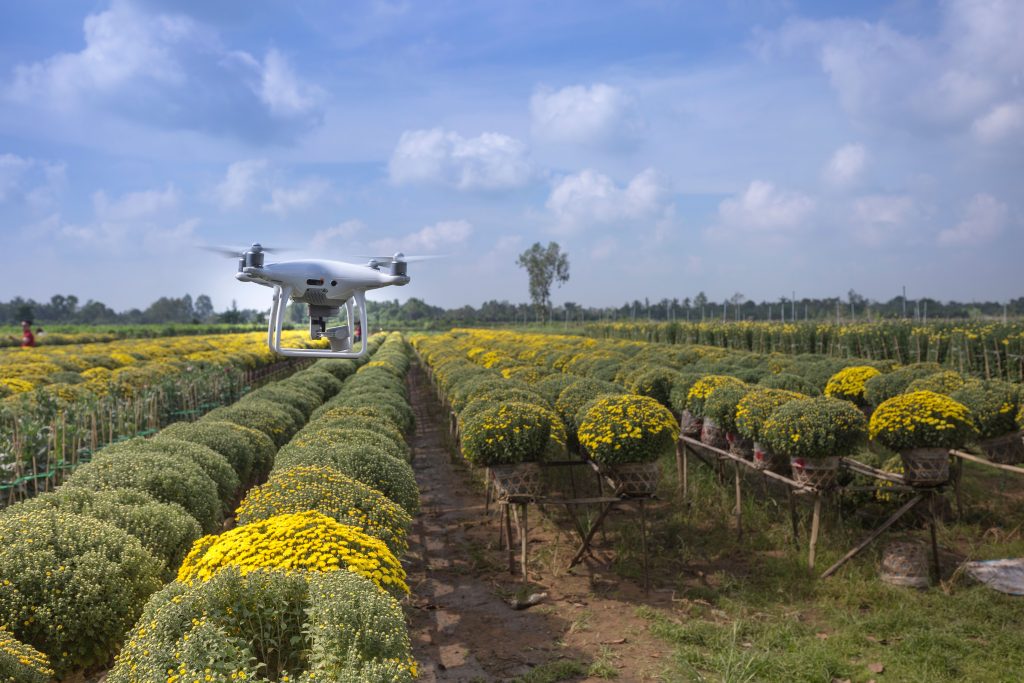
Drones and Precision Agriculture
Artificial Intelligence is increasingly being integrated into agricultural drones.
These drones can survey large areas of farmland, identify stressed crops, detect pest infestations, and map fields with remarkable accuracy.
Instead of manually inspecting hundreds of hectares, farmers can obtain detailed field assessments within minutes.
This enables faster decision-making and more precise farm management.
As drone services become more affordable in Nigeria, adoption is expected to increase significantly.
AI for Smallholder Farmers
Perhaps the most exciting aspect of AI is that it is becoming increasingly accessible to smallholder farmers.
A farmer does not need expensive machinery or advanced technical knowledge to begin benefiting from artificial intelligence.
A smartphone, internet connection, and willingness to learn are often enough to access weather forecasting tools, AI-powered advisory services, market information systems, and digital learning platforms.
This democratization of technology means that even small-scale farmers can compete more effectively in modern agricultural markets.
Challenges to Adoption
Despite its enormous potential, AI adoption in Nigerian agriculture still faces obstacles.
Limited internet connectivity, low digital literacy, inadequate rural infrastructure, and the cost of technology remain significant barriers.
Many farmers are also unaware of the available tools and how they can be applied in daily farming operations.
Addressing these challenges will require collaboration among government agencies, agritech companies, research institutions, development organizations, and farmer associations.
Training and education will be critical to ensuring that farmers can fully utilize emerging technologies.
The Future of Farming Is Intelligent
Agriculture is entering a new era.
The days when farming depended entirely on intuition and tradition are gradually giving way to data, technology, and intelligent decision-making.
Countries that successfully integrate artificial intelligence into agriculture are likely to enjoy higher productivity, improved food security, stronger export competitiveness, and more resilient farming systems.
For Nigeria, where agriculture remains one of the largest employers and a cornerstone of economic development, AI represents a powerful opportunity to increase food production and improve farmer incomes.
The message is clear: Artificial Intelligence will not replace farmers. However, farmers who embrace Artificial Intelligence may increasingly outperform those who do not.
The future of Nigerian agriculture will belong to those who combine the wisdom of traditional farming with the power of modern technology.
Commodity.ng Insight
The adoption of Artificial Intelligence could become one of the most important developments in Nigerian agriculture over the next decade. While mechanisation helped transform agriculture in the 20th century, AI has the potential to drive the next wave of productivity growth.
The most immediate opportunities for Nigerian farmers lie in AI-powered weather forecasting, disease detection, market intelligence, farm management, and precision agriculture. Many of these tools are already accessible through smartphones.
What This Means for Nigerian Agriculture
- Better decision-making and higher yields.
- Reduced crop losses from pests and diseases.
- Improved fertilizer and water efficiency.
- Better market access and pricing transparency.
- Increased profitability for smallholder farmers.
- Greater resilience against climate change.
Bottom Line
Artificial Intelligence is no longer a future technology—it is becoming a practical farming tool. As access improves and awareness grows, AI could help Nigerian farmers produce more food, reduce waste, increase profits, and strengthen the country’s long-term food security. The farmers who begin learning and adopting these technologies today may become the agricultural leaders of tomorrow.
Discover more from Commodity Nigeria
Subscribe to get the latest posts sent to your email.



077pub, eh? Name sounds interesting. I’m always up for new experiences. Let’s see what this has to offer! Maybe I’ll find my new favorite thing. Worth a click: 077pub.