

Poor Energy Supply Threatens Nigeria’s Food Security, Bank of Agriculture Warns
Nigeria’s ambition to achieve food security is facing a major obstacle beyond access to farmland, fertilisers, and improved seeds. The country’s persistent electricity shortage is increasingly undermining agricultural productivity, food processing, storage, and the livelihoods of millions of rural farmers.
The Bank of Agriculture (BoA) has warned that inadequate energy infrastructure has become one of the biggest barriers to modern agriculture, limiting farmers’ ability to increase production, reduce post-harvest losses, and add value to agricultural produce.
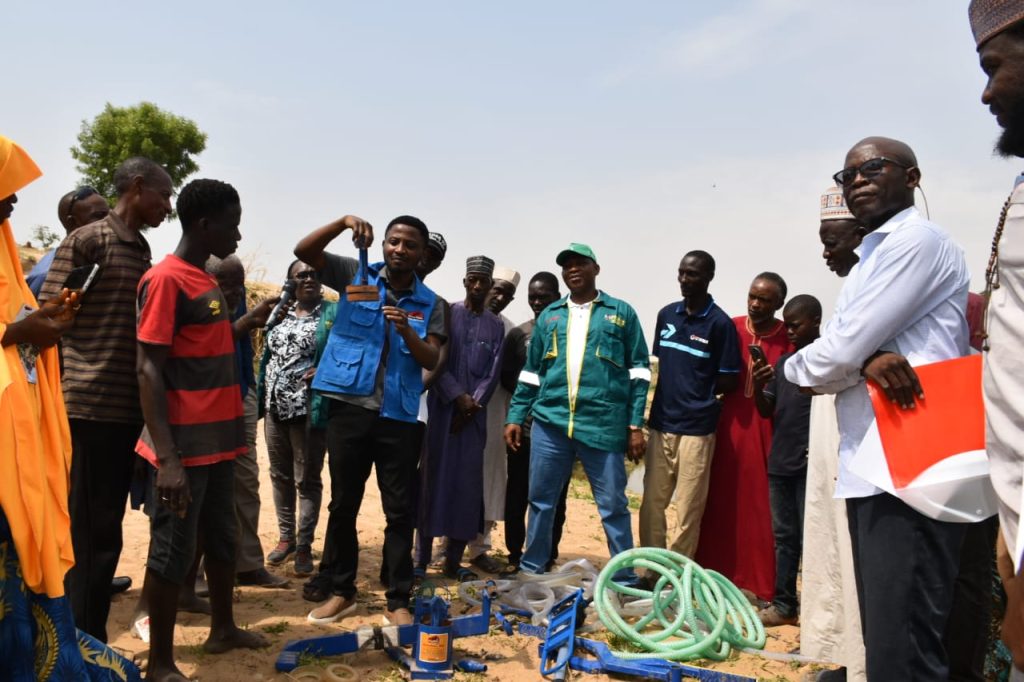
The warning was issued during a capacity-building workshop on the Clean Energy Access Framework (CEAF) held in Kaduna. The programme was organised by the Bank of Agriculture in partnership with DalaHill LP and funded by the Africa Climate Foundation (ACF).
Millions of Nigerians Still Lack Electricity
Speaking at the workshop, the Head of the Clean Energy Delivery and Innovation Unit at the Bank of Agriculture, Dr. Adnan Aminu, revealed that approximately 86.8 million Nigerians—representing 46.4 percent of the population—still lack access to electricity.
He further disclosed that more than 120,000 farming communities across Nigeria remain without reliable power, leaving farmers dependent on expensive diesel generators and petrol-powered equipment.
According to Aminu, the energy crisis affects virtually every segment of the agricultural value chain.
“Agriculture requires energy not only for production but also for processing, storage, value addition and virtually every stage of the agricultural value chain. What we are doing is positioning the Bank of Agriculture to credibly finance clean energy solutions for the sector,” he said.
Renewable Energy to Power Nigerian Agriculture
To address the challenge, the Bank of Agriculture is developing a Clean Energy Access Framework (CEAF) that will guide financing for renewable energy projects across Nigeria’s agricultural sector.
The framework will support investments in:
- Solar-powered irrigation systems
- Solar cold storage facilities
- Mini-grids for rural farming communities
- Renewable energy-powered agro-processing equipment
- Clean energy solutions for agricultural enterprises
According to Aminu, the framework is expected to be completed before the end of the month, after which the bank will begin mobilising funding from development partners, government institutions, and private investors.
He explained that the bank intends to provide financing ranging from ₦500,000 to ₦5 million for small-scale renewable energy projects, while larger commercially viable projects will receive higher levels of funding.
Tackling Post-Harvest Losses
One of the major benefits of clean energy adoption, according to BoA officials, is the reduction of Nigeria’s enormous post-harvest losses.
Head of Strategy and Performance Management at the Bank of Agriculture, Ogaruwu Anselm, noted that thousands of farmers lose substantial portions of their harvest because of inadequate storage facilities.
He explained that renewable energy-powered cold storage systems could dramatically improve food preservation.
“Most agricultural belts experience huge post-harvest losses because farmers lack adequate storage facilities. Clean energy-powered cold chains will help preserve produce, improve farmers’ incomes and strengthen Nigeria’s food security,” he said.
Improved cold-chain infrastructure would also enable farmers to sell produce when market prices are favourable instead of rushing to dispose of perishable goods immediately after harvest.
Unlocking Climate Finance for Agriculture
Project Manager at DalaHill LP, Toby Ilori, said Nigeria possesses enormous agricultural potential but has struggled to attract sufficient international climate finance because institutions require stronger technical capacity and implementation frameworks.
She explained that DalaHill is supporting the Bank of Agriculture in building the institutional systems needed to attract climate-related investments into agriculture.
According to her, improving access to renewable energy will strengthen agricultural supply chains, processing activities, storage facilities, and export competitiveness.
“We have the land, we have the people and we have the knowledge. What has been missing is the infrastructure and financing framework needed to unlock Nigeria’s agricultural potential,” she said.
Clean Energy Could Transform Nigerian Farming
Industry experts believe that affordable renewable energy could transform agriculture by reducing operating costs while improving productivity.
Solar-powered irrigation systems can enable farmers to cultivate crops throughout the year instead of relying solely on seasonal rainfall.
Renewable-powered processing facilities can help farmers add value to agricultural commodities such as rice, cassava, maize, cocoa, tomatoes, fruits, and vegetables before they reach the market.
Similarly, mini-grids serving rural farming clusters could support agro-processing centres, storage facilities, hatcheries, fish farms, dairy production, and other agribusiness activities that currently struggle with unreliable electricity.
Climate-Smart Agriculture
The Clean Energy Access Framework also aligns with Nigeria’s broader climate-smart agriculture agenda by reducing dependence on fossil fuels while promoting sustainable agricultural production.
Renewable energy technologies are expected to lower greenhouse gas emissions, improve resilience to climate change, and expand access to international climate finance for agricultural projects.
The initiative forms part of the Catalyzing Clean Energy Solutions for Agricultural Value Chains Project, which has established a dedicated Clean Energy Delivery and Innovation Unit within the Bank of Agriculture.
The unit will coordinate renewable energy financing while developing a pipeline of bankable projects capable of attracting domestic and international climate investment.
A Critical Step Toward Food Security
As Nigeria continues to battle rising food prices, post-harvest losses, and climate-related challenges, experts argue that improving access to clean and reliable energy may prove just as important as fertiliser distribution, mechanisation, irrigation, and improved seeds.
Without dependable electricity, farmers remain constrained by high production costs, limited storage capacity, and reduced processing opportunities.
The Bank of Agriculture’s clean energy initiative therefore represents more than an energy intervention—it is a strategic effort to improve agricultural productivity, strengthen rural livelihoods, reduce food waste, and move Nigeria closer to achieving long-term food security.
Discover more from Commodity Nigeria
Subscribe to get the latest posts sent to your email.



This spot wraps around me like a trusted friend who knows exactly which slot machine brings out my lucky side. The reels dance beautifully and I always hear a sweet ringing sound when my balance jumps. My go to spot for weekend vibes. 88luckyslot