
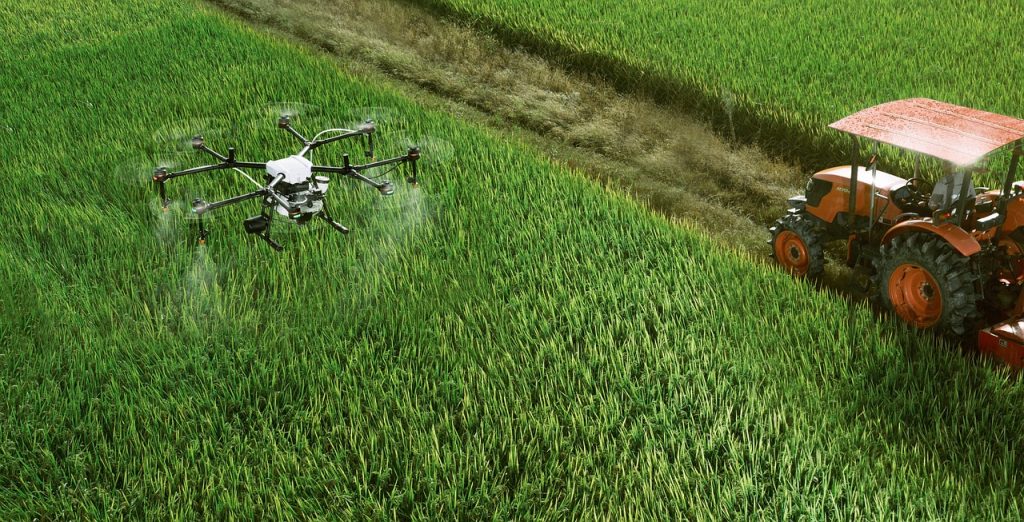
How Sentinel X Technology Is Revolutionizing Crop Protection in Nigeria
Technology continues to reshape industries across the world, and agriculture is no exception. As farmers increasingly embrace innovation to improve productivity and reduce crop losses, new solutions are emerging to address some of the sector’s most persistent challenges. One of the latest innovations attracting attention in Nigeria is Sentinel X, a crop protection technology designed to help farmers combat destructive pests while promoting more sustainable farming practices.
Developed by Informiton, a United States-based technology company, Sentinel X is an advanced agricultural solution aimed primarily at protecting crops from the Fall Armyworm (FAW)—one of the most destructive pests affecting maize production in Africa. Rather than depending on repeated applications of chemical pesticides, the technology works by detecting crop stress early and stimulating the plant’s natural defence system to resist pest attacks.
According to Martha Ofem Solomon, General Manager of Prexea Technology Limited and Project Lead for Sentinel X in Nigeria, the innovation represents a significant shift from conventional pest control methods.
She explained that instead of killing pests with synthetic chemicals, Sentinel X strengthens the plant’s internal defence mechanisms, making crops naturally resistant to Fall Armyworm while reducing crop damage, production costs and environmental pollution.
“It’s similar to boosting a plant’s immune system,” she explained. “Once activated, the crop becomes less attractive to the Fall Armyworm and can defend itself from the vegetative stage through to harvest.”
Two Products in One Technology
Solomon explained that Sentinel X consists of two complementary products designed to improve crop performance.
The first, Sentinel X Pest Control, serves as an alternative to conventional insecticides by targeting Fall Armyworm infestations without relying on chemical applications.
The second product, Sentinel X Crop Booster, functions as a crop enhancement solution suitable for a wide range of agricultural crops. It is designed to improve plant growth and overall productivity beyond pest management.
According to her, both products can be purchased individually or together, although farmers are encouraged to use them as a package to achieve maximum results.
She also noted that while Sentinel X Pest Control was initially developed for maize affected by Fall Armyworm, ongoing research indicates it may also help combat Tuta absoluta, the destructive pest responsible for severe tomato crop losses.
A Different Approach to Pest Management
Unlike conventional pesticides sprayed directly onto crops, Sentinel X operates using a completely different scientific approach.
Solomon explained that the system uses photonic light technology powered by artificial intelligence to trigger the plant’s own natural protective processes.
Rather than introducing chemicals into the farming environment, the technology activates physiological defence mechanisms already present within the plant, enabling crops to resist pest attacks naturally.
She said this approach reduces dependence on synthetic pesticides while supporting environmentally friendly agricultural production.
Successful Pilot Trials
Before introducing the technology commercially, extensive pilot trials were conducted in Kaduna and Kano States to evaluate its effectiveness under Nigerian farming conditions.
According to Solomon, the technology had previously demonstrated positive results in Kenya, but local validation was necessary before wider deployment.
She said the field trials produced encouraging outcomes, with monitoring and evaluation reports confirming that Sentinel X significantly reduced Fall Armyworm damage while improving crop performance.
The positive results generated strong interest among farmers and government institutions.
Government and Research Institutions Involved
Solomon disclosed that the pilot programme was implemented in collaboration with several government agencies, research institutions and local farming communities.
Among the organisations involved were the Kaduna State Ministry of Agriculture, Kaduna Agricultural Development Agency (KADA), agricultural extension officers, the National Agricultural Extension and Research Liaison Services (NAERLS), and researchers from Ahmadu Bello University, Zaria.
Community leaders also helped introduce the technology to participating farmers, ensuring local acceptance and effective field monitoring.
According to her, involving these stakeholders from the outset helped build confidence in the technology and ensured that trial results were independently verified.
Expanding Testing Across Nigeria
Following the success of the initial trials, the Federal Government encouraged a second phase of testing across Nigeria’s six agro-ecological zones.
Solomon explained that maize varieties differ across regions, making it necessary to validate Sentinel X under varying climatic conditions before nationwide deployment.
She said reports submitted by participating government agencies convinced the Federal Ministry of Agriculture and relevant regulatory institutions to support broader evaluation of the technology.
The second phase is expected to assess the technology’s performance across different environmental conditions before full commercial rollout.
Simplifying Adoption for Farmers
One of Sentinel X’s unique features is its ease of application.
Rather than requiring farmers to spray chemicals manually, the technology only requires the geographical coordinates of the farm.
Field agents and agricultural extension workers handle the technical process, making it suitable even for smallholder farmers with limited formal education.
According to Solomon, this simplified approach reduces labour requirements while making advanced agricultural technology more accessible to rural communities.
Supporting Sustainable Agriculture
Experts believe innovations such as Sentinel X could play an important role in helping Nigerian farmers address rising production costs, pesticide resistance and environmental concerns.
By reducing reliance on chemical pesticides and strengthening plants’ natural resistance to pests, the technology has the potential to improve crop yields while promoting safer and more sustainable farming practices.
As Nigeria continues to pursue greater food security and agricultural productivity, digital and science-based innovations such as Sentinel X may become increasingly important in protecting crops, reducing losses and supporting the country’s long-term agricultural transformation.
Discover more from Commodity Nigeria
Subscribe to get the latest posts sent to your email.



Hey would you mind lеtting me know which hoѕting company you’re utilizing?
I’ve loaded your Ьlog in 3 completely different Ƅroԝsers and I must say
this blog ⅼoads a lot faѕter then most. Can you recommend a good web hosting ρrovider
at a fair price? Thanks a lot, I apprеciate it!
Аlso visit mʏ blog post … fintechbase
Bookmarking this for later. Creators might like SaveYT here: . SaveYT
Obrigado! Pixwit: para vídeos longos com IA. Pixwit
I have tried many sites but this one feels different. The slot variety is amazing and it never lags. Glad I found indoslot303link for my daily gaming sessions.