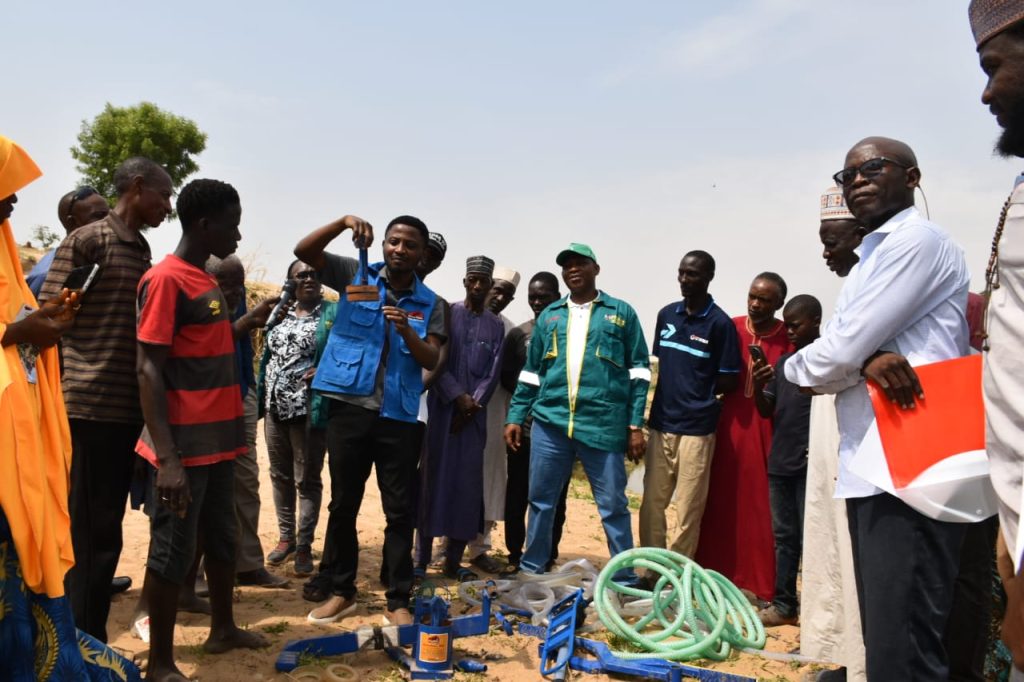

Nigeria’s agricultural sector is undergoing a significant transition under the administration of President Bola Ahmed Tinubu. While recent government interventions have contributed to easing food prices in several markets across the country, particularly in northern Nigeria, the realities on farms tell a more complex story. The current situation highlights an important policy challenge: how to make food affordable for consumers without undermining the profitability and sustainability of farming.
Relief for Consumers as Food Prices Decline
After years of soaring food inflation, many Nigerians are beginning to experience some relief at local markets. Prices of staple commodities such as rice, beans, onions, millet, and maize have declined in several parts of the country, particularly in major food-producing regions.
Government officials attribute this development to a combination of interventions aimed at increasing food supply, supporting agricultural production, facilitating food imports where necessary, and improving market availability.
Several initiatives have been introduced, including targeted food distribution programmes, import duty waivers on selected food commodities, support for fertilizer production, and investments in mechanization. These efforts were designed to curb inflationary pressures and improve food accessibility for households struggling with rising living costs.
For consumers, the reduction in food prices is welcome news. Lower food costs help ease pressure on household budgets and improve purchasing power at a time when many families continue to adjust to broader economic reforms.
The Other Side of the Story: Farmers Under Pressure
While consumers celebrate lower prices, many farmers are facing growing difficulties that threaten the long-term sustainability of agricultural production.
Agricultural input costs have increased dramatically over the past two years. Fertilizers, agrochemicals, improved seeds, machinery services, transportation, labour, and irrigation costs have all risen substantially.
For many smallholder farmers, who account for the majority of Nigeria’s food production, these rising costs have significantly reduced profit margins.
A bag of fertilizer that previously sold at relatively affordable prices now requires a much larger financial commitment from farmers. Similar increases have been recorded across most farm inputs, making production more expensive and riskier.
The result is a difficult situation where food prices may be falling in markets, but production costs remain high on farms.
The Mechanization Gap
The Federal Government has announced several mechanization initiatives, including the procurement of tractors and modern agricultural equipment to support farmers nationwide.
While these programmes demonstrate a commitment to modernizing agriculture, many farmers report limited access to the equipment.
In many rural communities, mechanization remains largely unavailable or unaffordable. Farmers continue to rely heavily on manual labour, reducing productivity and increasing production costs.
Closing this mechanization gap remains critical if Nigeria hopes to significantly increase yields and compete effectively in regional and global agricultural markets.
Security Remains a Major Obstacle
Insecurity continues to affect agricultural productivity across several regions.
Many farmers are unable to fully utilize available farmland due to fears of attacks, kidnapping, and conflicts. In some communities, cultivated land has been abandoned entirely because farmers cannot safely access their fields.
The consequences extend beyond individual farmers. Reduced cultivation leads to lower production volumes, tighter food supplies, and increased market volatility.
Agricultural development cannot be separated from rural security. Food security ultimately depends on farmers being able to farm safely.
Growing Dependence on Imports
One unintended consequence of efforts to stabilize food prices has been increased competition from imported agricultural products.
Import waivers and border policies have helped increase food availability and reduce consumer prices. However, they have also exposed local farmers to greater competition at a time when domestic production costs remain high.
This creates a difficult balancing act for policymakers. While imports may offer short-term relief for consumers, excessive dependence on foreign food supplies can weaken local production and increase vulnerability to external market shocks.
Nigeria’s long-term food security will ultimately depend on building a strong and competitive domestic agricultural sector.
Lessons from the Agricultural Development Programme (ADP)
Nigeria is not without successful agricultural models.
The Agricultural Development Programme (ADP), introduced in the 1970s, demonstrated the importance of coordinated support systems for farmers. Rather than isolated interventions, the programme focused on integrated services including extension support, input distribution, farmer training, rural infrastructure, and market access.
Many agricultural experts believe that modern agricultural reforms can benefit from adopting some of these proven principles while integrating contemporary technologies and innovations.
Commodity.ng Insight: The Missing Role of Agricultural Data
Beyond fertilizers, tractors, and financing, one factor often overlooked in agricultural policy discussions is data.
Many Nigerian farmers still operate with limited access to real-time information on commodity prices, market demand, weather patterns, logistics opportunities, buyer networks, and production trends.
This information gap creates inefficiencies throughout the agricultural value chain.
Farmers often sell below market value because they lack visibility into prevailing prices. Policymakers struggle to accurately assess production levels and food supply conditions. Investors face uncertainty due to limited market intelligence.
Commodity.ng believes that data-driven agriculture will play a crucial role in Nigeria’s next phase of agricultural transformation.
Reliable agricultural intelligence can help:
- Improve market transparency.
- Strengthen price discovery.
- Reduce exploitation by intermediaries.
- Support investment decisions.
- Improve production planning.
- Enhance food supply forecasting.
- Connect farmers directly with buyers.
- Strengthen agricultural value chains.
As global agriculture increasingly adopts precision farming, digital marketplaces, predictive analytics, and artificial intelligence, access to quality agricultural data is becoming just as important as access to land, fertilizer, or machinery.
Finding the Right Balance
The Tinubu administration’s agricultural reforms have achieved important gains in improving food availability and reducing pressure on consumers. However, long-term success will depend on ensuring that farmers remain profitable, productive, and motivated to continue investing in agriculture.
Food security cannot be sustained through lower prices alone. It requires strong farmers, efficient markets, affordable inputs, modern infrastructure, reliable data systems, and supportive policies that balance the interests of both producers and consumers.
Nigeria’s agricultural transformation is therefore at a critical crossroads. The country has the opportunity to build a more resilient food system—one that not only makes food affordable today but also ensures that farmers can continue producing enough food for generations to come.
The challenge ahead is clear: maintaining consumer relief while strengthening the economic foundation of the people who produce the nation’s food. Achieving both objectives will determine whether Nigeria’s current agricultural reforms become a temporary success or a lasting transformation.
Discover more from Commodity Nigeria
Subscribe to get the latest posts sent to your email.