
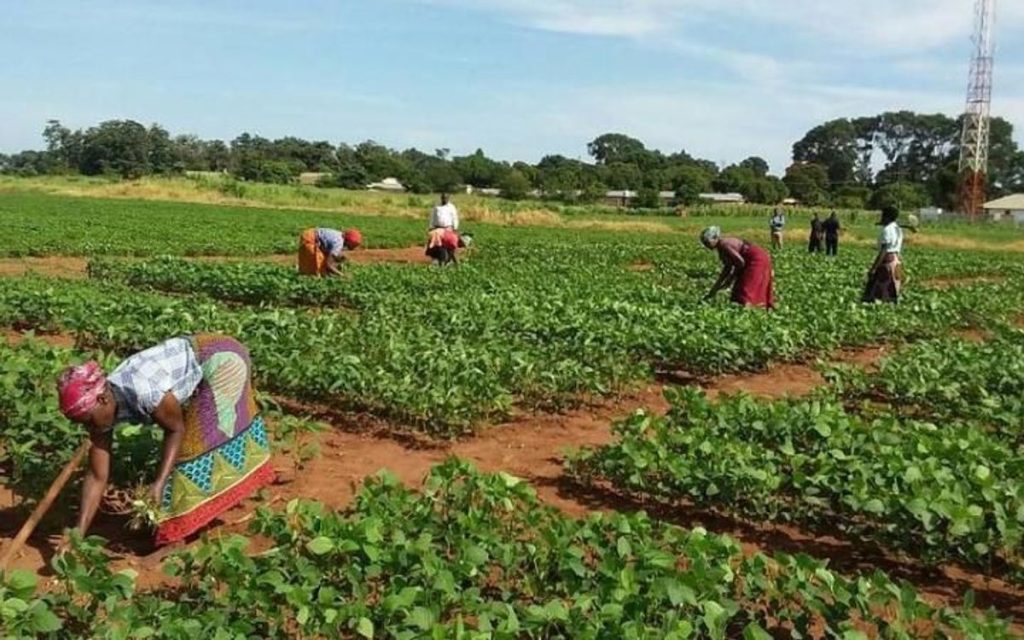
Agriculture, Not Oil, Will Secure Nigeria's Long-Term Prosperity — VP Shettima
…NDDC Launches $500 Million Niger Delta Agriculture Investment Fund
ABUJA — Vice President Kashim Shettima has declared that agriculture, rather than crude oil, will secure Nigeria’s long-term prosperity, as the Federal Government and the Niger Delta Development Commission (NDDC) unveiled a $500 million Niger Delta Agricultural Development and Investment Fund aimed at transforming the region into one of Africa’s leading agricultural investment destinations.
Shettima made the declaration on Wednesday at the Niger Delta Agricultural Development and Investment Summit 2026, held at the Banquet Hall of the Presidential Villa, Abuja. The summit, themed “Unlocking Investment for Sustainable Agricultural Transformation in the Niger Delta,” was jointly organised by the Office of the Vice President and the NDDC.
Addressing policymakers, development partners, financial institutions and investors, the Vice President said sustainable economic growth and national stability can only be achieved by strengthening Nigeria’s agricultural sector and reducing dependence on crude oil.
According to him, agriculture was the backbone of Nigeria’s economy long before petroleum was discovered and remains the country’s greatest opportunity for long-term prosperity.
“Agriculture remains the foundation of civilisation and the surest guarantee of political stability. While oil built the Niger Delta’s economy, agriculture will secure its long-term prosperity,” Shettima said.
The Vice President recalled that Nigeria’s famous groundnut pyramids, cocoa plantations and palm produce once generated the revenue that financed schools, hospitals and public infrastructure across the country.
He noted that the discovery of crude oil shifted national attention away from agriculture, resulting in declining productivity, increased food imports and underinvestment in one of Nigeria’s most strategic sectors.
$500 Million Investment Fund
A major highlight of the summit was the unveiling of the Niger Delta Agricultural Development and Investment Fund, a commercially managed investment vehicle designed to mobilise private and institutional capital across the agricultural value chain.
The fund will support investments in:
- Oil palm production
- Cocoa farming
- Rice cultivation
- Cassava processing
- Aquaculture
- Livestock production
- Horticulture
- Marine resources
- Agro-processing and value addition
According to Shettima, the initiative aligns with financing commitments from major international development institutions, including the World Bank, African Development Bank (AfDB), Islamic Development Bank (IsDB), the European Bank for Reconstruction and Development (EBRD), alongside private and commercial investors.
To ensure effective implementation, the Federal Government also inaugurated the Niger Delta Agricultural Development and Investment Council, which will be chaired by the Vice President, with the NDDC serving as the coordinating secretariat for agricultural investment projects across the nine Niger Delta states.
Supporting Tinubu’s Food Security Agenda
Shettima explained that the initiative complements President Bola Tinubu’s food security agenda, which focuses on increasing domestic food production, improving mechanisation, attracting private investment and reducing food inflation.
He highlighted several ongoing programmes under the Renewed Hope Agenda, including:
- The Renewed Hope Agricultural Mechanisation Programme targeting the deployment of 10,000 tractors over five years.
- The John Deere Tractorisation Programme.
- The Greener Hope Project.
- The Green Imperative Programme.
- Expanded irrigation and climate-smart agriculture initiatives.
According to him, these interventions have already contributed to declining prices of some staple food commodities in parts of the country.
Niger Delta’s Agricultural Potential
The Vice President commended the Niger Delta for embracing agriculture as a new pathway for economic diversification.
He observed that long before crude oil became Nigeria’s dominant export, the region was globally recognised for palm oil production, fisheries and other agricultural commodities.
Shettima said reviving that legacy through modern agribusiness, processing industries and export-oriented agriculture would create employment, reduce poverty and stimulate sustainable economic development.
States Reaffirm Commitment
Representing Akwa Ibom State Governor Umo Eno, Deputy Governor Senator Akon Eyakenyi announced plans to expand the state’s agricultural programme through the establishment of model farms across its three senatorial districts.
She also disclosed that the state had launched a Tree Crop Revolution centred on oil palm development in partnership with the Nigerian Institute for Oil Palm Research (NIFOR) to revive the region’s historical dominance in palm oil production.
Agriculture Ministry Calls for Increased Productivity
The Minister of Agriculture and Food Security, Senator Abubakar Kyari, represented by the Permanent Secretary, Dr. Marcus Ogunbiyi, reaffirmed that food security remains one of the Federal Government’s highest priorities.
He said programmes such as the National Agricultural Growth Scheme and Agro Pocket Programme (NAGS-AP), mechanisation support, irrigation expansion and climate-smart agriculture are being implemented to increase productivity, improve farmers’ incomes and reduce dependence on imported food.
Investors Encouraged to Look Beyond Oil
Minister of Regional Development, Engr. Abubakar Momoh, described the summit as a turning point in Nigeria’s economic transformation.
He urged local and international investors to view the Niger Delta not only as an oil-producing region but as one of Africa’s most promising destinations for agricultural investment.
According to him, investments in mechanisation, processing facilities, digital agriculture, rural infrastructure and youth empowerment would unlock enormous economic opportunities.
NDDC Targets Agricultural Transformation
Earlier, NDDC Managing Director and Chief Executive Officer, Chief Samuel Ogbuku, said the commission launched the investment fund to diversify the region’s economy and reduce dependence on crude oil revenues.
He recalled that before the discovery of petroleum, agriculture and fishing sustained the Niger Delta economy, with cocoa and palm oil serving as major export commodities.
Ogbuku said the gradual exit of international oil companies from onshore operations presents a unique opportunity to reposition agriculture as the next major driver of economic growth.
He cited successful agribusiness investments such as Olam Nigeria as examples of how large-scale agricultural investments can transform rural economies and generate employment.
According to him, Abuja was deliberately selected as the summit venue to attract investors, financial institutions and development partners capable of financing agricultural transformation across the Niger Delta.
Bridging the Investment Gap
The Senior Special Assistant to the President on Agribusiness and Productivity, Dr. Kingsley Uzoma, said the summit was designed to connect the Niger Delta’s vast agricultural potential with the capital, technology and partnerships required for sustainable development.
He explained that the region’s greatest challenge has not been a lack of opportunities but the inability to coordinate investment, institutions and implementation.
“Our goal is to move beyond discussions and leave with stronger partnerships, clearer commitments and a shared roadmap for implementation,” Uzoma said.
A New Economic Direction
Stakeholders at the summit agreed that transforming the Niger Delta into a leading agricultural hub will require sustained collaboration between the Federal Government, state governments, development finance institutions, private investors, farmer cooperatives and local communities.
They noted that with its fertile land, abundant waterways, favourable climate and strategic location, the Niger Delta possesses the resources needed to become a major contributor to Nigeria’s food security, agro-industrial development and non-oil export earnings.
The launch of the $500 million Niger Delta Agricultural Development and Investment Fund is expected to accelerate investment across the region’s agricultural value chain while reinforcing the growing national consensus that agriculture—not oil—holds the key to Nigeria’s long-term economic prosperity.
Discover more from Commodity Nigeria
Subscribe to get the latest posts sent to your email.


The live dealer tables here feel just like sitting at a real casino in Macau. I appreciate how fair the game rounds are and how fast the payouts hit my account. Really trust this platform for my weekend betting sessions. jilibdtv
I have been loyal to this community for quite a while and they keep proving me right every month. The staff actually remembers returning players and the monthly events are always worth jumping into. If you want a place that feels more like a club than a faceless site look no further. Join us at 3166betlogin