How to Grow Maize in Nigeria: A Practical Guide to Maize Farming, Cost, Yield and Profit
Maize is one of Nigeria’s most important agricultural commodities and one of the most widely cultivated crops in the country. It is a major source of food for households and an essential raw material for industries such as poultry, livestock feed, food processing and starch production.
The importance of maize extends far beyond the farm. Its value chain connects farmers with input suppliers, aggregators, traders, transporters, processors, feed manufacturers and consumers. This creates significant opportunities for farmers and agribusinesses, but profitability depends heavily on production costs, yield, market prices and timing.
This guide explains how to grow maize successfully in Nigeria, from choosing the right land and seed to planting, crop management, harvesting, storage, marketing and profitability.
Why Maize Farming Matters in Nigeria
Maize is one of the crops at the centre of Nigeria’s food and agricultural economy. It is consumed directly by households and is also a critical ingredient in animal feed. The poultry industry, in particular, depends heavily on maize, making demand for the crop closely connected to the growth of poultry and livestock production.
Maize is cultivated across many parts of Nigeria, including the North-West, North-Central, North-East and parts of the South. States such as Kaduna, Kano, Katsina, Niger, Benue, Plateau, Nasarawa, Taraba, Bauchi, Gombe, Adamawa, Oyo and several others have significant maize-growing activities.
Its relatively broad geographical adaptability gives farmers opportunities to produce maize under different production systems. However, the choice of variety, planting period and farming practices should always reflect the local climate and market.
How to Grow Maize Successfully
Successful maize production begins with choosing suitable land and quality seed. Maize performs best in fertile, well-drained soils with adequate moisture and good sunlight. Farmers should avoid severely waterlogged fields and, where possible, conduct a soil test before planting to understand the nutrient condition of the soil.
Seed selection is particularly important. Farmers should purchase quality seed from reputable suppliers and choose varieties suited to their location and production objectives. Factors such as maturity period, yield potential, disease tolerance and suitability for the intended market should be considered.
Land preparation should create favourable conditions for root development and early crop establishment. Depending on the farming system, this may involve clearing, ploughing, harrowing and preparing the field for planting.
Planting should be timed carefully around the local rainfall pattern. Planting too early when moisture is inadequate can result in poor germination, while excessive delays can expose the crop to moisture stress later in the season. In irrigated production systems, farmers have greater flexibility over planting dates.
Proper spacing is also important because maize plants compete for sunlight, water and nutrients. Overcrowding can reduce productivity, while excessively wide spacing can result in inefficient use of farmland. Farmers should follow the recommended spacing for their chosen variety and production system.
After planting, maize requires effective weed management, particularly during the early stages of growth. Weeds compete with maize plants for essential resources and can significantly reduce yields if not controlled. Farmers may use manual weeding, mechanised methods or appropriate herbicides depending on the scale and nature of the farm.
Nutrient management is another major factor in maize production. Maize requires significant amounts of nutrients, particularly nitrogen, phosphorus and potassium. However, fertiliser application should be based on soil conditions and crop requirements rather than guesswork. Proper nutrient management can improve plant growth, grain formation and overall productivity.
Farmers should also monitor their fields regularly for pests and diseases. Insects such as fall armyworm and other maize pests can cause significant damage if not detected early. Good field sanitation, resistant varieties where available, regular monitoring and integrated pest management can help reduce losses.
Where and When to Grow Maize
Maize can be cultivated in many parts of Nigeria, making it one of the country’s most adaptable major crops. However, rainfall patterns, soil conditions and temperature determine the best production period for each location.
In many rain-fed production areas, maize is planted around the beginning of the rainy season. Farmers need to monitor the onset of reliable rainfall rather than planting simply because the calendar indicates the start of a season.
Dry-season maize production is also possible where farmers have reliable irrigation. Irrigation can allow farmers to produce outside the main rainy season, but the additional cost of water, pumping and infrastructure must be considered when calculating profitability.
Climate variability has made agricultural planning more difficult. Irregular rainfall, prolonged dry spells, flooding and extreme temperatures can affect maize establishment and yield. Farmers who combine local experience with reliable weather information can make better decisions about planting and crop management.
Cost, Yield and Profitability of Maize Farming
Maize is often considered relatively straightforward to cultivate, but commercial production still requires careful financial planning.
Major expenses can include land preparation, seed, fertiliser, herbicides, pesticides, labour, machinery, harvesting, drying, storage, transportation and land costs.
The total cost can vary significantly depending on location, farm size, production method and input prices. A farmer using mechanised land preparation and improved inputs may have a very different cost structure from a smallholder relying mainly on manual labour.
Profitability is calculated using:
Profit = Total Revenue − Total Cost
Total revenue depends on the quantity harvested and the selling price.
For example, if a farmer spends ₦1.5 million producing and marketing a maize crop and sells 7,500 kg at ₦300 per kg, total revenue would be ₦2.25 million, leaving ₦750,000 before accounting for any additional costs not already included.
The example is only an illustration; actual maize prices, yields and production costs vary considerably across locations and seasons.
Farmers should also calculate their break-even price:
Break-Even Price = Total Cost ÷ Total Quantity Sold
Knowing this figure gives the farmer a clearer understanding of the minimum price required to avoid a loss.
Harvesting, Storage and Marketing
The timing of maize harvesting depends on whether the crop is intended for fresh consumption, animal feed or dry grain markets.
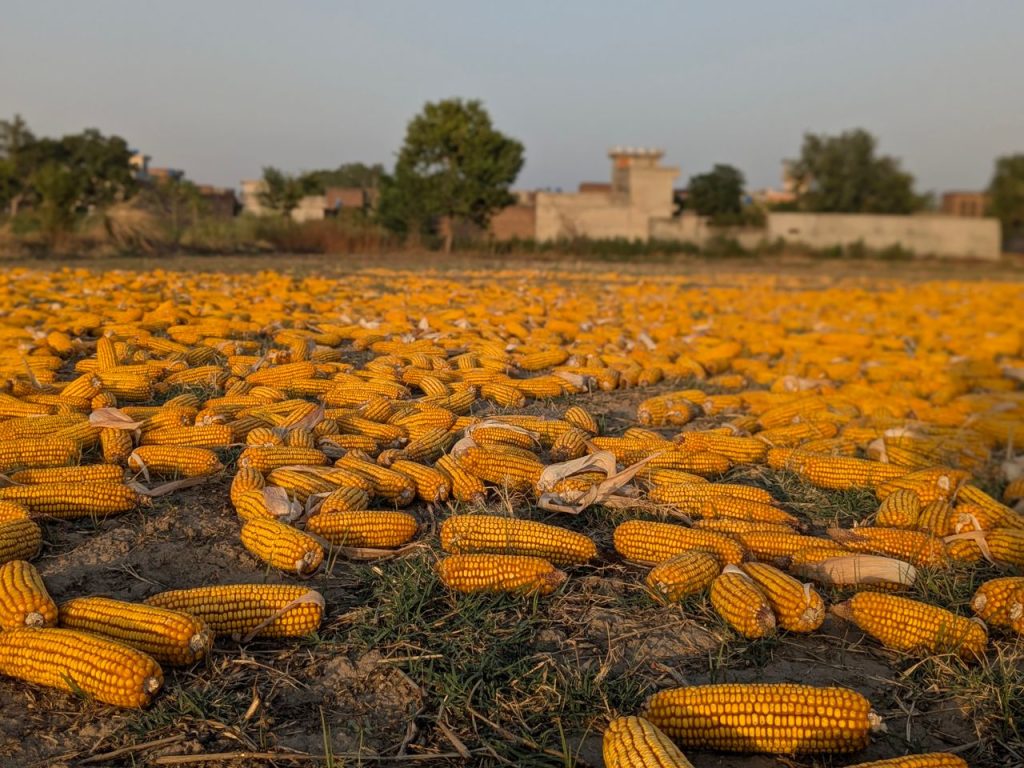
For grain production, maize needs to be adequately dried before long-term storage. Harvesting grain with excessive moisture can increase the risk of mould, deterioration and storage losses.
Proper drying is therefore essential. Farmers should ensure that grain reaches an appropriate moisture level for the intended storage system before storing it.
Storage is one of the most important aspects of maize marketing because it can influence when farmers are able to sell. Poor storage can expose maize to insects, rodents, moisture and fungal contamination.
With appropriate storage, farmers may have greater flexibility to avoid selling immediately after harvest when supply is often high.
Maize can be sold to wholesalers, aggregators, feed manufacturers, poultry businesses, processors, retailers and other bulk buyers. Farmers who establish relationships with reliable buyers before harvest may be in a stronger negotiating position.
Market information is particularly important because maize prices can change according to harvest volumes, demand from the livestock industry, transportation costs, imports, exchange-rate conditions and seasonal supply.
Challenges and Common Mistakes
One of the biggest challenges facing maize farmers is the rising cost of inputs. Seed, fertiliser, crop protection products, labour, machinery and transportation can significantly increase production costs.
Weather is another major risk. A prolonged dry spell at a critical stage of crop development can reduce yields, while excessive rainfall and flooding can damage fields.
Pests can also cause serious losses. Fall armyworm, for example, has become an important concern for maize farmers in Nigeria. Farmers should regularly inspect their fields rather than waiting until visible damage becomes severe.
Another common mistake is poor fertiliser management. Applying too little can limit yields, while inappropriate or excessive application can waste money and may negatively affect the crop or soil.
Farmers should also avoid planting without considering the market. Because maize is produced on a large scale across Nigeria, prices can fluctuate significantly depending on supply and demand.
Finally, poor post-harvest handling can reduce the value of an otherwise successful harvest. Proper drying, storage and transportation should therefore be treated as part of production—not as an afterthought.
The Future of Maize Farming in Nigeria
Nigeria’s maize sector has significant potential because demand extends across both food and industrial markets. Population growth, urbanisation and the expansion of poultry and livestock production are likely to continue supporting demand for maize.
There is also considerable opportunity for improved productivity. Better seeds, mechanisation, irrigation, soil management, precision agriculture and improved extension services can help farmers produce more from existing farmland.
Storage and processing are equally important. Maize can be transformed into animal feed, flour, starch and other products, creating additional value beyond the sale of raw grain.
The future of maize farming should therefore focus on building a more productive and connected value chain—from quality inputs and efficient production to storage, processing and reliable market access.
Frequently Asked Questions
Is maize farming profitable in Nigeria?
Yes, maize farming can be profitable, particularly when farmers achieve good yields, control production costs and sell at favourable prices. However, profitability varies by location, season and market conditions.
Which states are suitable for maize farming?
Maize is cultivated across much of Nigeria. Important production areas include Kaduna, Kano, Katsina, Niger, Benue, Plateau, Nasarawa, Taraba, Bauchi, Gombe, Adamawa and parts of the South.
How long does maize take to mature?
The maturity period depends on the variety and production conditions. Early-maturing varieties can be harvested sooner than medium- or late-maturing varieties. Farmers should follow the maturity information provided for their specific seed variety.
Can maize be grown during the dry season?
Yes. Dry-season maize production is possible where reliable irrigation is available. However, irrigation costs must be included in the production budget.
What is the most important fertiliser nutrient for maize?
Maize has significant nutrient requirements, particularly for nitrogen, but the appropriate fertiliser programme depends on soil conditions and crop requirements. Soil testing is the best starting point.
How can maize farmers increase profits?
Farmers can improve profitability through quality seeds, efficient fertiliser use, good weed and pest management, mechanisation where appropriate, proper drying and storage, reduced post-harvest losses and better market access.
Commodity.ng Insight
Maize is a perfect example of why agriculture should be viewed as a business and a market system, not simply as crop production.
The farmer needs to understand the cost of seed and fertiliser before planting, the weather during the growing season, the expected yield at harvest and the market price when the crop is ready to sell.
The same maize that is sold cheaply at harvest may later become more valuable because of increased demand from poultry farmers, feed manufacturers and food processors. Without proper market information and storage, however, farmers may have little choice but to sell when prices are weakest.
This is where Commodity.ng aims to make a difference.
By providing commodity prices, market intelligence and information about Nigeria’s agricultural markets, Commodity.ng seeks to connect production decisions with real market conditions.
For maize farmers, the objective should not simply be to produce more grain. It should be to produce efficiently, understand the market, reduce losses and capture more value from every harvest.
Discover more from Commodity Nigeria
Subscribe to get the latest posts sent to your email.