
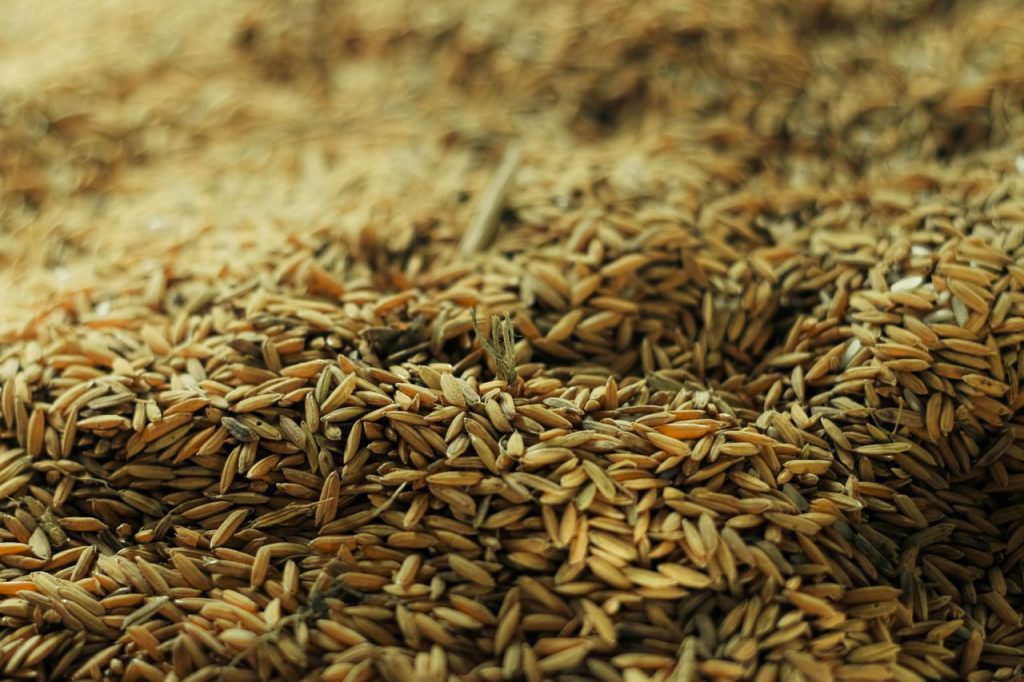
Japan Commits $3.5m to Strengthen Nigeria’s Rice Seed Production
The Government of Japan has committed approximately 587 million Japanese yen, equivalent to $3.5 million, to strengthen Nigeria’s rice seed production system and support the country’s efforts to achieve greater food security.
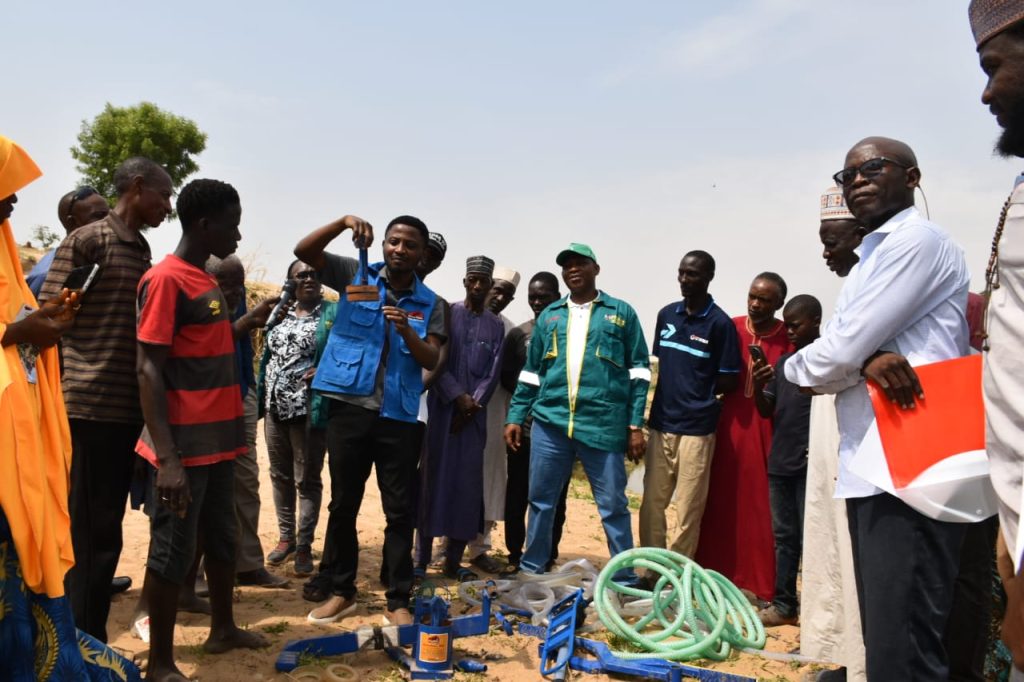
The intervention was announced during the handover ceremony of the Project for the Enhancement of Rice Seeds Production System at the National Cereals Research Institute (NCRI), Badeggi, in Niger State.
Japanese Ambassador to Nigeria, Hideo Suzuki, said the project would strengthen NCRI’s capacity to produce high-quality breeder and foundation seeds. The objective is to improve the availability of certified rice seeds to farmers, increase productivity and strengthen confidence in Nigeria’s seed system.
According to Suzuki, agriculture remains fundamental to Nigeria’s economy and food security, particularly as domestic demand for rice continues to grow.
The project supports Nigeria’s Second National Rice Development Strategy (2020–2030), which seeks to significantly increase domestic rice production and reduce the country’s dependence on imports.
“Good seed is the beginning of a good harvest,” Suzuki said, highlighting the importance of quality planting materials in achieving higher agricultural productivity.
Investment in modern agricultural equipment
The Japanese grant will provide NCRI and its outstations with modern equipment to improve seed cultivation, processing and research.
The equipment includes 20 medium-sized tractors, three rice transplanters, four small combine harvesters and two excavators. The project will also provide germination testers, automatic weather observation systems, flatbed dryers, laboratory equipment, seed graders, paddy huskers, grain moisture meters and maintenance tools.
The intervention is designed to reduce labour-intensive production processes while increasing the efficiency, quality and scale of rice seed production.
Japan also plans to complement the equipment with technical assistance, operational and maintenance training and institutional capacity development.
Suzuki stressed that the success of the investment would depend not only on the availability of machinery but also on the ability of Nigerian institutions to properly operate, maintain and utilise the equipment over the long term.
Government welcomes intervention
Minister of State for Agriculture and Food Security, Aliyu Sabi Abdullahi, commended Japan and the Japan International Cooperation Agency (JICA) for their continued support for Nigeria’s agricultural development.
He described the intervention as strategic because it addresses some of the critical weaknesses within Nigeria’s rice value chain, particularly seed production and mechanisation.
The minister said food security should be viewed beyond agriculture, describing it as an issue connected to national security, economic sovereignty and Nigeria’s long-term development.
He added that the project supports the Federal Government’s priorities of increasing food production, reducing dependence on imports, creating employment, improving farmers’ incomes and stimulating inclusive economic growth.
JICA expands support for Nigeria’s rice sector
JICA Chief Representative in Nigeria, Keiji Ishigame, said the organisation launched the Coalition for African Rice Development (CARD) in 2008 to help African countries increase rice production and reduce dependence on imports.
Nigeria remains an important participant in the initiative and has developed the National Rice Development Strategy II (NRDS II) 2020–2030 as a framework for transforming its rice industry through improved productivity, stronger seed systems, mechanisation and value-chain development.
JICA’s support in Nigeria has expanded beyond seed production to include agricultural extension, post-harvest management, marketing, institutional development and policy support.
The agency is also implementing a capacity-development programme aimed at improving rice seed multiplication, quality control and seed management.
NCRI strengthens capacity
Executive Director of NCRI, Dr. Mohammed Ndagi-Ishaq, said the intervention had already significantly improved the institute’s capacity to produce rice seeds.
He noted that access to modern machinery and seed-processing equipment would allow the institute to increase production while improving seed quality.
NCRI has also developed and released high-yielding and climate-resilient crop varieties, including zinc-biofortified rice varieties.
Ndagi-Ishaq, however, appealed for additional support, including five Hilux vehicles, to strengthen field inspections, monitoring and technical support in remote farming locations.
Governor Umaru Bago of Niger State, represented at the event by the Managing Director of the Niger Agricultural and Mechanisation Development Authority (NAMDA), Muhammed Baba, also reaffirmed the state’s commitment to initiatives that improve access to quality rice seeds and strengthen food production.
Commodity.ng Insight
Nigeria’s rice challenge is increasingly becoming a seed, technology and productivity challenge—not simply a land challenge.
The Japanese intervention is significant because it targets one of the foundations of agricultural production: quality planting material. Farmers cannot consistently achieve high yields simply because they have access to land and fertiliser. The quality of the seed, the availability of irrigation, mechanisation, extension services, weather information, storage and access to markets all determine the final outcome.
For Commodity.ng, this development reinforces an important reality: Nigeria’s food security strategy must move from input distribution to building a complete agricultural production ecosystem.
The investment in NCRI is particularly important because stronger seed production can create a multiplier effect. Better breeder and foundation seeds can lead to improved certified seed availability, which can translate into higher yields for thousands of farmers across rice-producing regions.
However, Nigeria must ensure that these investments do not remain concentrated within research institutes. The real measure of success should be how quickly improved seeds and technologies reach farmers and how much they improve farm-level productivity and income.
There is also a major opportunity to connect Nigeria’s strengthening seed infrastructure with agricultural data and market intelligence. If government and private-sector platforms can combine information on seed varieties, soil conditions, weather, expected yields, market prices and regional demand, farmers will be better positioned to determine what to plant, where to plant it and when to sell.
Nigeria should therefore view the Japanese intervention as more than a $3.5 million agricultural grant. It should be treated as part of a broader transition toward technology-driven, data-informed and commercially oriented agriculture.
The ultimate objective should not simply be for Nigeria to produce more rice. It should be to build a rice industry that is productive enough to compete internationally, resilient enough to withstand climate shocks, profitable enough to attract young people and efficient enough to reduce the country’s dependence on imports.
At Commodity.ng, we believe the future of Nigerian agriculture will be built where quality seeds, technology, financing, data, markets and farmers meet.
Discover more from Commodity Nigeria
Subscribe to get the latest posts sent to your email.


Interessante. Desafios de voz: The Choicer Voicer . The Choicer Voicer
Playing around on this site has been such a refreshing change for me and the local payment options make deposits feel totally stress free. Customer support always replies fast and the bonus structure keeps getting better with each visit. I honestly spend most of my free time here now and I could not be happier with the selection. phi999ph