How to Start Sheep Farming in Nigeria: A Practical Guide to Breeds, Feeding, Breeding, Cost, Profit and Market
Sheep farming is an important part of Nigeria’s livestock industry, providing meat, income, employment and opportunities for agricultural entrepreneurs. Sheep are raised by rural households, livestock traders, commercial farmers and pastoral communities. Their meat is consumed throughout the year, while demand often increases around Eid al-Adha, Eid al-Fitr and other festive periods.
Nigeria has a substantial sheep population. The National Agricultural Extension and Research Liaison Services (NAERLS), in its 2024 Wet Season Agricultural Performance Survey, estimated the country’s sheep population at approximately 63.96 million animals. Zamfara State recorded about 8.60 million sheep, while Jigawa recorded approximately 6.42 million. These figures reflect the importance of sheep production to Nigeria’s livestock economy.
For entrepreneurs, sheep farming offers several possible business models: breeding, lamb production, fattening, live-animal trading and meat distribution. The key is to choose a model that matches available capital, feeding resources, management skills and access to buyers.
Choosing the Right Sheep Breed
Nigeria has four widely recognised indigenous sheep breeds: Balami, Uda, Yankasa and West African Dwarf sheep. Each has characteristics that influence its suitability for different environments and production goals.
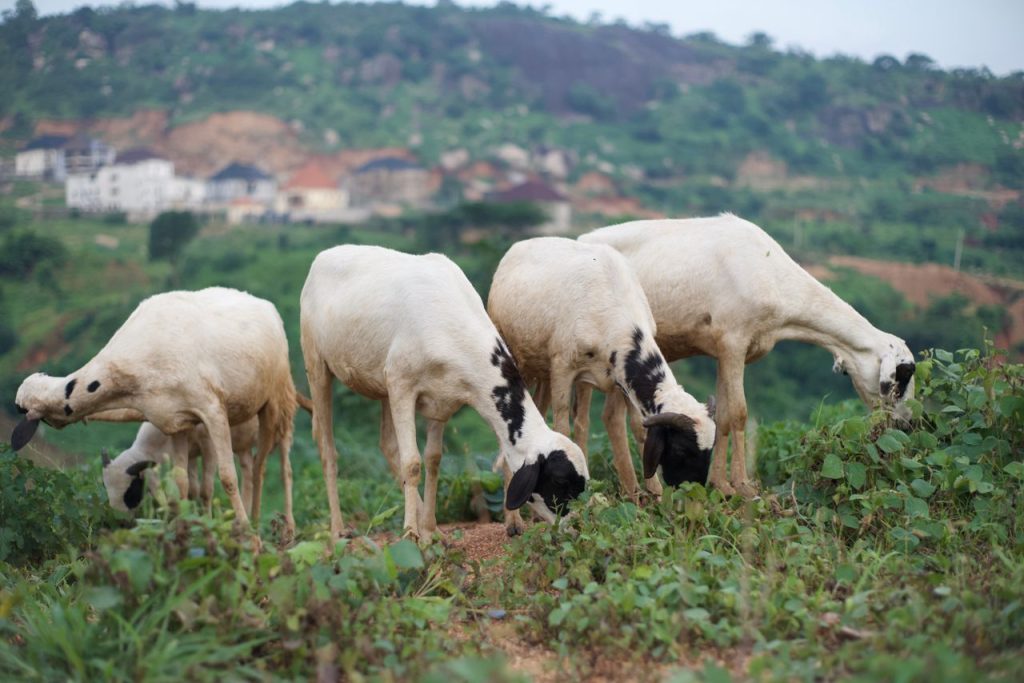
Balami: Balami sheep are generally large, predominantly white animals associated with northern Nigeria. Their body size makes them relevant to meat production and commercial fattening. Farmers considering Balami should pay attention to the purchase price, health, body condition and availability of suitable feed.
Uda: Uda sheep are recognisable by their contrasting dark forequarters and lighter rear body. They are associated with the dry savanna and Sahelian environments of northern Nigeria. Their adaptation to hot, dry conditions makes them relevant to pastoral and semi-intensive systems.
Yankasa: Yankasa sheep are widely distributed across northern and parts of central Nigeria. They are medium-sized animals used primarily for meat and are relevant to farmers seeking locally adapted breeding stock. Their wide distribution can also make them practical to source in several livestock markets.
West African Dwarf sheep: These sheep are smaller and are associated particularly with southern Nigeria’s humid environments. Their hardiness and adaptation to local conditions can make them useful for smallholder systems, although their smaller body size should be considered when evaluating meat-market returns.
There is no single breed that suits every farm. A farmer producing animals for premium live-weight markets may prioritise growth and mature size, while a smallholder may value adaptability, reproductive performance and lower management demands. Breed selection should always consider the local climate, feed supply, disease risks and the type of animal buyers want.
Systems of Sheep Farming
Sheep farming can be organised under extensive, semi-intensive or intensive systems.
In an extensive system, animals graze or browse over available land and may return to a secure enclosure at night. This can reduce purchased-feed costs, but performance depends on pasture availability, grazing access, weather, security and disease control.
A semi-intensive system combines grazing with supplementary feeding and shelter. It allows farmers to monitor animals more closely, manage breeding, protect lambs and improve growth while retaining some of the cost advantages of grazing.
An intensive system keeps sheep in a controlled environment where the farmer supplies most or all of their feed and water. This can suit farms with limited grazing land or a deliberate fattening programme, but feed, labour, housing and manure-management costs must be carefully controlled.
For many new farmers, a well-managed semi-intensive system can be a practical starting point. However, the right system depends on local resources rather than a universal rule.
Feeding, Housing and Health Management
Sheep require sufficient energy, protein, minerals and clean water to maintain health, grow and reproduce. Depending on availability, their diets can include grasses, legumes, crop residues and supplementary feeds. Cowpea haulms, groundnut haulms and suitable cereal residues can be valuable resources when collected and stored properly.
Farmers should avoid assuming that animals will grow adequately simply because they have access to open land. During the dry season, pasture quality and availability can decline, reducing growth and body condition. Conserving forage during periods of abundance can help manage this seasonal problem.
Housing does not need to be elaborate, but it should provide protection from rain, excessive heat, predators and theft. Good drainage, ventilation, adequate space and regular cleaning help reduce health risks. Lambs and pregnant ewes may require closer monitoring and additional care.
Health management should include veterinary guidance on vaccination, parasite control, quarantine for newly purchased animals and prompt attention to illness. Peste des petits ruminants (PPR) is an important disease affecting sheep and goats, so farmers should consult local veterinary professionals about appropriate prevention and disease-control measures.
Keeping records of animal purchases, births, deaths, treatments, feeding expenses and sales is equally important. These records help identify which animals perform well and reveal the real cost of maintaining the flock.
Sheep Breeding and Fattening as Business Models
There are two main ways to approach sheep production commercially: breeding sheep to produce lambs and buying sheep for fattening and resale.
A breeding enterprise requires patience. Farmers purchase healthy ewes and suitable rams, manage mating and pregnancy, care for newborn lambs and raise the offspring to a marketable age or weight. Over time, the farmer can expand the flock through successful reproduction rather than relying entirely on purchasing new animals.
Good breeding stock should have sound legs and feet, healthy teeth, good body condition and no obvious signs of disease. Farmers should assess reproductive history where records are available and avoid uncontrolled mating between closely related animals.
Fattening offers a different route. The farmer purchases under-finished sheep, provides appropriate feed and healthcare, monitors weight and body condition, and sells when the animals meet the requirements of target buyers.
This model may be particularly relevant ahead of periods of increased demand. However, festive demand does not guarantee higher profit: purchase prices may also rise, and a farmer who buys too expensively may have little margin left after feeding and transportation.
The central calculation is:
Total cost per animal = Purchase price + Feed + Veterinary expenses + Labour + Transport + Other costs
Profit per animal = Selling price − Total cost per animal
Consider a hypothetical example. A farmer buys a sheep for ₦180,000 and spends ₦25,000 on feeding, ₦5,000 on veterinary care and ₦10,000 on transport and other expenses. The total cost is ₦220,000. If the sheep is sold for ₦260,000, the difference is ₦40,000 before any additional overheads.
These figures are illustrative, not current market quotations or guaranteed profits. Actual prices vary by breed, size, location, season and market conditions. The example also assumes that the animal survives and reaches the expected selling price.
How Much Does It Cost to Start Sheep Farming in Nigeria?
Startup costs depend on the number and quality of animals, housing arrangements, feeding system and whether the farm already has land, water and equipment.
A small breeding operation requires money for breeding ewes and a ram, housing, feeders, water containers, feed, veterinary care and routine maintenance. A fattening operation may require fewer long-term breeding assets but needs enough working capital to purchase animals and finance feeding until sale.
Farmers should prepare separate estimates for initial investment and recurring operating expenses. Housing, fencing and water infrastructure are usually capital expenses, while feed, medication, transport and labour recur during production.
Working capital is especially important. A farmer who spends all available money buying sheep may not have enough to feed and treat them properly. It is safer to budget for the full production cycle before purchasing animals.
Before starting, obtain local quotations from livestock markets, feed suppliers, builders and veterinary providers. Prices should be checked in the actual location where the farm will operate, rather than copied from estimates prepared for another state.
The Sheep Value Chain and Market Opportunities
Sheep farming creates business opportunities beyond raising animals. The value chain includes breeding, lamb production, fattening, aggregation, transportation, slaughter, meat processing, wholesale, retail and food service. Hides and skins, as well as manure, can provide additional uses or income where buyers and suitable handling facilities exist.
An entrepreneur does not need to operate every stage. Someone with strong market connections could aggregate sheep from several smallholders and supply butchers or larger buyers. Another business could specialise in transportation, feed supply, veterinary services, slaughter facilities, meat processing or cold storage.
Sheep meat is consumed throughout the year, but demand patterns can change around religious celebrations and other occasions. Farmers should therefore identify their buyers before scaling production. Potential customers include livestock traders, butchers, restaurants, caterers, event organisers and households. Building relationships with buyers can help the farmer understand preferred sizes, purchase schedules and delivery requirements.
Where Is Sheep Farming Suitable in Nigeria?
Sheep are raised across Nigeria, but the scale and type of production vary by region. Northern states such as Zamfara and Jigawa have particularly large reported sheep populations. Yankasa sheep are widely distributed across northern and central areas, while Balami and Uda are associated more strongly with northern dryland environments. West African Dwarf sheep are more closely associated with the humid south.
The most suitable commercial location is not necessarily the state with the largest sheep population. Farmers should consider land costs, access to forage, water availability, veterinary services, security, transport and proximity to buyers.
A farm near a reliable livestock market may have an advantage in sourcing and sales, while a farm with access to inexpensive forage may have an advantage in production costs. These factors should be assessed together before making a location decision.
Is Sheep Farming Profitable in Nigeria?
Sheep farming can generate income, but results depend on the production model and how well costs are controlled.
For breeding farms, important measures include lambs born per ewe, lamb survival, time to market, feed costs and the number of healthy animals sold. For fattening businesses, purchase price, weight gain, feeding costs, mortality and selling price are central.
A useful measure is the cost of gaining marketable weight:
Cost per kilogram gained = Additional production cost ÷ Additional live weight gained
This helps farmers compare animals and feeding strategies more accurately than simply comparing purchase and selling prices.
Common challenges include seasonal feed shortages, disease, parasites, theft, poor breeding records, mortality among young lambs and unpredictable market prices. These challenges can be reduced through sound housing, veterinary guidance, forage planning, accurate records and advance market research.
Frequently Asked Questions
How many sheep should a beginner start with?
The number depends on available capital, housing, feed and management capacity. Start with a flock that can be monitored and maintained properly, with sufficient funds reserved for the entire production cycle.
Which sheep breed is suitable for Nigeria?
Balami, Uda, Yankasa and West African Dwarf sheep are the principal indigenous types commonly discussed in Nigerian sheep production. Their suitability depends on the environment, production objective and availability of good-quality animals.
Is sheep fattening profitable?
It can be, if animals are purchased at a reasonable price, gain sufficient weight, remain healthy and are sold for more than their total cost. Seasonal demand alone does not guarantee a profit.
What do sheep eat?
Sheep can feed on grasses, legumes, suitable browse and agricultural residues, with supplements where necessary. Their diet should meet nutritional needs rather than depend entirely on whatever vegetation is available.
Can sheep farming be combined with crop farming?
Yes. Suitable crop residues can be used as livestock feed, while properly handled manure can be returned to fields as an organic nutrient source. Farmers should store and use these materials safely and avoid feeding spoiled or contaminated residues.
Commodity.ng Insight
Sheep farming should be managed as a commercial livestock enterprise, not simply as the accumulation of animals. The key indicators are flock growth, lamb survival, feed cost, weight gain, mortality, sale price and cash flow.
Nigeria’s estimated 63.96 million sheep represent a substantial livestock resource, but population size alone does not tell a farmer whether a particular business will succeed. Commercial success depends on converting that resource into healthy, marketable animals at a cost buyers are willing to cover.
For investors, the opportunity extends beyond livestock ownership. Feed production, forage conservation, animal health, aggregation, transportation, meat processing and cold-chain infrastructure can all support the sheep value chain.
Reliable market information is important at every stage. Farmers need to compare animal purchase prices and selling prices across markets. Traders need to understand where supply is available and where demand exists. Processors need dependable supply, while investors need a clearer picture of production costs and market opportunities.
This is where Commodity.ng can connect agricultural production with market intelligence, helping farmers, traders, processors and investors make better-informed decisions.
The long-term opportunity in Nigerian sheep farming lies in improving productivity, reducing avoidable losses and building stronger connections between producers and buyers. A sustainable sheep business is built not merely by owning more animals, but by managing each animal, each cost and each sale with discipline.
Discover more from Commodity Nigeria
Subscribe to get the latest posts sent to your email.