
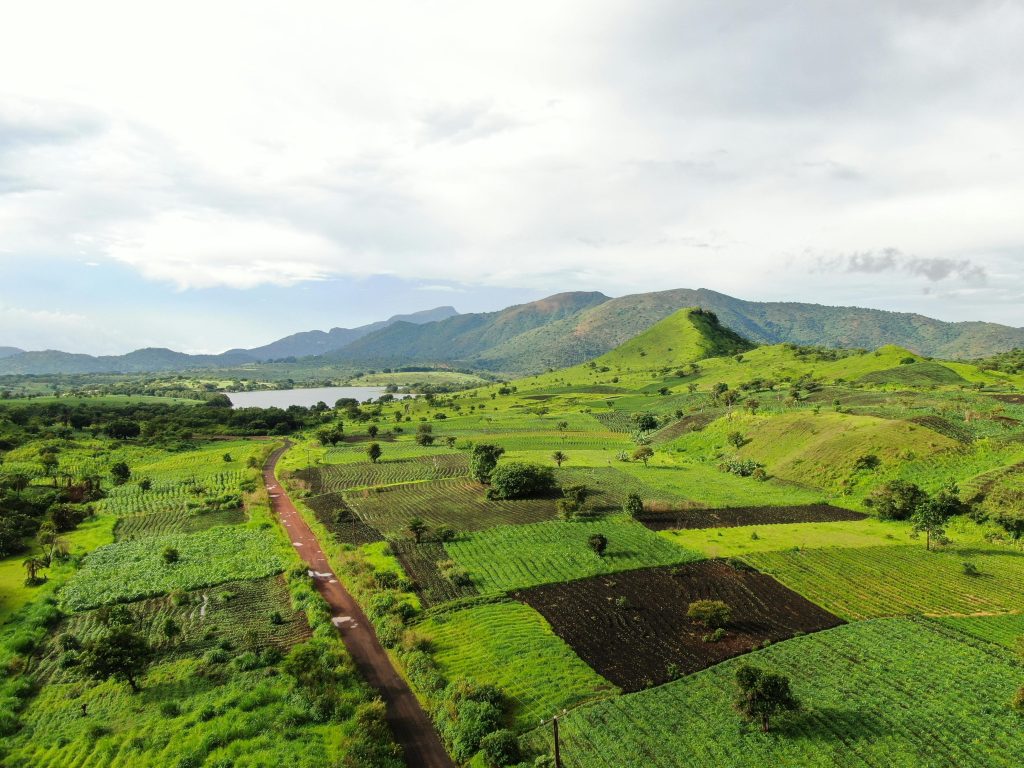
A Nairobi-based agritech startup is demonstrating how innovation is reshaping African agriculture, using solar-powered irrigation systems to increase crop yields by up to 300% while reducing water usage by 80%. Backed by high-profile global investors, the company is also gaining strong traction in Africa’s emerging solar irrigation market, projected to reach £2.4 billion at full potential.
This development reflects a broader shift across the continent, where agriculture is increasingly attracting technology-driven investment. Africa’s food economy is expected to expand dramatically, with projections showing growth from $280 billion to $1 trillion by 2030. At the same time, agrifood tech investment reached $192 million in 2024, with a 63% year-on-year increase, and a 600% rise over the past decade.
In 2024 alone, Africa’s agritech ecosystem saw 280 startups raise about $1.2 billion in funding, while digital platforms connected 45 million farmers and facilitated $2.8 billion in transactions. These technologies are already delivering measurable impact, including yield increases of 32%, 28% reduction in input costs, and 35% lower water usage for tech-enabled farms.
Across the continent, new technologies such as artificial intelligence, blockchain traceability systems, digital lending platforms, and geospatial mapping are increasingly being applied to agriculture, improving productivity and transparency while opening new investment frontiers across the value chain.
Infrastructure development is also emerging as a key growth driver. Governments and private investors are channeling capital into agro-processing and logistics systems, including initiatives like Nigeria’s Special Agro-Industrial Processing Zones programme, which has attracted about $538 million in investment and is projected to significantly reduce post-harvest losses and boost productivity.
Cold chain infrastructure is also expanding rapidly, with projections showing growth from $10.88 billion in 2024 to $14.85 billion by 2029, driven by rising urbanization and increasing intra-African trade under the African Continental Free Trade Area (AfCFTA).
Key investment opportunities are emerging across staple crops such as rice, maize, and cassava, as Africa continues to import significant volumes of basic food commodities. The cassava processing market alone is valued at over $5 billion. Meanwhile, aquaculture is expanding rapidly, reaching $3.8 billion in value, with growing demand for fish farming, hatcheries, and processing systems. Livestock and dairy production, valued at $43 billion, is also expanding, with increasing digitalization of livestock trade.
Despite this growth, major challenges persist. Agriculture still receives only a small fraction of global investment and development funding, leaving an estimated $200 billion financing gap. Climate change, infrastructure deficits, and low productivity continue to limit yields, with many African farms operating at only about 25% of their potential output.
In Nigeria alone, climate shocks continue to cause heavy losses, including large-scale flooding that destroyed hundreds of thousands of hectares of farmland and crop diseases that have wiped out billions of naira in agricultural value.
Experts suggest that successful investment strategies in the sector will depend on integrated agribusiness models that combine production, processing, and distribution, alongside hybrid digital-physical solutions tailored to smallholder farmers. Other key approaches include patient capital, climate-smart agriculture, blended finance structures, and regional trade integration under AfCFTA, which is expected to significantly boost agricultural trade across Africa.
Commodity.ng Insight (In-depth)
Africa’s agricultural transformation narrative is increasingly shifting from subsistence improvement to full-scale investment industrialization, and this article highlights a crucial turning point: agriculture is no longer being viewed primarily as a development sector, but as a high-growth, capital-intensive asset class.
At the center of this shift is technology-enabled productivity. The example of solar-powered irrigation increasing yields by 300% while reducing water usage by 80% is not just an innovation story—it is a demonstration of how resource efficiency is becoming the new competitive advantage in agriculture. In regions like Nigeria, where climate variability and input costs are rising, such technologies directly address two core constraints: productivity and sustainability.
However, the deeper implication lies in the structural revaluation of African agriculture by global capital markets. With food demand projected to reach $1 trillion and agrifood tech investment growing rapidly, agriculture is transitioning into a high-interest frontier for venture capital, private equity, and blended finance institutions. This represents a major departure from historical underinvestment patterns, where agriculture was seen as high-risk and low-return.
A key driver of this shift is the rise of data-driven agriculture ecosystems. The integration of AI for yield prediction, blockchain for traceability, fintech for credit access, and geospatial mapping for infrastructure planning is transforming agriculture from a manual system into a digitally coordinated supply chain economy. This is particularly important because it directly addresses one of Africa’s biggest historical constraints: lack of reliable agricultural data for investment decision-making.
Another major insight is the emergence of platform-based agriculture economies, where digital marketplaces are connecting tens of millions of farmers to buyers and financial systems. This is not just improving efficiency—it is fundamentally reshaping market access, reducing post-harvest losses, and formalizing previously fragmented rural economies. However, the sustainability of this model depends heavily on infrastructure depth and farmer inclusion, especially for smallholders who remain the backbone of production.
Despite these opportunities, the most critical bottleneck remains the agricultural financing gap of $200 billion. This gap reflects not just lack of capital, but also misaligned risk perceptions among investors. Smallholder farmers—who produce up to 90% of food in some countries—are often underfinanced due to outdated assumptions about risk, scalability, and profitability. In reality, they represent one of the largest untapped productive networks in the global economy.
Climate change further complicates this picture by introducing systemic volatility. Flooding, droughts, and crop diseases are no longer isolated events but recurring shocks that reduce yield stability and increase investment uncertainty. This makes climate-smart agriculture not optional, but foundational for long-term viability.
From an investment standpoint, the most important structural shift is the move toward integrated agribusiness ecosystems. The highest-performing models are no longer single-point solutions (like only farming or only logistics), but vertically integrated systems that combine production, processing, storage, and distribution. This reduces inefficiencies, improves margins, and creates stronger resilience against market shocks.
In the Nigerian and broader African context, the most strategic opportunity lies in building end-to-end agricultural value chains, particularly in staple crops, aquaculture, livestock, and agro-processing. However, success will depend on three critical enablers: infrastructure expansion (especially cold chain and logistics), financing innovation (blended and patient capital), and digital inclusion for smallholder farmers.
Ultimately, Africa’s agricultural sector is undergoing a structural re-rating—from a subsistence-driven system to a global investment frontier. The countries and investors that succeed will be those that understand agriculture not as a standalone sector, but as a connected system of food production, data intelligence, infrastructure, and capital flows operating at continental scale.
Discover more from Commodity Nigeria
Subscribe to get the latest posts sent to your email.



Insightful
Phspinapp good app to play, need to try! Free spins and good payout right? Wanna know more about how to play. Checkout phspinapp.
The examples of solar irrigation cutting water use by 80% and digital platforms connecting 45 million farmers show how technology is transforming African agriculture. For teams documenting field trials or investment projects, removing GPS, EXIF, and AI metadata locally before sharing images can add an important layer of privacy.
https://aimetadataremover.app/