
Nigeria’s Ministry of Agriculture and Food Security, in partnership with the International Soil Reference Information Center (ISRIC) and the International Institute of Tropical Agriculture (IITA), has launched a strategic push to modernize agriculture through soil data systems aimed at improving productivity, efficiency, and food security.
The initiative was discussed at the Nigeria Soil Information System Development Workshop in Abuja, where stakeholders emphasized the role of soil intelligence in transforming agricultural decision-making and reducing inefficiencies across the sector.
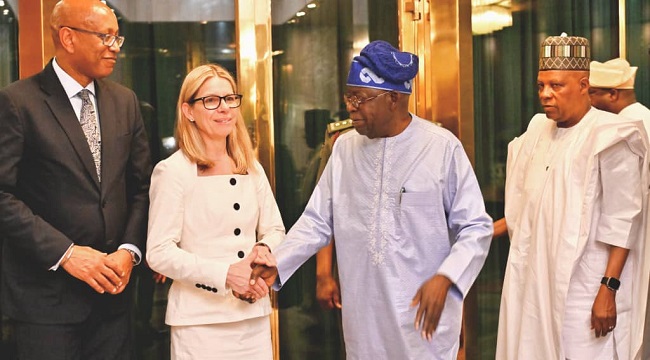
Speaking at the event, the Minister of State for Agriculture and Food Security, Senator Aliyu Sabi Abdullahi, said the programme will equip farmers with data-driven insights to match crops with suitable soil types, optimize fertilizer usage, reduce production costs, and lay the foundation for precision agriculture in Nigeria.
He stressed that soil remains the most fundamental resource in agriculture, noting that understanding soil data is essential for achieving national food security and sovereignty.
The minister explained that the system will also support the development of location-specific fertilizer blends, improving efficiency across the agricultural value chain while encouraging greater private sector participation in fertilizer production.
According to him, the approach will allow agricultural experts to analyze soil conditions and provide targeted recommendations on crop selection and fertilizer application, ultimately leading to higher yields and lower production costs for farmers.
He further noted that the data-driven model will help guide investment decisions into high-value agricultural zones and reduce risks for agribusiness investors by providing clearer insights into soil potential and regional productivity.
Senator Abdullahi added that the initiative aligns with the government’s broader food security agenda centered on local production, encapsulated in the policy direction to “eat what we produce and produce what we eat.”
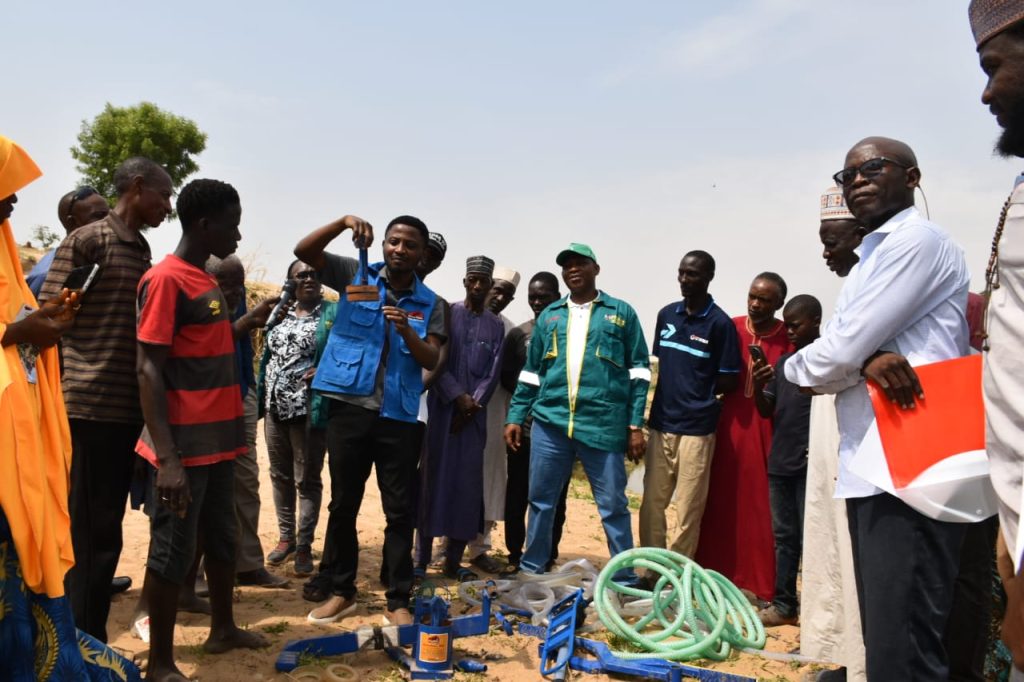
As part of the implementation strategy, the ministry plans to establish functional soil testing laboratories across all 774 local government areas in Nigeria, aimed at expanding access to soil analysis services and improving farm-level decision-making.
Representing IITA, Deputy Director-General for the Regional Hub in Ibadan, Dr. Bernard Vanlauwe, said the organization will support Nigeria in strengthening its Soil Information System using advanced technologies while ensuring regional consistency across West Africa.
Similarly, Dr. Chrow Krushid, Project Manager for the Soil Information System at ISRIC in the Netherlands, noted that Nigeria is a priority country under the West Africa hub and will receive technical assistance in developing digital soil maps to support policy formulation and agricultural investment decisions.
Commodity.ng Insight (In-depth)
Nigeria’s shift toward a soil data-driven agricultural system represents one of the most important structural transitions in its food economy in decades, because it directly addresses a long-standing but often overlooked problem: low agricultural efficiency caused by generalized, non-scientific farming practices.
For decades, Nigerian agriculture has largely operated on a “one-size-fits-all” approach—uniform fertilizer application, limited soil testing, and crop selection driven more by tradition than data. This has resulted in suboptimal yields, high input wastage, and declining soil productivity across many farming regions. The introduction of a nationwide soil information system changes this foundation by moving agriculture from intuition-based practices to evidence-based agronomy.
The most immediate impact of this initiative is cost efficiency for farmers. Fertilizer is one of the highest recurring costs in Nigerian farming, yet a significant portion of it is often misapplied due to lack of soil-specific recommendations. By aligning fertilizer blends to soil composition, farmers can reduce waste, improve absorption rates, and significantly increase yield per hectare. In practical terms, this means higher output without necessarily increasing farmland size or input spending.
More importantly, this system introduces the foundation for precision agriculture in Nigeria. Precision agriculture is not just about technology—it is about decision-making accuracy. When soil data is digitized and mapped at scale, it allows for targeted interventions: identifying which crops perform best in specific regions, where irrigation investment is most needed, and which areas are suitable for high-value export crops. This fundamentally changes how agricultural planning is done at both micro and macro levels.
Another critical implication is the impact on agricultural investment risk reduction. One of the biggest barriers to agribusiness expansion in Nigeria is uncertainty—investors often lack reliable data on soil productivity, yield potential, and regional suitability. A functional soil information system reduces this uncertainty by providing verifiable, location-specific data. This could unlock new private capital inflows into agriculture, especially in large-scale commercial farming and agro-processing zones.
However, the success of this initiative will depend heavily on implementation depth and infrastructure integrity. Establishing soil laboratories across 774 local governments is ambitious and potentially transformative, but it also raises questions around sustainability, staffing, equipment maintenance, and data integration. Without a strong digital backbone linking these labs into a unified national database, the system risks becoming fragmented and underutilized.
Additionally, there is a broader systemic opportunity: integration with input supply chains and extension services. Soil data alone is not enough unless it directly informs fertilizer production, seed distribution, and farmer advisory systems. The real value emerges when soil intelligence is embedded into everyday farming decisions through mobile platforms, cooperatives, and agribusiness service providers.
In the long term, this initiative could reposition Nigeria from a reactive agricultural system to a predictive and planning-driven food economy, where production is guided by scientific data rather than historical guesswork. If successfully implemented, it could significantly improve national food security, reduce import dependency, and increase export competitiveness by enabling consistent, high-quality production.
Ultimately, this is not just a soil management project—it is a foundational step toward building a modern agricultural intelligence system.
Discover more from Commodity Nigeria
Subscribe to get the latest posts sent to your email.