

Nigeria’s long-term economic growth will depend heavily on how effectively it transforms its agricultural sector, according to the Japanese Ambassador to Nigeria, Suzuki Hideo.
Speaking at the 40th anniversary and annual stakeholders’ workshop of the Sasakawa Africa Association, the ambassador stressed that improving agricultural productivity through modernisation is critical to achieving sustainable development and positioning Nigeria as a leading economic force in Africa.
🇳🇬 Nigeria’s Untapped Agricultural Strength
Nigeria possesses vast agricultural potential, with about 76.6% of its land suitable for cultivation and abundant water resources capable of supporting large-scale farming. The sector already contributes roughly 25% to the country’s Gross Domestic Product (GDP) and employs about 34% of the labour force.
Despite these strong fundamentals, the country continues to struggle with low productivity and heavy dependence on food imports, highlighting a significant gap between its natural capacity and actual output.
🚜 The Urgent Need for Structural Transformation
The ambassador identified three critical areas that require immediate attention to unlock Nigeria’s agricultural potential:
Mechanisation:
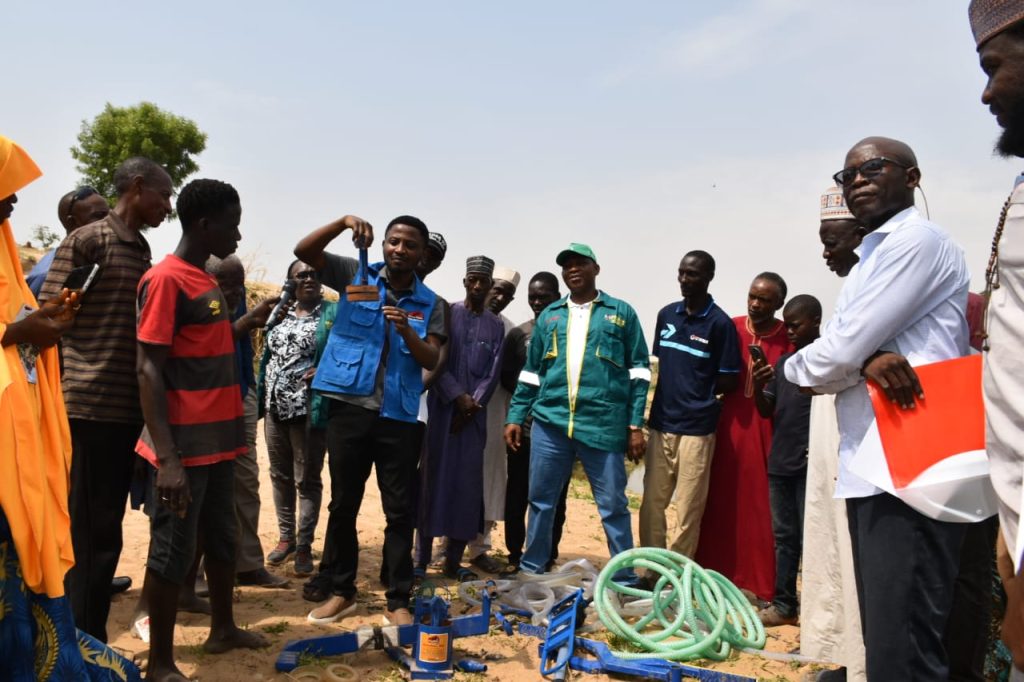
Farming in Nigeria remains largely manual, limiting productivity and scalability. Increased adoption of machinery and modern farming tools is essential to boost efficiency and output.
Post-Harvest Management:
A substantial portion of agricultural produce is lost after harvest due to poor storage, inadequate transportation, and limited processing infrastructure. Addressing these losses could significantly increase available food supply without expanding production.
Market Access:
Farmers often face challenges in accessing reliable markets, leading to low incomes and inefficiencies across the value chain. Strengthening linkages between producers and markets is crucial for sustainable growth.
🌍 Four Decades of Agricultural Support
For over 40 years, the Sasakawa Africa Association has played a key role in supporting Nigerian farmers by promoting improved farming techniques, enhancing productivity, and providing extension services.
However, the organisation acknowledges that new challenges—including climate variability, population growth, and shifting economic realities—require more innovative and scalable solutions.
🏛️ Government Push for Reform
The Minister of State for Agriculture and Food Security, Aliyu Sabi Abdullahi, revealed that the federal government, in partnership with development agencies, is rolling out new initiatives to strengthen the sector.
A major programme, “Readiness Assessment and the Coalition of the Willing,” is expected to launch by May 2026, bringing together all 36 state governments to coordinate agricultural reforms and drive nationwide impact.
📉 The $10 Billion Reality Check
According to the Country Director of the Sasakawa Africa Association, Godwin Atser, Nigeria spends approximately $10 billion annually on food imports, including staples such as wheat, rice, sugar, fish, and tomato paste.
This underscores a fundamental issue: domestic production is not keeping pace with national demand.
To bridge this gap, he emphasised the need to deliver improved technologies directly to farmers through effective extension and advisory services.
📊 Commodity.ng Insight: From Potential to Performance
Nigeria’s agricultural challenge is no longer about resource availability—it is about execution across the value chain.
The country has the land, labour, and demand. What it lacks is a coordinated system that efficiently connects production, storage, processing, and markets.
🔍 Where the Real Opportunities Lie
Mechanisation as a Business Opportunity:
The gap in access to tractors, irrigation systems, and modern equipment presents a significant investment opportunity for private sector players.
Post-Harvest Losses as Hidden Supply:
Reducing losses through better storage and logistics could immediately increase food availability, stabilise prices, and improve farmer incomes.
Food Imports as Market Signals:
Rather than just a weakness, Nigeria’s $10 billion food import bill reflects strong and consistent demand—an indicator of untapped domestic market potential.
Extension Services as the Missing Link:
Bridging the knowledge gap through digital advisory tools, data-driven farming, and scalable extension services will be critical to the sector’s transformation.
🔮 The Road Ahead
For Nigeria to fully realise its agricultural potential, it must move beyond policy discussions and focus on building scalable systems that integrate farmers into efficient value chains.
Platforms like Commodity.ng have a key role to play in this transformation by improving market access, enhancing price transparency, and enabling smarter, data-driven decisions across the agricultural ecosystem.
📌 Final Take
Nigeria’s future as an economic powerhouse will not be determined by oil alone, but by how effectively it harnesses its agricultural resources.
Modernising agriculture is no longer optional—it is the foundation for sustainable growth, food security, and long-term economic resilience.
Discover more from Commodity Nigeria
Subscribe to get the latest posts sent to your email.


Yo, gamers! Heard about a5.gamer and decided to check it out. Seems like a decent spot to find some new games. Worth a look if you’re always on the hunt for something fresh! Go give it a peek: a5.gamer
Alright alright alright, tg77casino’s got my attention. Some nice games and the site looks legit. Give it a shot, might just be your lucky day! Check this: tg77casino