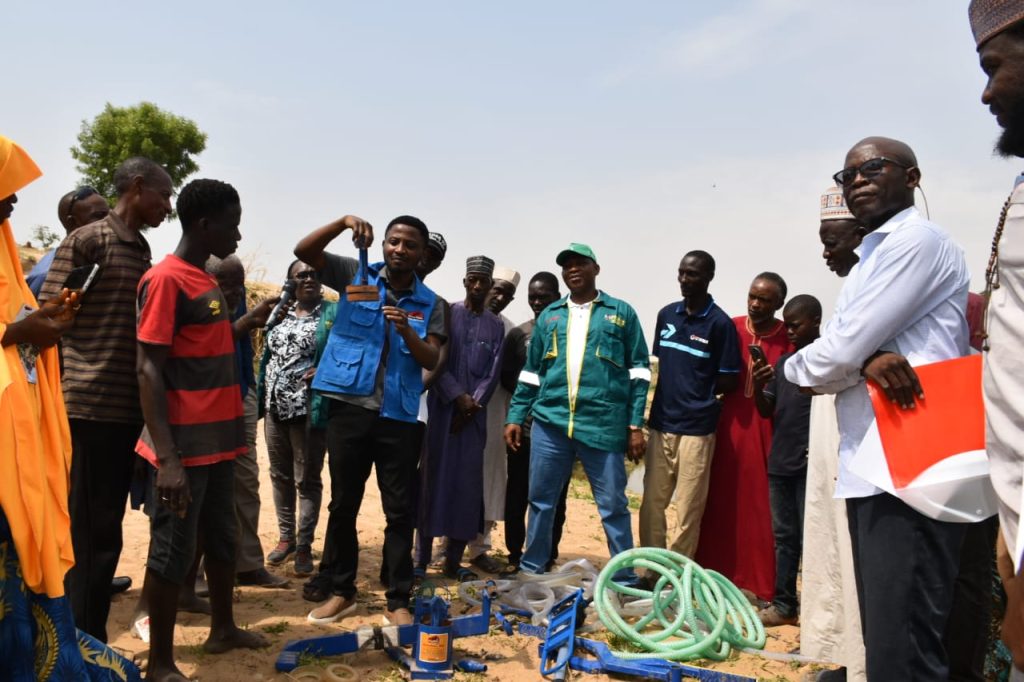
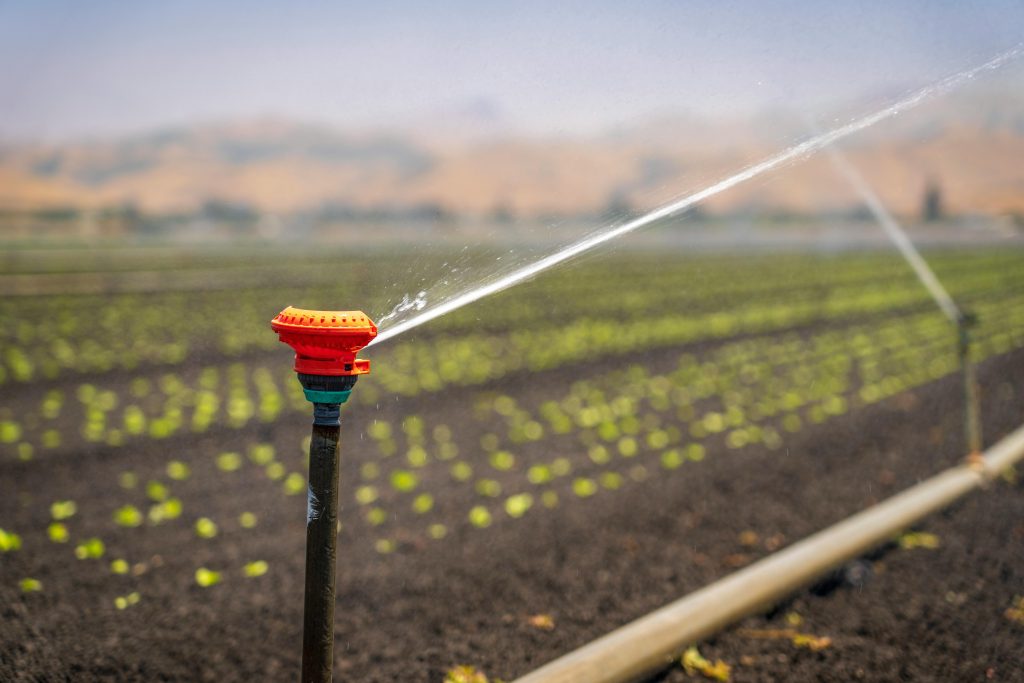
For many farmers in northern Nigeria, irrigation is no longer just a farming tool—it is becoming a lifeline for productivity, income stability, and climate resilience.
In Kano State, Mustapha Adamu remembers when farming on a 6,000-hectare stretch of land was extremely difficult due to poor water access, degraded soil, and unpredictable weather conditions.
That situation has gradually changed through the Transforming Irrigation Management in Nigeria (TRIMING) project, an initiative led by Nigeria’s Federal Ministry of Water Resources and Sanitation with support from the World Bank through its International Development Association (IDA).
The project focuses on rehabilitating irrigation infrastructure, improving water management systems, and strengthening agricultural productivity across key farming regions.
Expanding Irrigation and Productivity
Under the project, irrigation systems across major schemes including Kano River, Hadejia Valley, Bakolori, and Dadin Kowa have been upgraded to support more efficient farming.
In Kano State alone, irrigated farmland expanded to more than 15,000 hectares, allowing farmers to cultivate more intensively and with greater consistency.
For farmers like Musa Idris in Jigawa State, improved irrigation has significantly increased yields.
According to him, rice production previously averaged about 15 to 20 bags per acre, but has now risen to between 30 and 35 bags per acre due to better water access and improved farming conditions.
The project also introduced infrastructure upgrades beyond irrigation canals, including road rehabilitation and improved water management systems designed to reduce uncertainty during farming seasons.
Community-Led Water Management
A major component of the TRIMING project has been the establishment and strengthening of more than 800 Water Users’ Associations (WUAs), enabling farmers to collectively manage irrigation resources and maintain infrastructure.
These associations help coordinate water distribution, improve efficiency, and encourage long-term sustainability within farming communities.
Women Farmers Gain Greater Participation
The project has also expanded opportunities for women in irrigated agriculture.
Hajiya Ramatu, a farmer and deputy leader of a women’s farming group, said women previously had limited participation in irrigated farming activities before the intervention began.
Today, her group has expanded its cultivated land from 22 to 37 hectares, while improved road access has made it easier to transport produce to markets.
According to her, the increased income generated from farming has improved household welfare, including supporting her son’s university education.
Towards a More Food-Secure Future
Overall, the TRIMING project improved and expanded irrigation across approximately 43,400 hectares of farmland, contributing to increased food production and supporting the livelihoods of farming communities.
Additional interventions included dam safety improvements, drainage rehabilitation, sediment control, and sustainable water management practices.
Building on these achievements, Nigeria is now advancing a follow-up initiative known as the Sustainable Power and Irrigation for Nigeria project, with continued World Bank support.
The federal government has also set a target of irrigating 500,000 hectares of farmland by 2030 as part of broader efforts to strengthen food security and rural livelihoods amid growing climate pressures and population growth.
Commodity.ng Insight (In-depth)
This story highlights one of the most important realities shaping Nigeria’s agricultural future: irrigation is increasingly becoming the dividing line between vulnerable farming and resilient farming.
For decades, Nigeria’s agricultural system has been overwhelmingly dependent on rainfall, leaving millions of farmers exposed to climate uncertainty. With less than 1% of farmland historically irrigated, most production cycles have remained highly vulnerable to droughts, delayed rainfall, floods, and seasonal unpredictability. The TRIMING project demonstrates what happens when that dependency is reduced through structured irrigation systems.
The most striking insight is not just the expansion of irrigated land, but the dramatic increase in productivity. Doubling rice yields from 15–20 bags per acre to 30–35 bags illustrates a critical economic truth: Nigeria’s food production challenge is often more about productivity efficiency than land availability. Farmers are capable of producing significantly more when supported with stable water access and infrastructure.
Another major takeaway is the shift from subsistence survival to production planning. Under rain-fed agriculture, farmers are forced to react to weather conditions. Irrigation changes this dynamic by allowing controlled cultivation cycles, multiple harvests annually, and better crop diversification. This transforms farming from a seasonal activity into a more stable economic enterprise.
The role of Water Users’ Associations is also strategically important. Nigeria’s agricultural challenges are not only technical but institutional. Infrastructure alone cannot sustain productivity unless communities have systems for maintenance, coordination, and resource governance. By empowering farmers to collectively manage irrigation systems, the project introduces a more sustainable operational model compared to purely government-controlled infrastructure.
Another critical dimension is the inclusion of women. The expansion of women’s participation in irrigated farming reflects a broader economic implication: when infrastructure barriers are reduced, agricultural participation becomes more inclusive. Improved roads, water access, and organized farming systems enable women to scale production, improve incomes, and contribute more meaningfully to household and local economies.
However, the larger national challenge remains scale. While 43,400 hectares is significant, it remains small relative to Nigeria’s total agricultural landmass and food demand. The government’s target of irrigating 500,000 hectares by 2030 signals recognition that irrigation must move from isolated projects to a national agricultural strategy.
There is also a strong climate adaptation dimension. Climate change is reducing the reliability of rain-fed systems globally, making irrigation not just a productivity tool, but a food security necessity. Countries that fail to modernize water management systems risk facing deeper agricultural instability, rising food inflation, and increased rural poverty.
Beyond food production, irrigation has broader economic implications. Stable water access supports agro-processing, rural employment, multiple planting cycles, and stronger value chains. It also increases land value and investment attractiveness in agricultural zones.
Ultimately, the success of projects like TRIMING reinforces a crucial lesson: Nigeria’s agricultural transformation will depend less on expanding farmland and more on improving how existing farmland is managed, irrigated, and integrated into modern production systems.
Smarter irrigation is not simply about water—it is about building a more productive, climate-resilient, and economically sustainable agricultural economy for the future.
Discover more from Commodity Nigeria
Subscribe to get the latest posts sent to your email.