The Insects4Feed Impact Cluster, launched in 2021, is redefining Nigeria’s agricultural future through a powerful blend of innovation, sustainability, and market intelligence. Supported by the Netherlands Enterprise Agency (RVO) and a consortium of Dutch and Nigerian businesses, research institutions, and social enterprises, the initiative leverages Black Soldier Fly (BSF) farming to tackle three critical challenges: food security, waste management, and job creation.
But beyond innovation, the real strength of Insects4Feed lies in its alignment with market realities—particularly insights from Commodity.ng, which reveal the growing urgency for alternative feed solutions in Nigeria.
A Market Under Pressure: Why BSF Matters Now
Nigeria’s livestock and aquaculture sectors are facing an escalating feed crisis. Key feed ingredients such as maize and soybean have experienced significant price volatility and sustained increases in recent years—putting immense pressure on farmers’ profitability.
Data from Commodity.ng consistently highlights:
- Rising and unstable prices of feed commodities
- Regional supply shortages
- Widening gaps between farmgate and market prices
This reality reframes BSF farming from a “novel idea” into a market-driven necessity.
As feed costs continue to rise, BSF larvae offer a locally sourced, high-protein alternative capable of stabilizing input costs and improving resilience across the value chain.
A Visionary Beginning: From Concept to Infrastructure
The Insects4Feed cluster began with a bold vision—to integrate BSF farming into Nigeria’s feed ecosystem as a sustainable, scalable alternative.
Key milestones include:
- Refurbishment of the insect and input screening centre at the University of Ibadan
- Establishment of a demonstration farm at the International Institute of Tropical Agriculture
These facilities now serve as centres for:
- Applied research
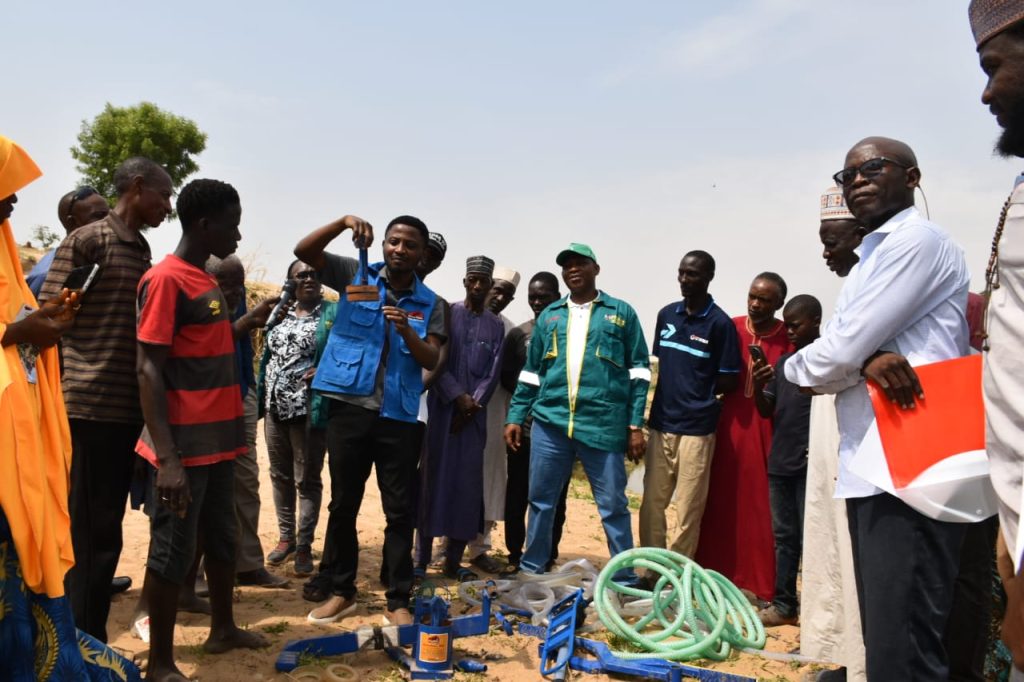
- Hands-on training
- Entrepreneurial incubation
“We set out to create a model for sustainable feed production in Nigeria and have exceeded expectations,” — Prof. A.A. Omoloye
Empowering Entrepreneurs and Building a New Industry
At its core, Insects4Feed is building people, not just systems.
Achievements include:
- 50+ entrepreneurs trained across three cohorts
- 12 BSF businesses launched
- Formation of a cooperative registered with the Corporate Affairs Commission
The cooperative collaborates with the Quality Insects for Feed & Food Association of Nigeria to strengthen advocacy, standardization, and market access.
The revitalized Agribusiness Incubation Centre at the University of Ibadan—supported by Vice Chancellor Kayode Adebowale—has become a hub for innovation and mentorship.
The “Orange House”, an advanced insect and input screening facility, has trained over 230 students, equipping them with practical, industry-ready skills.
From Data to Decisions: The Commodity.ng Advantage
While Insects4Feed builds supply, Commodity.ng provides the intelligence layer that makes adoption scalable and economically viable.
Through real-time data, Commodity.ng enables:
- Feed cost tracking across regions
- Price trend analysis for maize, soybean, and alternative inputs
- Profitability simulations for farmers and feed producers
- Market entry signals for new agribusiness ventures
This integration is critical.
Farmers and producers are no longer making decisions blindly—they can now quantify how switching to BSF impacts their margins in real time.
Driving Innovation Through Strategic Partnerships
The cluster’s impact is amplified through collaboration with:
- Oyo State Government
- International Livestock Research Institute
- Nigerian Breweries
Oyo State’s integration of insect farming into its agricultural roadmap signals growing policy recognition of BSF as a strategic solution.
Additionally, the initiative has engaged over 300 stakeholders through workshops, webinars, and masterclasses—building a strong ecosystem of practitioners and innovators.
Real Impact: Where Innovation Meets Market Reality
1. From Trainee to Market Supplier
Temitope Ojelere transformed her training into a thriving BSF larvae production business. By supplying farmers and recycling organic waste, she contributes to both economic and environmental sustainability.
2. Cutting Costs with Data-Backed Decisions
Akeem Akere, a catfish farmer, reduced feed costs by 30% after incorporating BSF larvae into his feed mix.
Using pricing insights aligned with Commodity.ng data, he was able to:
- Identify cost-saving opportunities
- Optimize feed formulation
- Expand his operations sustainably
3. Bridging Knowledge and Execution
Emmanuel Akinwale’s journey highlights the importance of hands-on training. Through the incubation program, he transitioned from theory to building a viable BSF enterprise.
“The hands-on training bridged the gap between knowledge and real-world application.”
Resilience in the Face of Disruption
Despite setbacks from COVID-19 and academic strikes, the cluster adapted—accelerating implementation and strengthening partnerships to maintain progress.
A Data-Backed Future for Sustainable Agriculture
As the project approaches its conclusion in 2025, its legacy is clear:
- A growing network of BSF entrepreneurs
- Increased adoption of sustainable feed alternatives
- Strong institutional and policy alignment
More importantly, the combination of innovation (Insects4Feed) and intelligence (Commodity.ng) creates a powerful model for the future of agriculture in Nigeria.
Looking ahead, the cluster plans to:
- Expand BSF farming clubs across campuses
- Refine scalable business models
- Deepen partnerships across the value chain
“From a vision to reality, Insects4Feed has shown what’s possible when science meets entrepreneurship,” — Marian Peters
Consortium Members
- NGN Pro Active (Netherlands)
- ProEnto (Netherlands)
- SingleSpark (Netherlands)
- University of Ibadan (Nigeria)
- Nigerian Breweries (Nigeria)
- Quality Insects for Feed & Food Association of Nigeria (QIFFAN)
- International Institute of Tropical Agriculture – Business Incubation Platform (IITA-BIP)
Conclusion: From Innovation to Market Transformation
The Insects4Feed Impact Cluster proves that sustainable agriculture is not just possible—it is scalable, profitable, and necessary.
By converting waste into wealth and insects into high-value protein, the initiative is reshaping Nigeria’s feed industry. And with the integration of real-time market intelligence from Commodity.ng, it moves beyond innovation into data-driven transformation.
The result is a new agricultural paradigm—one where farmers are informed, markets are efficient, and sustainability drives profitability.
Discover more from Commodity Nigeria
Subscribe to get the latest posts sent to your email.