
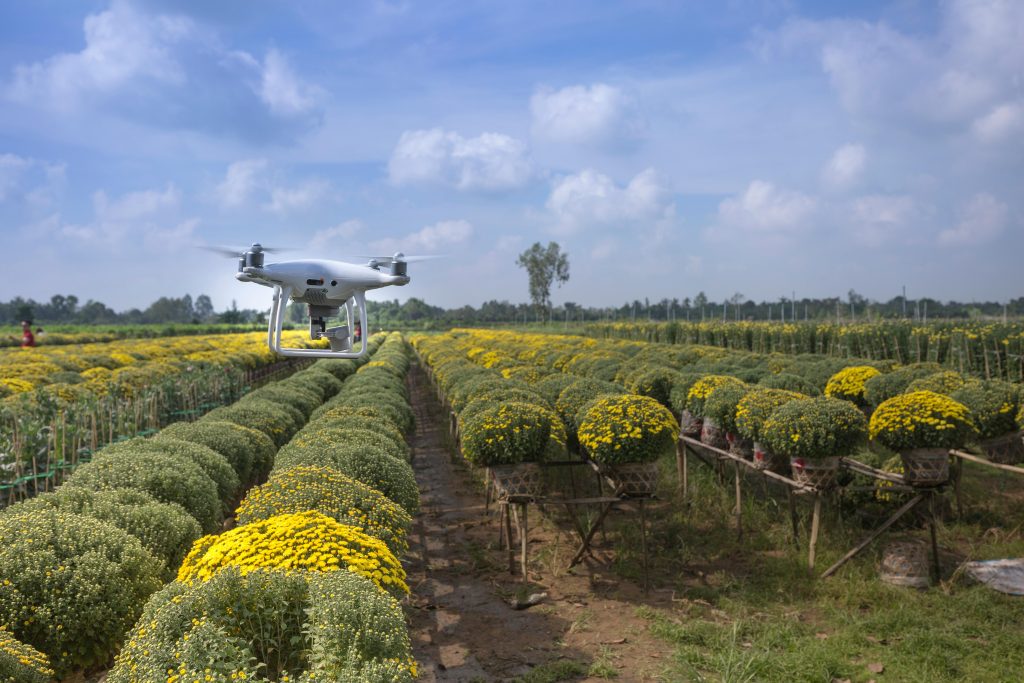
As Nigeria’s population continues to grow rapidly, pressure on the country’s food system is intensifying. With more than 221 million people and increasing demand for food, the agricultural sector faces mounting challenges ranging from poor seed quality and labour shortages to climate variability and shrinking farmland due to urbanization.
Amid these pressures, artificial intelligence (AI) is emerging as a transformative tool capable of improving productivity, reducing inefficiencies, and strengthening food security—particularly for smallholder farmers who form the backbone of Nigeria’s agricultural system.
Across the country, agritech companies, government agencies, and development institutions are increasingly deploying AI-powered solutions to modernize farming practices and provide farmers with access to data-driven support systems.
AI-Powered Agritech Solutions Gain Momentum
Several Nigerian agritech startups are already using artificial intelligence to improve decision-making and farm management.
Kitovu uses AI-driven agronomic advisory systems combined with remote sensing technology to help farmers monitor soil conditions, assess crop health, and optimize yields through personalized recommendations.
Similarly, AirSmat integrates drone technology, satellite imagery, soil sensors, and Internet of Things (IoT) devices to analyze farm data and improve the efficient use of water, fertilizers, and pesticides.
Apollo Agriculture also applies machine learning models to analyze weather data, satellite imagery, and farmer behavior patterns in order to provide customized financing, insurance products, and agronomic support to smallholder farmers.
These technologies are helping farmers make more informed decisions while reducing waste and improving productivity.
Government Expands AI Support for Agriculture
The Nigerian government has also introduced several initiatives aimed at promoting the adoption of artificial intelligence across critical sectors, including agriculture.
The proposed National AI Strategy is expected to provide a national framework for AI development and integration, while the Nigeria Artificial Intelligence Research Scheme (NAIRS) supports AI-focused research and innovation projects.
In addition, World Bank-backed digital agriculture programmes are supporting technology-driven farming solutions designed to improve yields, expand market access, and strengthen agricultural outcomes through innovation.
Building AI Skills for Farmers and Innovators
Recognizing that technology adoption depends heavily on human capacity, Nigeria is also investing in AI training and digital literacy programmes.
The National Information Technology Development Agency (NITDA) has launched initiatives such as the AI Developers Group and other skills programmes aimed at training Nigerians in machine learning, programming, and AI applications.
These programmes include modules on digital agriculture, data science, and the practical use of AI tools in farming systems.
State-level collaborations are also expanding. In Ogun State, partnerships involving the International Institute of Tropical Agriculture (IITA) are helping farmers and extension agents gain practical knowledge in precision agriculture, data analytics, and AI-based farm management systems.
A Shift Toward Data-Driven Farming
Experts believe that AI could play a critical role in helping Nigeria transition from traditional farming practices to more efficient, technology-driven agricultural systems capable of supporting long-term food security and economic growth.
Commodity.ng Insight (In-depth)
Artificial intelligence is increasingly becoming one of the most important technological forces shaping the future of agriculture—not because it replaces farmers, but because it transforms how decisions are made across the food system.
For Nigeria, where smallholder farmers dominate production, the significance of AI lies in its ability to solve one of the country’s biggest agricultural problems: low productivity caused by limited access to accurate, timely, and actionable information.
Traditionally, many Nigerian farmers make decisions based on experience, local observation, or delayed extension support. While valuable, this approach becomes increasingly unreliable under modern conditions marked by climate variability, pest outbreaks, soil degradation, and volatile market conditions. AI changes this by introducing predictive and data-driven farming systems.
The use of satellite imagery, remote sensing, weather analytics, and machine learning allows farmers to make more precise decisions on irrigation, fertilizer application, planting schedules, and pest management. This is especially critical because Nigeria’s agriculture is still highly inefficient in input usage. Many farmers either overuse or underuse fertilizers and chemicals due to lack of accurate guidance, reducing yields and increasing costs.
Another major breakthrough is the integration of AI into financial inclusion systems. One of the reasons smallholder farmers struggle to access loans and insurance is the lack of reliable farm data for risk assessment. AI-powered models can analyze weather patterns, farm performance, and satellite imagery to help financial institutions better evaluate risk, making it easier to extend credit and insurance to farmers previously excluded from formal financial systems.
However, the deeper structural implication is that agriculture is gradually evolving from a labour-driven sector into a knowledge-intensive ecosystem. The competitive advantage in farming is increasingly shifting toward access to information, analytics, and digital tools. This transition could fundamentally reshape rural economies over the next decade.
Yet significant barriers remain. The majority of smallholder farmers still face limited internet access, low digital literacy, weak infrastructure, and high technology adoption costs. This creates a major risk of digital inequality in agriculture, where only farmers with access to technology benefit from productivity gains while others fall further behind.
Capacity building therefore becomes as important as the technology itself. Programmes led by government agencies, agritech startups, and institutions like IITA are essential because they bridge the gap between innovation and practical adoption. Without farmer education and support systems, AI solutions risk remaining urban-centered or commercially exclusive.
There is also an important economic dimension. AI-driven agriculture can improve efficiency, reduce waste, and increase output, but its real long-term value lies in enabling precision agriculture at scale. This means producing more food with fewer resources—less water, fewer chemicals, lower labour intensity, and reduced environmental impact. In a climate-constrained future, this will become increasingly important.
From a national perspective, AI could help Nigeria tackle several interconnected challenges simultaneously: food insecurity, low agricultural productivity, rural poverty, and youth unemployment. It also creates opportunities for a new generation of agritech entrepreneurs building solutions tailored to African farming conditions.
Ultimately, the success of AI in Nigerian agriculture will not depend solely on the sophistication of the technology, but on how effectively it is integrated into the realities of smallholder farming. The future of agriculture in Nigeria may not be fully automated, but it will almost certainly be increasingly data-driven, digitally connected, and intelligence-powered.
Discover more from Commodity Nigeria
Subscribe to get the latest posts sent to your email.



This platform truly lives up to its bold name by treating every player like a champion. arbetwarriorprovincia keeps the energy high with daily boosts and a layout that makes navigation feel completely effortless. I love how the team actually listens to feedback and rolls out improvements that show they care about our experience. Fair play and fast cashouts are exactly what I expected and more. arbetwarriorprovincia