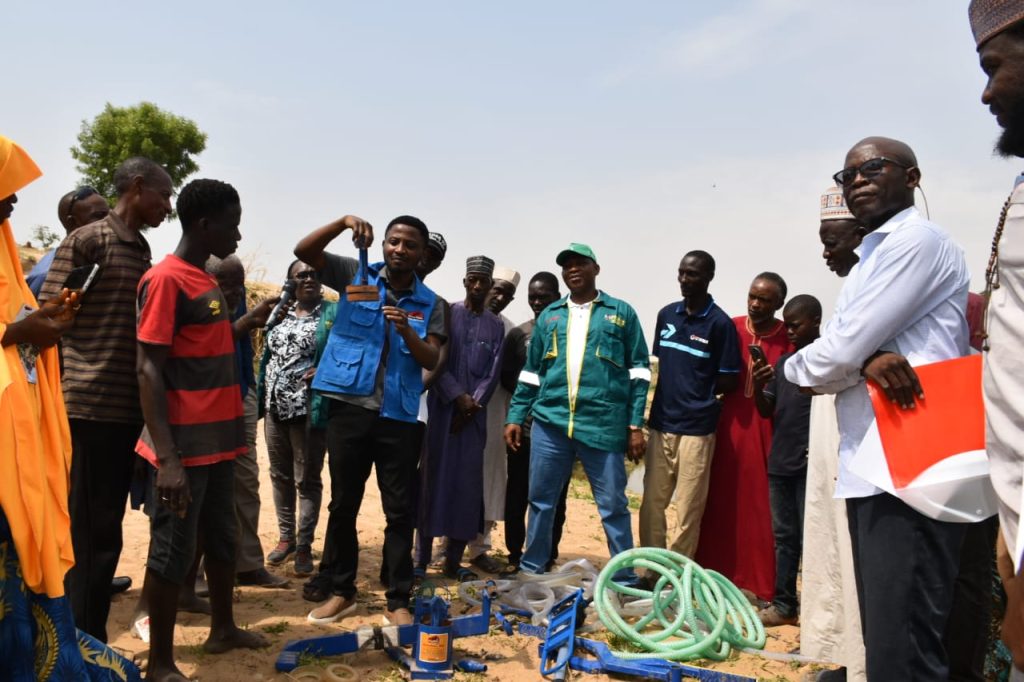
Nigeria has intensified efforts to improve agricultural data collection and market transparency following the handover of the Computer Assisted Personal Interview (CAPI) system by the Food and Agriculture Organization (FAO) to the Federal Ministry of Agriculture and Rural Development (FMARD).
The digital platform, developed under the Agricultural Market Information System (AMIS), is designed to modernize the way agricultural data is collected, processed, and shared across Nigeria’s food system.
The CAPI system enables real-time data gathering from farmers, traders, merchants, and other stakeholders within the agricultural value chain. The platform is also equipped with a web-based repository that allows easier access to agricultural information for policymakers, investors, agribusiness operators, and market participants.
Speaking during the handover ceremony, the ministry emphasized that accurate agricultural data is critical to improving food security, market access, and production planning.
Officials noted that the system would help move Nigeria away from outdated manual data collection methods toward a more digital and efficient monitoring framework capable of improving decision-making across the agricultural sector.
The platform is expected to provide near real-time agricultural information through crowd-sourced data collection involving farmers, traders, and other participants in the food value chain.
According to FAO representatives, the initiative could significantly improve Nigeria’s ability to monitor agricultural production trends, food prices, and market activities while strengthening coordination between states and agricultural institutions.
The National Project Coordinator of AMIS, Olutayo Oyawale, explained that the system would help solve one of Nigeria’s biggest agricultural challenges: the lack of reliable and timely data.
He noted that investors, farmers, traders, and agribusiness operators would be able to make better decisions using accurate information on production levels, pricing trends, and market opportunities.
The digital system is also expected to reduce operational costs for government agencies by eliminating paper questionnaires, reducing data entry expenses, and enabling GPS-supported monitoring during field data collection.
As part of the project rollout, FAO conducted a pilot crowdsourced data collection exercise covering 18 crops across selected markets and local government areas in Kaduna State. The pilot involved more than 800 farmers and traders over a four-month period.
The broader AMIS initiative, supported by the Bill & Melinda Gates Foundation, was established by G20 agriculture ministers to improve global food market transparency, monitor price volatility, and strengthen food security systems.
How Commodity.ng Can Help Solve Nigeria’s Agricultural Data Challenge
One of the biggest structural problems in Nigeria’s agricultural sector is not just low production—it is the absence of reliable, accessible, and actionable data across the food value chain. This is where Commodity.ng can play a transformative role.
1. Building a Centralized Agricultural Intelligence Platform
Commodity.ng can serve as a centralized agricultural intelligence hub where farmers, traders, processors, investors, and policymakers access real-time market information, commodity prices, production trends, weather updates, and supply-demand insights.
Many Nigerian farmers currently operate with limited information, often selling produce below market value because they lack access to pricing intelligence. Commodity.ng can bridge this gap through live commodity dashboards, regional price tracking, and digital market analysis.
2. Crowdsourcing Agricultural Data Nationwide
Using mobile technology and farmer networks, Commodity.ng can create a crowdsourced agricultural reporting system where farmers and traders contribute real-time field data on crop conditions, prices, pest outbreaks, rainfall patterns, and harvest volumes.
This would improve transparency within the agricultural market while generating localized intelligence that can support production planning and investment decisions.
3. Improving Market Access for Farmers
One major problem Nigerian farmers face is market disconnect. Farmers often produce without knowing actual market demand, leading to gluts, waste, and post-harvest losses.
Commodity.ng can help solve this by connecting producers directly with processors, wholesalers, exporters, and institutional buyers through a digital marketplace ecosystem powered by data analytics.
4. Supporting Agribusiness Investment Decisions
Reliable agricultural data is critical for attracting investment. Banks, insurers, processors, and agribusiness investors require production statistics, regional trends, and risk analysis before deploying capital.
Commodity.ng can position itself as a trusted source of agricultural intelligence capable of supporting investment decisions, commodity forecasting, supply chain mapping, and agribusiness planning.
5. Enhancing Food Security Monitoring
Through data aggregation and analytics, Commodity.ng can help monitor food supply trends, regional shortages, and commodity price volatility across Nigeria.
This can support early warning systems for food inflation, climate-related disruptions, and supply chain bottlenecks—helping stakeholders respond proactively rather than reactively.
6. Empowering Smallholder Farmers with Information
Access to information is increasingly becoming as important as access to land or fertilizer. Commodity.ng can provide smallholder farmers with simplified digital tools including:
- Market price alerts
- Weather forecasts
- Planting recommendations
- Pest and disease alerts
- Buyer discovery systems
- Commodity trend analysis
- Agribusiness education resources
This would help farmers transition from subsistence farming into more market-oriented production systems.
Commodity.ng Insight (In-depth)
Nigeria’s agricultural sector has historically suffered from a major information deficit. In many cases, decisions affecting millions of farmers are made using outdated estimates, fragmented surveys, or incomplete market data. This creates inefficiencies across the entire food system—from production planning to pricing, storage, logistics, and policy formulation.
The introduction of systems like CAPI reflects a growing recognition that agriculture can no longer function efficiently without digital intelligence infrastructure.
Modern agriculture is increasingly data-driven. Countries with advanced agricultural economies rely heavily on real-time information systems to forecast production, monitor market trends, track commodity flows, and manage food security risks. Nigeria is gradually moving in that direction, but the challenge remains scale, coordination, and accessibility.
The deeper issue is that agricultural data in Nigeria is still highly fragmented. Farmers, traders, government agencies, commodity buyers, transporters, and processors often operate independently without integrated information systems. This weakens efficiency and increases uncertainty across the value chain.
This is where platforms like Commodity.ng become strategically important. Beyond being a media or information platform, Commodity.ng has the potential to evolve into a digital agricultural intelligence ecosystem capable of connecting data, markets, and stakeholders nationwide.
The future of agriculture will increasingly belong to organizations that can organize information as effectively as they organize production. Data is becoming the new infrastructure of agriculture.
For Nigeria, improving agricultural data systems is not simply about statistics—it is about improving food security, reducing market inefficiencies, attracting investment, minimizing losses, and enabling smarter decision-making across the economy.
Ultimately, the ability to collect, interpret, and distribute agricultural intelligence may become one of the most valuable tools for transforming Nigeria’s food system in the coming decade.
Discover more from Commodity Nigeria
Subscribe to get the latest posts sent to your email.