

Agricultural experts, policymakers, and farmers have called for a renewed focus on indigenous crops as a key strategy for building climate-resilient agriculture in Nigeria.
The call was made at the end of a two-day Farmer–Scientist Engagement Programme and Policymakers/Stakeholders Summit held at Michael Okpara University of Agriculture. The event brought together stakeholders across the agricultural value chain to explore sustainable solutions to climate-related challenges affecting food production.
🌍 Bridging Science and Farming
The programme, co-convened by Carol Ibe in collaboration with the Agri-Impact and Innovation Project (AGRIIP) and Olayinka Nwachukwu, is part of a broader initiative focused on strengthening Nigeria’s agricultural resilience through molecular biotechnology.
Funded by the Mastercard Foundation and the University of Cambridge Climate Resilience and Sustainability Research Fund, the project aims to connect scientific innovation with real-world farming practices.
🌾 Climate Change Threatens Food Systems
In a keynote address, Sylvester N. Ibe highlighted the growing risks climate change poses to agriculture and food security in Nigeria.
He explained that climate resilience goes beyond adaptation—it involves building systems that can withstand shocks such as droughts, flooding, and extreme weather conditions, while maintaining productivity.
Despite global efforts under frameworks like the Sustainable Development Goals, Nigeria’s agricultural sector continues to face persistent challenges, including insecurity, high input costs, and inadequate infrastructure.
🧬 Indigenous Crops as a Strategic Solution
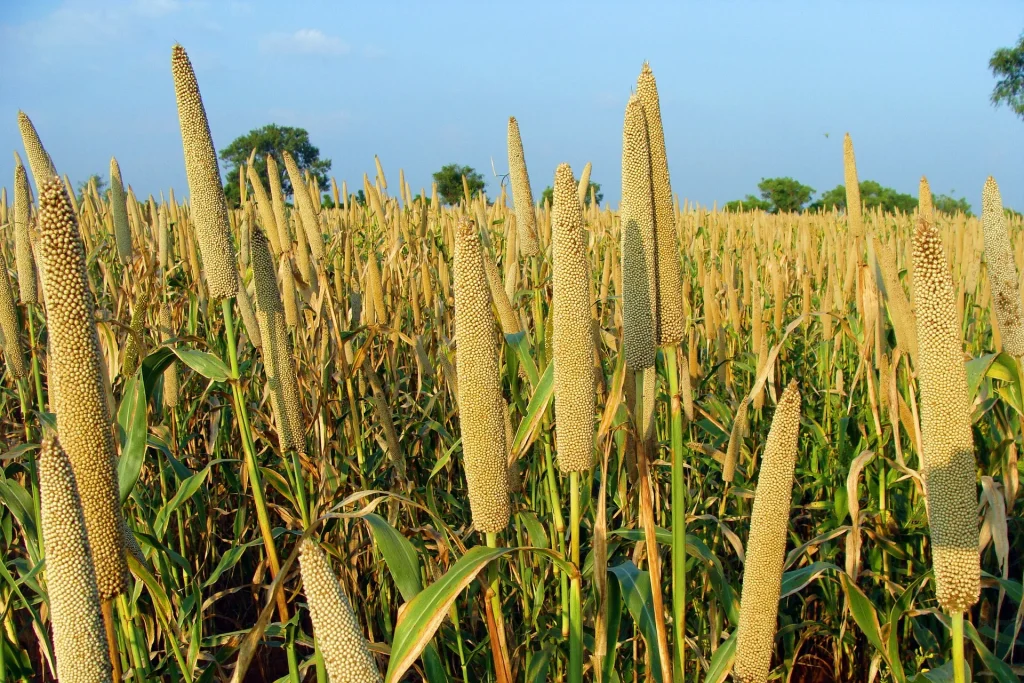
A central theme of the summit was the urgent need to revitalise indigenous crops, which are naturally adapted to local environmental conditions.
Carol Ibe expressed concern that many traditional African crops are gradually disappearing due to limited research investment and policy neglect.
She noted that Africa imports approximately $75 billion worth of food annually, despite having indigenous crops that are:
- Naturally drought-resistant
- Well-suited to local soils
- Nutritionally rich
Examples highlighted include:
- Akidi (Bambara beans)
- Cocoyam
- Three-leaf yam
- Ukpo
According to her, promoting these crops can significantly enhance food security, reduce import dependence, and preserve cultural heritage.
🏛️ Government and Policy Direction
The Senior Special Assistant to the President on Agribusiness and Innovation, Kingsley C. Uzoma, outlined ongoing federal government efforts to strengthen climate resilience through policy reforms, public awareness, and targeted agricultural programmes.
Meanwhile, the Vice-Chancellor of Michael Okpara University of Agriculture, Ursula Ngozi Akanwa, reaffirmed the institution’s commitment to advancing research that supports sustainable food systems and climate-smart agriculture.
🤝 Collaboration as the Missing Link
Project Lead Olayinka I. Nwachukwu emphasised that the initiative is designed to bridge the long-standing gap between research and practical farming.
She stressed that stronger collaboration among farmers, scientists, and policymakers is essential for developing effective, scalable solutions to climate challenges.
Similarly, Project Co-Lead George Ikwuakolam Okoro noted that innovation, partnerships, and farmer support are critical to building resilient agricultural systems and improving livelihoods.
👩🌾 Farmers and Stakeholders Respond
Participants, including farmers and nutrition experts, described the programme as impactful and practical.
A nutritionist, Kelechi Ikpe, highlighted the importance of integrating nutrition into agricultural development, while farmers such as Chimaobi Ifeanyi and Veronica Nnanna noted that the engagement provided valuable insights to improve their farming practices.
📊 Commodity.ng Insight: Indigenous Crops Are Nigeria’s Untapped Climate Advantage
Nigeria’s push for climate-resilient agriculture is often centred on modern technologies—but this summit highlights a more immediate and underutilised solution: indigenous crops.
🔍 What This Means for the Market
1. Climate Resilience Already Exists Locally
Indigenous crops are naturally adapted to Nigeria’s climate conditions.
👉 This reduces:
- Irrigation costs
- Crop failure risks
- Dependence on imported seeds
2. Import Substitution Opportunity
With Africa spending $75 billion annually on food imports, indigenous crops present a clear pathway to:
- Reduce foreign exchange pressure
- Boost local production
- Strengthen food sovereignty
3. Value Chain Gap = Business Opportunity
Most indigenous crops lack:
- Processing infrastructure
- Branding and packaging
- Market visibility
👉 This creates opportunities in:
- Agro-processing
- Export development
- Retail positioning
4. Research-to-Market Disconnect
One of the biggest challenges remains the gap between innovation and adoption.
👉 The real opportunity lies in:
- Translating research into practical tools
- Scaling farmer education
- Leveraging digital advisory platforms
🔮 The Road Ahead
For Nigeria to build true climate resilience, it must combine:
- Modern agricultural science
- Traditional crop systems
- Efficient market structures
Indigenous crops should no longer be viewed as “subsistence foods,” but as strategic assets in Nigeria’s agricultural transformation.
📌 Final Take
Nigeria does not need to import resilience—it already has it in its indigenous crops.
The real challenge is:
Scaling production, investing in value chains, and connecting these crops to modern markets.
If properly developed, indigenous crops could become a cornerstone of Nigeria’s food security strategy and a powerful driver of sustainable economic growth.
Discover more from Commodity Nigeria
Subscribe to get the latest posts sent to your email.


Bet.nacional é o lugar certo pra quem busca apostas online confiáveis e com boas opções. Gosto muito da interface e da rapidez dos saques. bet.nacional
Looking to try my luck! Downloading from ‘tai xoso66.com’ right now. Fingers crossed! Get yours here: tai xoso66.com