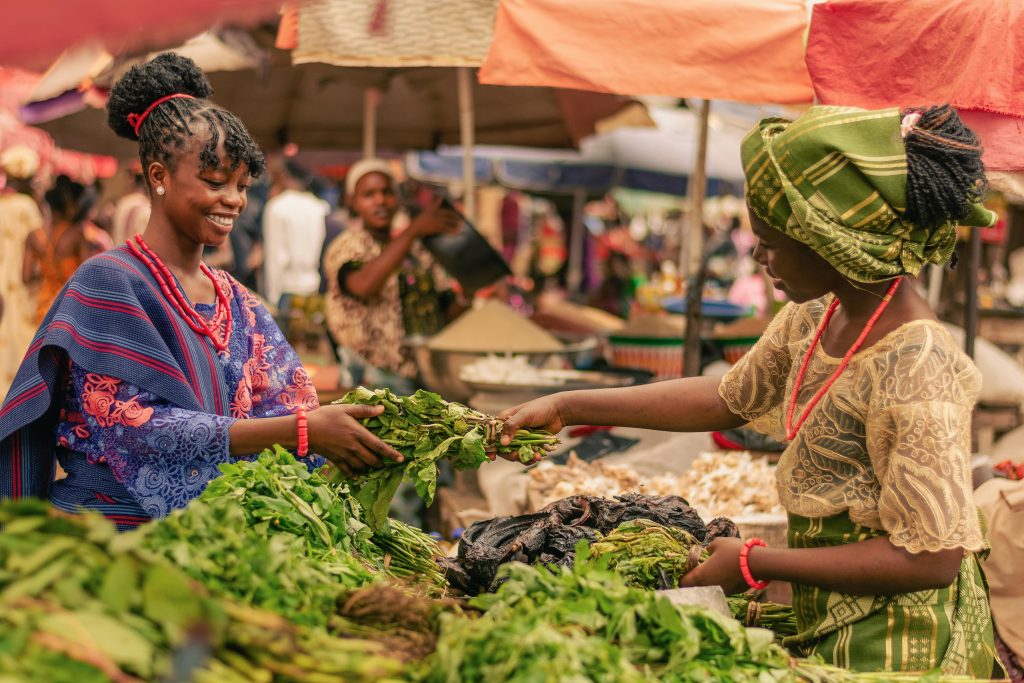
Women account for a significant majority of Nigeria’s subsistence farming population, highlighting their central role in the country’s food production system. This was disclosed by Shakin Agbayewa, Deputy Chairman of the All Farmers Association of Nigeria (AFAN) in Lagos.
Speaking in an interview, Agbayewa stated that women make up about 80% of subsistence farmers in Nigeria, particularly in food crop cultivation, processing, and local market distribution. Despite their critical contributions, he noted that many female farmers continue to operate under severe constraints.
According to him, limited access to farmland, credit facilities, improved seedlings, and mechanized equipment remains a major challenge. He further pointed out that women are disproportionately affected by low mechanization levels, with the majority lacking access to modern farming tools.
Agbayewa emphasized that strengthening women’s capacity in agriculture would directly improve food supply, household welfare, and overall rural development. He noted that women are deeply involved across key agricultural value chains, including cassava processing, vegetable farming, poultry production, and grain trading.
He called on government institutions, financial bodies, and development partners to design targeted interventions that address the specific needs of female farmers. These include access to low-interest financing, cooperative support structures, irrigation systems, and capacity-building programs.
He also stressed the importance of addressing systemic issues such as middlemen exploitation and land tenure restrictions, which continue to limit women’s ability to scale their farming activities.
According to Agbayewa, Nigeria’s agricultural growth could accelerate significantly if women are empowered to transition from subsistence-level production to commercially viable agribusiness operations.
Commodity.ng Insight (In-depth)
The revelation that women account for up to 80% of subsistence farmers in Nigeria exposes a fundamental structural reality: Nigeria’s food system is largely powered by an undercapitalized, underserved female workforce. This is not just a gender issue—it is one of the most critical productivity and food security challenges facing the country.
At its core, this imbalance represents a productivity gap disguised as a social issue. Women dominate the lowest level of agricultural production—subsistence farming—while having the least access to the resources that drive scale: land ownership, financing, mechanization, and technology. This creates a system where the majority of food producers operate at minimal efficiency, limiting overall national output.
The mechanization gap is particularly significant. If 80% of non-mechanized farmers are women, it means that a large portion of Nigeria’s agricultural labour force is still dependent on manual tools. This directly affects yield per hectare, production speed, and post-harvest efficiency. Mechanization alone could dramatically increase output if targeted specifically at this segment.
Access to land is another critical constraint. Many female farmers operate on small, informal, or borrowed plots due to cultural and legal limitations in land ownership. Without secure land tenure, it becomes difficult to access credit, invest in long-term improvements, or scale operations. This keeps women locked in subsistence cycles rather than enabling commercial growth.
Financial exclusion further compounds the problem. Traditional lending systems often require collateral that women typically do not possess, effectively shutting them out of formal credit markets. As a result, many rely on informal financing, which limits expansion and increases vulnerability to shocks.
However, this challenge also presents one of the largest untapped opportunities in Nigeria’s agricultural transformation. Empowering women farmers is not just a social intervention—it is a high-impact economic strategy. Studies consistently show that when women gain access to the same resources as men, farm productivity increases significantly, leading to improved food availability and stronger rural economies.
Another key issue is value chain positioning. Women are heavily involved in production and processing but often capture the least value due to exploitation by middlemen and weak market access. Digital marketplaces, cooperative systems, and direct-to-market platforms could help shift more value into the hands of female producers.
From a policy perspective, the solution requires targeted, not generalized interventions. Gender-neutral agricultural programs often fail because they do not address the unique structural barriers women face. What is needed are tailored solutions: land access reforms, women-focused financing models, mechanization subsidies, and extension services designed specifically for female farmers.
In the broader context, Nigeria cannot achieve meaningful food security or agricultural industrialization without addressing this imbalance. Women are already the backbone of the system—the next step is transforming them into commercial-scale producers and agribusiness leaders.
Ultimately, empowering women in agriculture is not optional—it is one of the fastest and most effective pathways to increasing national productivity, reducing poverty, and strengthening Nigeria’s entire food system.
Discover more from Commodity Nigeria
Subscribe to get the latest posts sent to your email.