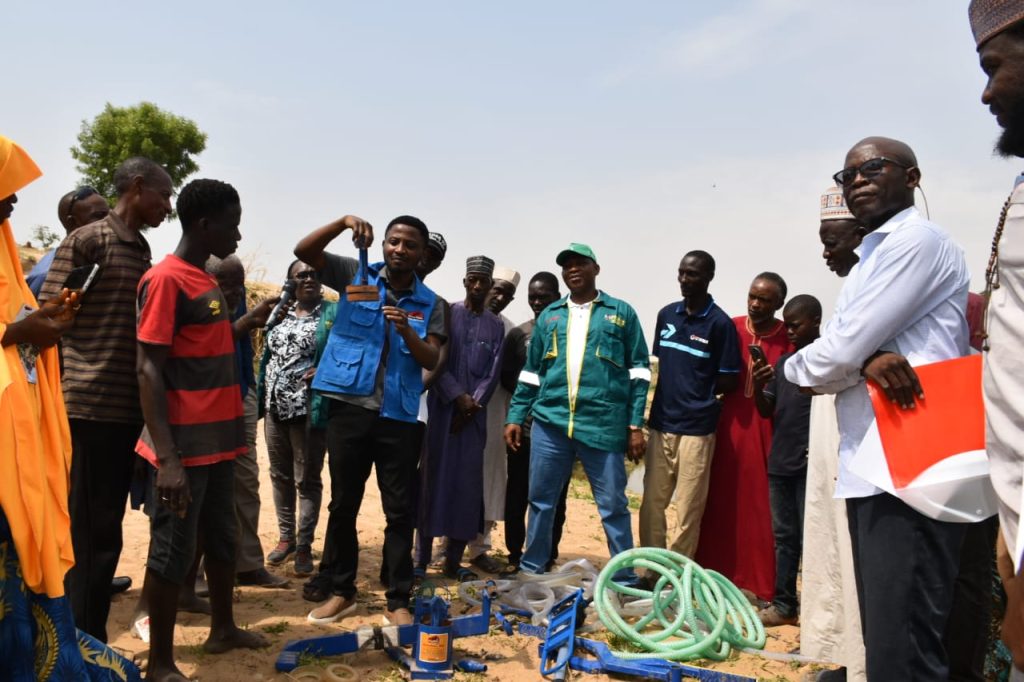
ActionAid Nigeria has trained over 135,000 smallholder farmers and young people—most of them women—in climate-smart and agroecological farming practices across multiple states, as part of efforts to build resilience and strengthen inclusive food systems.
The programme, implemented under the Strategic Partnerships for Agroecology and Climate Justice in West Africa (SPAC), focuses on promoting sustainable farming methods while improving farmers’ ability to adapt to climate-related challenges.
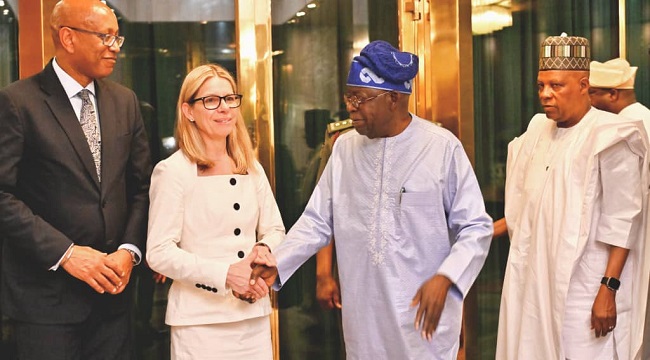
Speaking at a national town hall in Abuja, Country Director Andrew Mamedu emphasized that land remains a critical pillar for agricultural productivity, climate resilience, and sustainable livelihoods. He noted that beyond training, the initiative has also made progress in helping farmers—especially women and youth—gain access to farmland through collaboration with communities, traditional institutions, and government bodies.
Several land access milestones were highlighted, including allocations to farmer cooperatives and agroecology groups in states such as Ondo, Delta, and Jigawa. These efforts have enabled the establishment of model farms and expanded cultivation opportunities for smallholder farmers.
Despite these gains, Mamedu pointed out that structural barriers continue to limit equitable land access, particularly for women and young people. Key challenges include competing land uses, poor infrastructure, and the long distances many farmers must travel to access farmland.
He also noted that while the Land Use Act was designed to regulate land administration, it has not fully addressed issues of accessibility, tenure security, and fairness due to bureaucratic processes and socio-cultural constraints.
The town hall meeting, themed around land access and governance, aimed to bridge the gap between policy, research, and practical implementation, particularly in addressing climate shocks, land degradation, and food insecurity.
Also speaking, Permanent Secretary of the Federal Ministry of Agriculture and Food Security, Marcus Ogunbiyi (represented at the event), acknowledged that land access remains a major challenge affecting millions of Nigerians. He stressed that legal, structural, and cultural barriers continue to hinder productivity and inclusive agricultural growth.
Stakeholders at the event called for alternative land governance frameworks that are more inclusive and responsive, particularly for women and youth, while promoting agroecology as a pathway to sustainable and climate-resilient agriculture.
Commodity.ng Insight (In-depth)
This development brings together three of the most critical pillars shaping Nigeria’s agricultural future—climate resilience, human capacity development, and land access—but it also reveals a deeper structural contradiction: while training and awareness are scaling rapidly, the foundational constraints required to translate that knowledge into productivity remain only partially addressed.
Training 135,000 farmers is significant, especially in climate-smart agriculture, which is increasingly essential in a country facing recurring floods, droughts, and soil degradation. Agroecology, in particular, offers a sustainable pathway by reducing reliance on chemical inputs, improving soil health, and enhancing long-term productivity. However, training alone does not automatically translate into increased output or income unless farmers have secure access to land, inputs, and markets.
Land emerges as the most critical bottleneck in this entire equation. The article repeatedly reinforces a key reality: without land ownership or secure tenure, farmers cannot scale, invest, or fully adopt climate-smart practices. Agroecology itself often requires long-term investments such as tree planting and soil regeneration, which are only viable when farmers have guaranteed control over land over time. This means that land reform is not just a governance issue—it is directly tied to productivity and climate adaptation.
Another important dimension is the gendered nature of land access. With most beneficiaries being women, the structural barriers they face—cultural restrictions, weak inheritance rights, and limited institutional support—create a situation where those most trained are often the least empowered to act at scale. This creates a mismatch between capacity building and actual production potential.
The initiative also highlights the importance of community-driven land allocation models, which appear to be more flexible and responsive than formal systems under the Land Use Act. While these localized solutions are effective in the short term, they are not yet scalable nationwide. This raises a critical policy question: how can Nigeria institutionalize flexible, inclusive land access models without compromising governance and transparency?
From a systems perspective, this effort reflects a broader transition toward climate-resilient agriculture, but it also exposes the need for integration. Climate-smart training must be linked with financing, land security, mechanization, and market access to produce real economic outcomes. Without this integration, such programmes risk becoming high-impact in awareness but limited in measurable productivity gains.
There is also a deeper economic implication: agroecology and climate-smart agriculture are not just environmental strategies—they are cost-reduction and risk-management tools. By improving soil health and reducing dependence on expensive inputs, farmers can stabilize production even in volatile conditions. This is especially important in Nigeria, where rising input costs and climate shocks are already squeezing farm profitability.
Ultimately, this initiative demonstrates that Nigeria is making progress in building agricultural resilience, but it also underscores a fundamental truth: training farmers is the easiest part of transformation; restructuring the systems they operate in is the real challenge.
For Nigeria to fully benefit from such large-scale capacity-building programmes, land reform, institutional efficiency, and value chain integration must move at the same pace as farmer education. Only then can climate-smart knowledge translate into sustained productivity, higher incomes, and long-term food security
Discover more from Commodity Nigeria
Subscribe to get the latest posts sent to your email.