
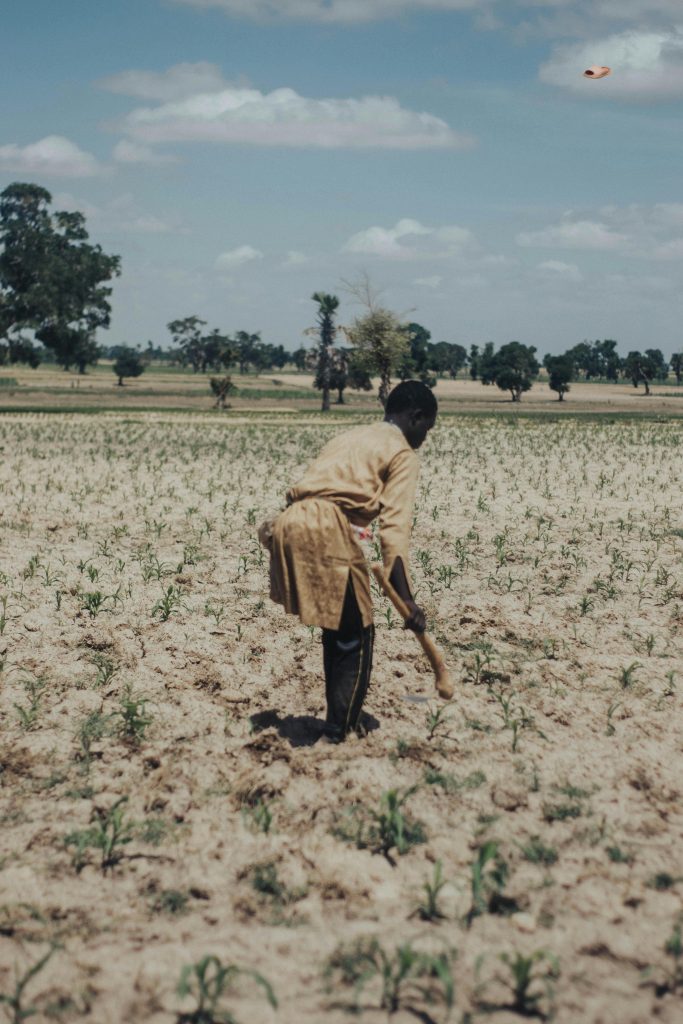
As Nigeria transitions into the dry season, farmers across the country are once again faced with one of the most demanding phases of the agricultural calendar. Reduced rainfall, rising temperatures, water scarcity, and increasing input costs combine to place significant pressure on farm productivity and rural livelihoods.
While some farmers adopt irrigation systems to sustain production during this period, many others are forced to scale back or abandon farming activities entirely due to financial constraints and limited access to water infrastructure.
Dry season farming in Nigeria is not new, but its intensity is increasing due to climate variability, land degradation, and rising competition for water resources. These challenges make it harder for smallholder farmers—who form the majority of producers—to maintain consistent output throughout the year.
However, experts and agricultural practitioners argue that the dry season should not be viewed solely as a period of loss, but as a strategic opportunity for productivity if properly managed.
Irrigation as a Survival Tool, Not a Luxury
One of the most critical enablers of dry season farming is irrigation. From small-scale pump systems to drip irrigation technologies, access to controlled water supply allows farmers to continue cultivation when rainfall is absent. However, high installation and operating costs remain a major barrier for many rural farmers.
Without affordable irrigation solutions, many farmers are effectively locked out of dry season production, leading to reduced annual income and seasonal food shortages.
Crop Selection and Climate Adaptation
Another key survival strategy lies in crop selection. Drought-resistant and short-cycle crops such as vegetables, maize varieties, and legumes are better suited for dry conditions. Farmers who adjust planting patterns based on seasonal conditions are more likely to maintain stable yields.
Climate-smart agriculture practices, including mulching, soil moisture conservation, and staggered planting, are also increasingly important in reducing water loss and improving soil resilience.
Economic Pressure and Input Costs
Beyond environmental challenges, rising costs of fertilizers, fuel, and irrigation equipment are forcing many farmers out of production during the dry season. This cost pressure reduces profitability and discourages reinvestment in the next farming cycle.
For smallholder farmers, the dry season often becomes a period of financial strain rather than opportunity, especially where access to credit and insurance is limited.
The Bigger Picture: Systemic Constraints
The challenges of dry season farming in Nigeria are not only technical but structural. Limited rural infrastructure, weak extension services, poor access to financing, and inadequate water management systems all contribute to low resilience among farmers.
Without coordinated investment in irrigation infrastructure, storage systems, and farmer support services, dry season farming will continue to exclude a large portion of Nigeria’s agricultural population.
Commodity.ng Insight (In-depth)
The dry season in Nigeria exposes one of the most important realities of the country’s agricultural system: production is still heavily rain-dependent and structurally vulnerable to climate variability. This means that national food output is not consistent year-round, creating predictable cycles of scarcity, price inflation, and income instability for farmers.
At its core, dry season farming represents both a challenge and a massive untapped economic opportunity. Countries with strong irrigation systems treat the dry season as a high-value production window, not a downtime. In Nigeria, however, it remains largely underutilized due to weak infrastructure and limited access to affordable water management technologies.
One of the most critical constraints is irrigation access inequality. While commercial farms and certain agricultural clusters can invest in irrigation systems, the majority of smallholder farmers cannot. This creates a dual agricultural economy: a small, productive dry-season farming segment and a large population excluded from year-round cultivation. Bridging this gap is essential for improving national food supply stability.
Another key issue is cost structure distortion. Dry season farming is inherently more input-intensive—requiring irrigation, energy (fuel or electricity), and often higher fertilizer application due to soil moisture loss. When these costs rise without corresponding access to credit or subsidies, farmers naturally exit production. This explains why many rural farmers abandon fields during this period despite available demand in the market.
From a systems perspective, Nigeria’s dry season challenge is not just about water scarcity—it is about the absence of a coordinated agricultural infrastructure ecosystem. Effective dry season farming requires integration of irrigation networks, energy access, storage systems, extension services, and financing mechanisms. Currently, these components operate in isolation, limiting overall effectiveness.
However, the opportunity is significant. If properly developed, dry season agriculture could become a major driver of year-round food production, rural income stabilization, and inflation control. Crops like vegetables, tomatoes, onions, and legumes have strong market demand during dry periods, often commanding higher prices due to seasonal scarcity. This creates a strong economic incentive for structured investment in irrigation and climate-smart farming systems.
Additionally, climate change is making rainfall patterns less predictable, which means reliance on rainy-season farming alone is no longer sustainable. This shift makes controlled agriculture systems (especially irrigation-based farming) not just an advantage, but a necessity for national food security.
In conclusion, the dry season should be reframed from a period of agricultural stress to a strategic production cycle that can significantly strengthen Nigeria’s food system. Achieving this transformation will require deliberate investment in irrigation infrastructure, affordable financing for farmers, climate-smart technologies, and strong extension support systems. Without these, dry season farming will remain an underdeveloped opportunity in Nigeria’s agricultural economy.
Discover more from Commodity Nigeria
Subscribe to get the latest posts sent to your email.



What an incredible place to unwind and chase those big wins. I have been playing regularly for months and the experience stays consistent every single time. Promotions are straightforward and the team goes out of their way to keep things exciting. It truly feels like a home away from home. Come visit phlove33 and join the winning streak