
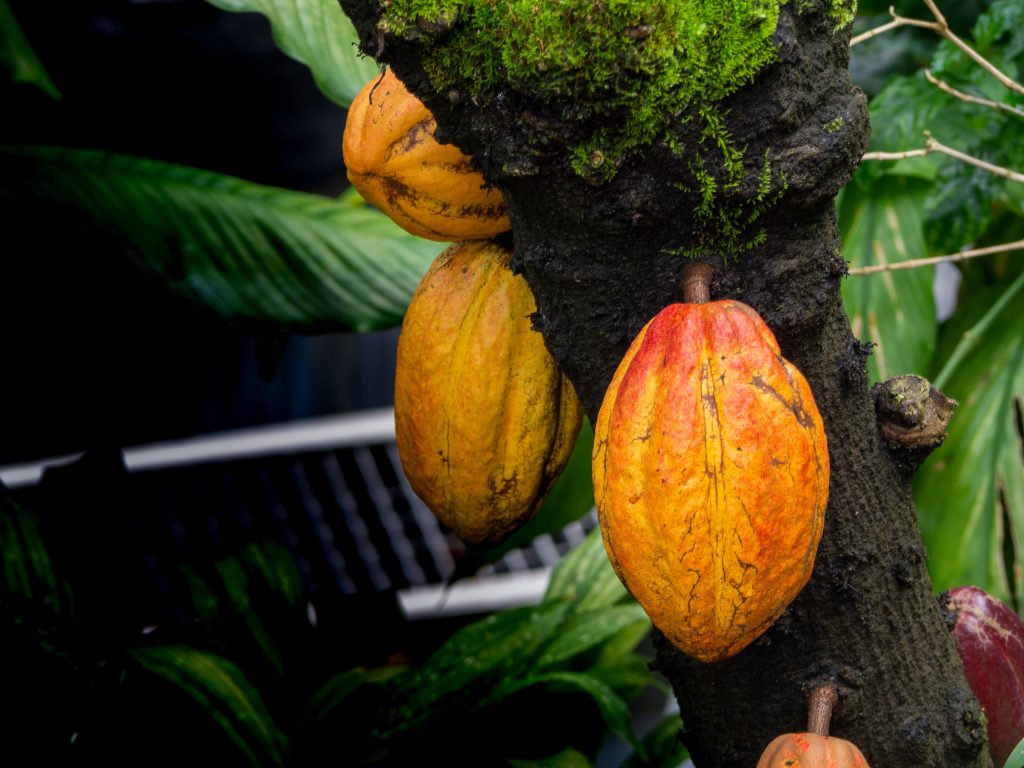
FG Launches One Million Improved Cocoa Seedlings to Boost Production and Agricultural Exports
The Federal Government has launched one million improved hybrid cocoa seedlings in a major step towards revitalising Nigeria’s cocoa industry, increasing agricultural exports and improving the productivity of cocoa farmers across the country.
The initiative, unveiled at the Cocoa Research Institute of Nigeria (CRIN) in Ibadan, forms part of the Federal Government’s broader strategy to rehabilitate ageing cocoa plantations, increase yields and strengthen Nigeria’s position in the global cocoa market.
Speaking during the inauguration, the Minister of Agriculture and Food Security, Senator Abubakar Kyari, said the programme aligns with President Bola Tinubu’s Renewed Hope Agenda for agriculture, which seeks to improve farmers’ incomes, expand agricultural exports, enhance rural livelihoods and strengthen the country’s economic resilience.
According to the minister, the distribution of improved hybrid cocoa seedlings represents a strategic investment in one of Nigeria’s most important cash crops, with the potential to significantly increase production and generate higher earnings for farmers.
Faster Maturity, Higher Productivity
Senator Kyari explained that the newly introduced hybrid cocoa varieties are designed to mature much faster than conventional cocoa trees.
Unlike traditional cocoa varieties that often take between three and five years to begin fruiting, the improved seedlings are expected to start producing pods within two years, allowing farmers to earn returns on their investments much earlier.
The initiative is also expected to support the gradual replacement of ageing cocoa trees that have become less productive after decades of cultivation.
Many cocoa plantations across Nigeria consist of old trees with declining yields, making farm rehabilitation essential to sustaining the country’s cocoa industry.
Government believes that introducing improved planting materials will increase productivity, improve bean quality and enhance farmers’ profitability over the long term.
Strengthening Export Standards and Traceability
As part of efforts to improve Nigeria’s competitiveness in international cocoa markets, Senator Kyari directed the National Cocoa Management Committee and the National Cocoa Compliance Platform to deepen collaboration with cocoa farmers on farm mapping and product traceability.
He noted that improving traceability systems is essential to ensuring Nigeria’s cocoa exports comply with the European Union’s sustainability and traceability requirements, which have become increasingly important for accessing premium international markets.
The minister stressed that strengthening compliance would help preserve Nigeria’s export opportunities while enhancing the country’s reputation as a supplier of high-quality, sustainably produced cocoa.
Stakeholders Welcome the Initiative
The Executive Secretary of the Agricultural Research Council of Nigeria (ARCN), Dr. Adamu Dabar, described the inauguration as a renewed commitment by the Federal Government to reposition Nigeria’s cocoa industry through the adoption of improved planting materials, research-driven innovations and modern production practices.
According to him, strengthening research and technology adoption will play a vital role in increasing cocoa productivity and supporting long-term growth within the sector.
Also speaking, the President of the Association of Cocoa Farmers of Nigeria (ACFN), Mr. Mufutau Abolarinwa, noted that cocoa remains one of Nigeria’s leading agricultural export commodities and an important source of foreign exchange earnings.
He expressed optimism that the distribution of improved seedlings would significantly increase productivity, improve farmers’ incomes and strengthen the competitiveness of Nigeria’s cocoa industry.
In his remarks, the Acting Executive Director of the Cocoa Research Institute of Nigeria (CRIN), Dr. Adedeji Rasheed, said the initiative would contribute to the rehabilitation of ageing cocoa plantations while encouraging greater youth participation in cocoa farming.
He added that increasing the availability of improved planting materials would help expand national cocoa production and generate higher export earnings for the country.
Strengthening Nigeria’s Cocoa Export Industry
Cocoa remains one of Nigeria’s leading non-oil export commodities and an important source of foreign exchange.
Global demand for cocoa continues to rise, driven by the expanding chocolate and confectionery industries, creating significant opportunities for producing countries.
The Federal Government believes increasing cocoa production will not only improve farmers’ incomes but also strengthen Nigeria’s export earnings, support economic diversification and reduce dependence on crude oil revenues.
Officials also noted that improving cocoa productivity would create additional employment opportunities across the cocoa value chain, including processing, logistics, warehousing, marketing and export services.
Renewing Ageing Cocoa Plantations
One of the programme’s major objectives is to reverse the declining productivity of Nigeria’s ageing cocoa plantations.
Agricultural experts have consistently identified old cocoa trees, poor planting materials and inadequate farm rehabilitation as key factors limiting national production despite favourable growing conditions.
Replacing old plantations with high-yielding, disease-resistant hybrid varieties is expected to improve productivity while increasing resilience to pests, diseases and climate-related challenges.
The initiative also complements broader government efforts to modernise agriculture through improved seedlings, mechanisation, climate-smart farming practices and stronger private-sector participation.
Commodity.ng Insight
Nigeria has the potential to become one of the world’s leading cocoa producers, but unlocking that potential will require more than distributing improved seedlings. While the launch of one million hybrid cocoa seedlings is a significant milestone, long-term success will depend on integrating improved genetics with farmer training, extension services, sustainable production practices and stronger value addition.
The minister’s emphasis on traceability is particularly timely as international markets increasingly demand sustainably sourced agricultural products that comply with environmental and supply-chain transparency standards. Meeting these requirements will be essential for maintaining access to premium export markets, particularly within the European Union.
Why This Matters
- Hybrid cocoa seedlings mature faster, enabling farmers to earn income sooner.
- Farm rehabilitation will improve productivity and replace ageing plantations.
- Traceability and farm mapping will help Nigerian cocoa meet international export standards.
- Higher cocoa production can increase foreign exchange earnings and support economic diversification.
- Youth participation and local value addition can strengthen the long-term sustainability of Nigeria’s cocoa industry.
Bottom Line
Reviving Nigeria’s cocoa sector requires a comprehensive strategy that combines improved planting materials, research, farmer education, traceability, processing and market access. The launch of one million hybrid cocoa seedlings represents an important step towards rebuilding one of Nigeria’s most valuable agricultural export industries while creating greater opportunities for farmers, processors and the broader economy.
Discover more from Commodity Nigeria
Subscribe to get the latest posts sent to your email.



Logging in here is always a smooth experience thanks to the quick load times and secure gateway. I appreciate how they keep the game library fresh and the customer chat actually solves problems on the first try. My weekend routine definitely revolves around this place now. roobetlogin
I have tried quite a few platforms over the years but this one stands out for its reliability. Transactions are fast and the VIP rewards actually make you feel valued. It really feels like a cozy lounge where everyone knows your name. Join the experience at boa777vip