
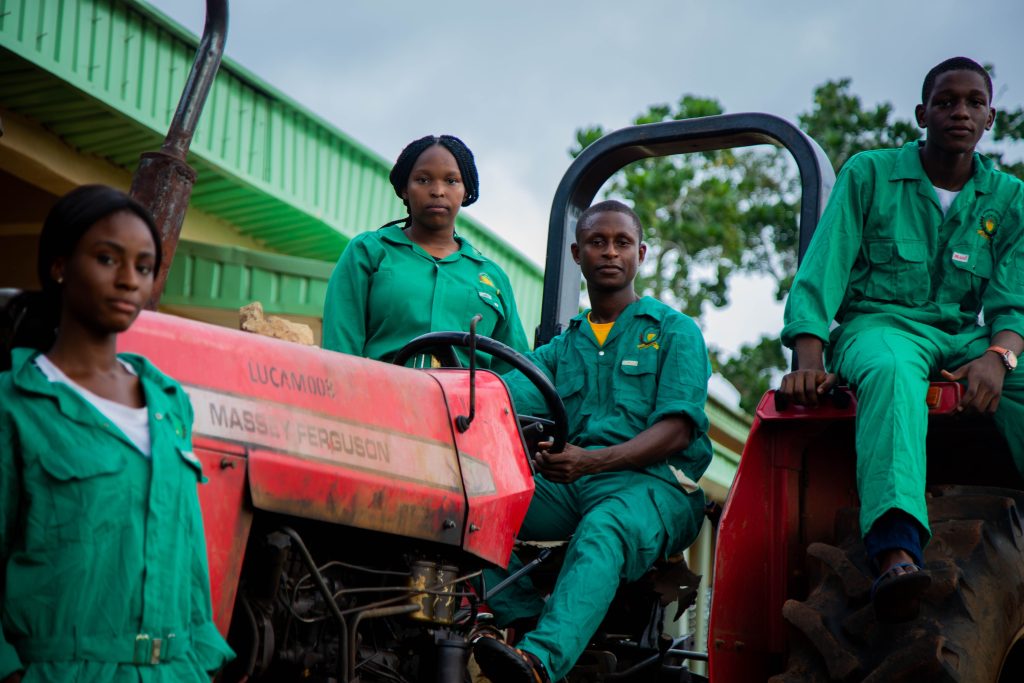
Firm Unveils Plan to Train 36,000 Nigerian Youths in Mechanized Farming.
Agricultural technology company TracTrac Mechanization Services Limited (TracTrac MSL) has announced plans to train 36,000 Nigerian youths in mechanised agriculture over the next six months as part of efforts to address the country’s growing shortage of skilled agricultural machinery operators and technicians.
The initiative, known as Young People in Mechanization (YPiM), is designed to engage 1,000 young people from each of Nigeria’s 36 states, equipping them with practical skills needed to support the country’s drive toward modern, technology-driven agriculture.
Speaking during the programme’s launch in Abuja, the Chief Executive Officer of TracTrac MSL, Godson Ohuruogu, described the initiative as Nigeria’s first youth-focused mechanisation movement aimed at preparing young people between the ages of 18 and 35 for careers in agricultural mechanisation.
According to him, participants will receive practical training, mentorship and exposure to opportunities in agricultural mechanisation, agribusiness, innovation, entrepreneurship, leadership and advocacy.
He explained that the programme seeks to close the widening skills gap in Nigeria’s mechanisation ecosystem while encouraging more young Nigerians to view agriculture as a viable and profitable career path.
Ohuruogu encouraged interested youths across the country to register through the YPiM online application portal and take advantage of the opportunity to acquire industry-relevant skills.
Nigeria Needs More Private Investment in Mechanisation
The TracTrac CEO stressed that achieving meaningful agricultural mechanisation in Nigeria will require stronger collaboration between government and the private sector.
According to him, public sector interventions alone cannot meet the country’s enormous mechanisation needs.
He estimated that Nigeria requires approximately 250,000 tractors within the next five years to adequately support modern farming and increase agricultural productivity.
“The solution lies in attracting greater private investment into the mechanisation ecosystem. Government has an important role to play, but sustainable progress will depend heavily on private-sector participation,” he said.
Plans to Boost Local Tractor Manufacturing
As part of efforts to improve access to farm machinery, Ohuruogu disclosed that TracTrac is working with partners to attract between four and five tractor assembly plants to Nigeria.
He said increasing local assembly would reduce dependence on imported equipment while improving the availability of spare parts, lowering maintenance costs and strengthening the country’s agricultural machinery industry.
The company also revealed plans to train 3,000 tractor operators next year to address the shortage of qualified machinery operators, which remains one of the biggest obstacles to mechanised farming.
According to Ohuruogu, poor handling of tractors by untrained operators often leads to equipment breakdowns and unnecessary maintenance costs.
Pilot Deployment of Locally Assembled Tractors
TracTrac also announced a partnership with a Nigerian tractor manufacturer to deploy 565 locally assembled tractors under a pilot programme that will initially cover two states.
The company believes local manufacturing will improve after-sales support, simplify maintenance and ensure quicker access to replacement parts for farmers.
Ohuruogu further explained that successful mechanisation depends on deploying equipment that matches the specific soil conditions in different parts of Nigeria.
He noted that farms in many southern states require higher-horsepower tractors due to heavier and more compact soils, while lower-capacity machines are generally sufficient for many northern farming areas.
He added that expanding access to smaller, more affordable tractors would enable more smallholder farmers to adopt mechanised farming practices.
Supporting Nigeria’s Mechanisation Policy
The company also disclosed that it contributed to the development of Nigeria’s draft National Agricultural Mechanization Policy, which seeks to accelerate mechanisation through increased private-sector participation, local manufacturing, climate-smart agriculture and human capital development.
According to TracTrac, its digital platform, TracTrac Plus, has already made significant contributions to Nigeria’s agricultural sector.
The company says it has supported more than 500,000 farmers, empowered over 6,000 mechanisation service providers, deployed approximately 800 tractors across several states and facilitated more than 2,000 mechanisation service engagements through its technology platform.
The initiative reflects growing efforts by private-sector players to modernise Nigerian agriculture, improve farm productivity and create employment opportunities for young people through technology and mechanisation.
Commodity.ng Insight
Nigeria’s agricultural future will depend heavily on its ability to modernise farming through mechanisation while building the skilled workforce needed to operate and maintain modern farm equipment. Although government programmes continue to support tractor acquisition, one of the country’s biggest challenges remains the shortage of trained operators, mechanics and mechanisation service providers.
Training initiatives such as YPiM could help bridge this gap by creating employment opportunities for young Nigerians while increasing access to mechanised farming services for smallholder farmers.
Why This Matters
- Nigeria still has one of the lowest mechanisation rates in Africa.
- Skilled tractor operators and technicians remain in short supply.
- Local tractor assembly could reduce equipment costs and improve maintenance services.
- Youth participation in mechanised agriculture can help address unemployment while boosting food production.
- Expanding affordable mechanisation services will improve productivity, reduce labour costs and strengthen food security.
Bottom Line
Mechanisation is about more than tractors—it requires skilled people, reliable maintenance systems, local manufacturing and sustainable private-sector investment. Building human capacity alongside expanding access to modern equipment will be essential if Nigeria is to achieve higher agricultural productivity and long-term food security.
Discover more from Commodity Nigeria
Subscribe to get the latest posts sent to your email.


This app has completely changed how I enjoy online gaming. Everything loads fast and the promotions actually feel worth claiming. I always come back because they treat their regular players right. jlbetapp