
France Launches Agribusiness Club to Boost Agricultural Investment in Nigeria
France has deepened its agricultural partnership with Nigeria through the launch of the France-Nigeria Agribusiness Club, a new platform aimed at strengthening investment, innovation, technology transfer and trade across Nigeria’s agricultural sector.
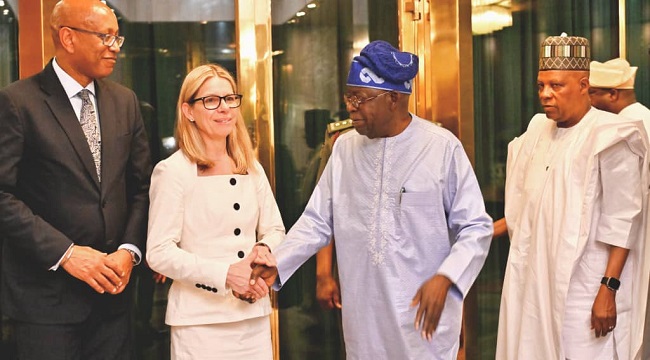
The initiative was unveiled during the inaugural France-Nigeria Agribusiness Series 1 held in Lagos, bringing together government officials, agribusinesses, investors, researchers and development partners from both countries to explore new opportunities for collaboration across agricultural value chains.
Speaking at the event, the Consul General of France in Nigeria, Laurent Favier, said Nigeria possesses the natural resources, market size and entrepreneurial capacity to become one of Africa’s leading agri-food economies.
He noted that combining Nigeria’s vast agricultural potential with French expertise in mechanisation, food processing, research, logistics and agribusiness development could unlock significant opportunities for businesses and investors in both countries.
According to Favier, the newly established France-Nigeria Agribusiness Club will operate under the Franco-Nigerian Chamber of Commerce, providing a structured platform that brings together businesses, the French Embassy, Business France, technical experts, academic institutions, financial organisations and development partners to strengthen cooperation within Nigeria’s agricultural sector.
The club is expected to attract more than 500 members, creating a stronger network for knowledge exchange, investment promotion and commercial partnerships.
France Expands Agricultural Financing
Favier also disclosed that France is increasing financial support for agricultural development across Africa through the Food and Agriculture Resilience Mission Plus (FARM Plus) initiative and a €300 million financing facility managed by Proparco to strengthen agricultural value chains and food systems.
He explained that the financing forms part of France’s broader €27 billion commitment announced during the Africa Forward Summit in Nairobi to accelerate investment in African agriculture, agribusiness and regional food trade.
The funding is expected to support projects that improve agricultural productivity, value addition, food processing and market access across the continent.
Supporting Nigerian Agricultural Exports
Also speaking, the Agriculture Counsellor for Nigeria, Ghana and Cameroon at the French Embassy, Rachid Benlafquih, said France would assist Nigerian producers in meeting European Union export requirements through technical training, capacity building and improved production standards.
He announced that officials from Nigeria’s Federal Ministry of Agriculture and Food Security, alongside representatives of the Tomato Producers Association of Nigeria, will visit France to study advanced biological pest-control technologies for managing Tuta absoluta, one of the most destructive pests affecting tomato production.
Benlafquih identified aflatoxin contamination in sesame and Salmonella contamination in ginger as major challenges limiting Nigeria’s agricultural exports into European markets.
He said France would collaborate with Nigerian institutions to improve food safety systems, quality assurance, traceability and certification processes required for international trade.
He further emphasised that investments in cold-chain infrastructure, veterinary services, fisheries development and the blue economy would significantly strengthen Nigeria’s agricultural competitiveness.
Data Remains Critical for Agricultural Investment
Delivering the keynote address, the Dean of Lagos Business School, Pan-Atlantic University, Professor Olayinka David-West, stressed that reliable agricultural data has become one of the most important requirements for attracting investment into Nigeria’s agricultural sector.
According to her, global investors are actively searching for agricultural investment opportunities, but many struggle to identify bankable projects due to fragmented, inconsistent and unreliable sector data.
She called for stronger collaboration between Nigeria and France through joint research programmes, technical exchanges, certification initiatives, agricultural innovation and co-investments in processing facilities and cold-chain infrastructure.
David-West noted that stronger data systems would improve transparency, reduce investment risks and unlock greater financing for agribusinesses across the country.
Strengthening Bilateral Agribusiness Partnerships
The Convener of the France-Nigeria Agribusiness Series and Chief Executive Officer of JR Farms, Olawale Rotimi, said the France-Nigeria Agribusiness Club would coordinate existing partnerships under one platform to improve collaboration between public institutions, private investors, researchers and agribusiness operators.
He explained that the initiative aims to accelerate technology adoption, facilitate investment opportunities and strengthen agricultural trade between Nigeria and France while creating sustainable growth across multiple agricultural value chains.
Commodity.ng Insight
The launch of the France-Nigeria Agribusiness Club reflects the growing importance of international partnerships in transforming Nigeria’s agricultural sector. Beyond financing, collaborations that promote technology transfer, mechanisation, food safety, research, climate-smart agriculture and export readiness can significantly improve productivity and competitiveness.
However, unlocking Nigeria’s full agricultural potential will require more than foreign investment alone. Strengthening agricultural data systems, improving rural infrastructure, expanding irrigation, reducing post-harvest losses, enhancing farmer training and ensuring consistent policy implementation remain essential to building globally competitive agricultural value chains. If effectively implemented, partnerships such as this can help position Nigeria as a leading agricultural production and export hub under the African Continental Free Trade Area (AfCFTA) while creating jobs, increasing farmer incomes and boosting national food security.
Discover more from Commodity Nigeria
Subscribe to get the latest posts sent to your email.


B1betcasino got some good offers going on. Variety of games is pretty standard though. Try it out if you’re in the mood for something familiar. b1betcasino
Been playing a bit on tayaph lately. Honestly, pretty decent selection and haven’t had any issues withdrawing. Worth a shout tayaph if you’re looking for new options.