The Minister of Agriculture and Food Security, Sen. Abubakar Kyari, has emphasized that the active involvement of young people in agriculture is critical to accelerating sectoral growth, increasing food production, strengthening agribusiness, and achieving national food and nutrition security.
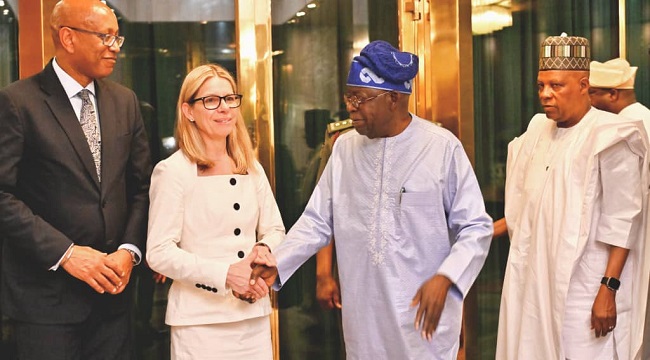
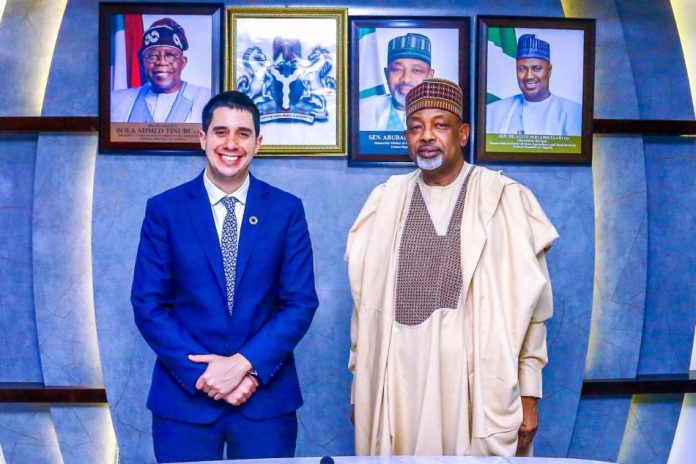
He made this statement during a courtesy visit by a United Nations delegation led by the Assistant Secretary-General for Youth Affairs, Dr. Felipe Paullier, in Abuja.
Kyari explained that the Federal Government is deliberately prioritizing youth inclusion in agriculture through financial support systems, expanded economic opportunities, and the creation of an enabling environment that encourages participation in farming and agribusiness.
He highlighted ongoing government interventions, including the activation of the National Agricultural Development Fund (NADF) and the ₦1.5 trillion recapitalization of the Bank of Agriculture (BOA), describing it as one of the largest agricultural financing commitments in Nigeria’s history. According to him, these initiatives are designed to improve youth access to affordable credit and strengthen agribusiness ventures.
The Minister also noted that the government is deploying targeted programmes such as agricultural mechanization, digital platforms, financing schemes, and extension services to equip a new generation of farmers with modern tools and knowledge.
He further pointed to emerging young Nigerian innovators in agriculture, including individuals working in soilless farming, drone technology, biofortified crops, and agricultural ecosystem coordination, stating that they are already influencing policy direction and practical implementation within the sector.
On his part, the UN Assistant Secretary-General for Youth Affairs, Dr. Felipe Paullier, explained that the UN Youth Office was established by the General Assembly to drive global engagement and advocacy on youth development issues. He added that the office focuses on improving youth access to resources such as land, technology, finance, information, and policy participation across member states.
Meanwhile, the Permanent Secretary in the Ministry, Dr. Marcus Olaniyi Ogunbiyi, disclosed that the government has procured 2,000 tractors and over 9,000 agricultural implements, describing it as the largest mechanization programme in Nigeria’s history. He said the initiative is aimed at improving productivity, expanding mechanized farming, and creating employment opportunities for young people in agricultural services, machinery operation, and maintenance.
Also speaking, a young agripreneur, Tobi Jeremiah Olanrewaju, commended the government for its interventions through the NADF, including financial support schemes and distribution of agricultural inputs to young farmers across the country.
Commodity.ng Insight (In-depth)
Nigeria’s renewed push for youth inclusion in agriculture reflects a long-standing recognition of a critical demographic and economic reality: the country’s agricultural sector is ageing, labour-intensive, and increasingly unattractive to its fastest-growing population segment. On paper, the policy direction is strong—combining financing (NADF and BOA recapitalization), mechanization (2,000 tractors and 9,000 implements), digitalization, and skills development. However, the real challenge lies not in policy design, but in systemic execution and structural alignment.
First, access to finance remains the most decisive bottleneck. Even with a ₦1.5 trillion recapitalization of BOA, the effectiveness of agricultural financing in Nigeria has historically been constrained by collateral requirements, bureaucratic lending processes, and weak distribution networks. For youth-led agribusiness to scale, financing must shift from asset-based lending to trust-based, data-driven credit systems supported by digital farmer profiling, satellite verification, and output-linked repayment models.
Second, mechanization efforts—while significant—risk underperformance if not supported by maintenance ecosystems, spare parts supply chains, and service-based access models. Nigeria’s past mechanization drives often failed because equipment was centrally distributed without decentralized service infrastructure. Without a “mechanization-as-a-service” framework, tractors and implements risk becoming underutilized capital assets rather than productivity multipliers.
Third, youth engagement is being framed largely around production, but the real opportunity lies in value chain transformation. Agriculture today is no longer just farming; it is logistics, processing, packaging, agri-tech, storage, and export facilitation. The young innovators mentioned (in drone tech, soilless farming, and biofortification) represent the future of high-margin agriculture—but they require venture capital, incubation systems, and market access, not just policy recognition.
Fourth, land access remains the silent constraint. Without structured land leasing systems, agribusiness zones, or reform of land tenure frameworks, most youth will remain excluded from productive farming regardless of finance or technology availability. Land is still the foundational input, and Nigeria has not yet resolved its accessibility problem at scale.
Finally, there is a critical risk of fragmentation between initiatives. Finance, mechanization, innovation, and youth programmes are being developed in parallel, but without strong integration into a single agricultural transformation architecture, impact may remain diluted. What Nigeria needs is not just multiple interventions, but a coordinated agricultural ecosystem where finance, land, technology, and markets function as a unified system.
In summary, the policy direction is promising and the investments are significant, but the success of youth-driven agricultural transformation will ultimately depend on execution efficiency, system integration, and the ability to convert policy announcements into accessible, working, and profitable realities for young farmers.
Discover more from Commodity Nigeria
Subscribe to get the latest posts sent to your email.