Nigeria’s food security ambitions are increasingly under threat as insecurity continues to force thousands of farmers away from their farms, reducing agricultural output and placing additional pressure on food prices across the country.
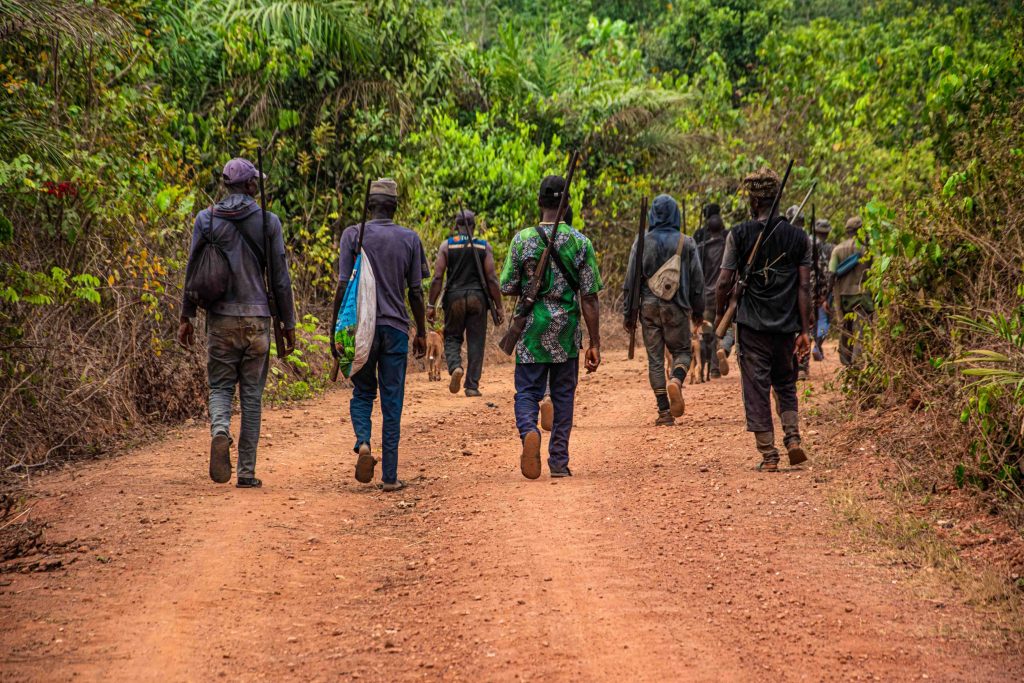
For years, agriculture has remained one of Nigeria’s most important economic sectors, providing livelihoods for millions of households and supplying food to a rapidly growing population. However, rising incidents of banditry, kidnapping, farmer-herder conflicts, insurgency, and communal violence have created an environment where farming has become increasingly risky.
Across several food-producing states, many farmers now face a difficult choice: risk their lives to cultivate crops or abandon their farmlands altogether.
A Growing Threat to Food Production
Nigeria’s agricultural sector relies heavily on smallholder farmers who produce the majority of the country’s food. These farmers are often located in rural communities where security challenges have become more severe in recent years.
In states such as Benue, Kaduna, Plateau, Niger, Zamfara, Katsina, Borno, and parts of Kebbi and Sokoto, numerous farming communities have experienced attacks that have displaced residents and disrupted agricultural activities.
As insecurity spreads, many farmers are unable to access their fields during critical planting and harvesting periods. Some are forced to cultivate only small portions of their land, while others have stopped farming entirely.
The result is a decline in cultivated hectares, lower harvest volumes, and reduced food supplies reaching local markets.
Rising Food Prices and Reduced Supply
Food markets across Nigeria are already feeling the impact.
When fewer farmers are able to produce crops, market supply naturally falls. Reduced supply, combined with strong consumer demand, creates upward pressure on prices.
Staple commodities such as maize, rice, sorghum, millet, yam, beans, and vegetables have all experienced supply disruptions at different periods due to insecurity-related challenges.
Agricultural analysts warn that unless farming communities become safer, food inflation could remain a recurring challenge regardless of other economic interventions.
While government programmes may support production through fertilizer distribution, mechanisation, and financing schemes, those efforts become less effective when farmers cannot safely access their land.
The Human Cost Behind the Crisis
Beyond statistics and market prices lies a deeper human tragedy.
Many rural families depend entirely on farming for their income. When insecurity prevents cultivation, household earnings disappear. Children are withdrawn from school, healthcare becomes unaffordable, and poverty deepens.
Displacement has also become a growing concern. Thousands of farming households have been forced to relocate to urban areas or internally displaced persons (IDP) camps after attacks on their communities.
These displaced populations often lose access to productive assets including land, livestock, equipment, and stored harvests.
The long-term consequence is the erosion of rural economic systems that have sustained communities for generations.
Impact on Agricultural Investment
Insecurity is not only affecting farmers; it is also discouraging investment across the agricultural value chain.
Investors are often reluctant to commit resources to regions where assets, equipment, and personnel face security risks.
Processors struggle to secure consistent raw material supplies when production fluctuates.
Agricultural lenders face higher risks as farmers become more vulnerable to crop losses and disruptions.
Insurance providers are similarly challenged by the increasing uncertainty surrounding agricultural production.
The cumulative effect is a slower pace of agricultural development and reduced confidence in the sector.
Food Security Is National Security
Experts increasingly argue that food security and national security are inseparable.
A country that cannot guarantee the safety of its farmers risks undermining its own food systems.
As agricultural output declines, dependence on food imports may increase, exposing the economy to global price shocks and foreign exchange pressures.
At the same time, rising food prices can worsen social tensions and economic hardship, creating additional pressures on vulnerable households.
Protecting agricultural communities therefore goes beyond supporting farmers—it is essential for economic stability, inflation control, employment generation, and national development.
The Need for a Coordinated Response
Addressing insecurity in farming communities requires a coordinated approach involving government agencies, security institutions, local leaders, private sector stakeholders, and development partners.
Improved rural security infrastructure, intelligence gathering, community engagement, and rapid response mechanisms can help restore confidence among farmers.
Equally important is supporting displaced farming households with the resources needed to resume production when conditions permit.
Investment in irrigation, mechanisation, climate-smart agriculture, storage facilities, and market infrastructure must also continue to ensure that agricultural productivity can recover and expand.
Looking Ahead
Nigeria possesses enormous agricultural potential, with vast arable land, favourable climatic conditions, and a large farming population. However, unlocking that potential will remain difficult if insecurity continues to limit access to farmland.
The future of Nigeria’s food system depends not only on better seeds, fertilizers, technology, and financing, but also on creating an environment where farmers can work without fear.
As the nation pursues food security and agricultural transformation, securing farming communities must remain a central priority. Without safe farms, sustainable food production will remain an increasingly difficult goal to achieve.
Discover more from Commodity Nigeria
Subscribe to get the latest posts sent to your email.