
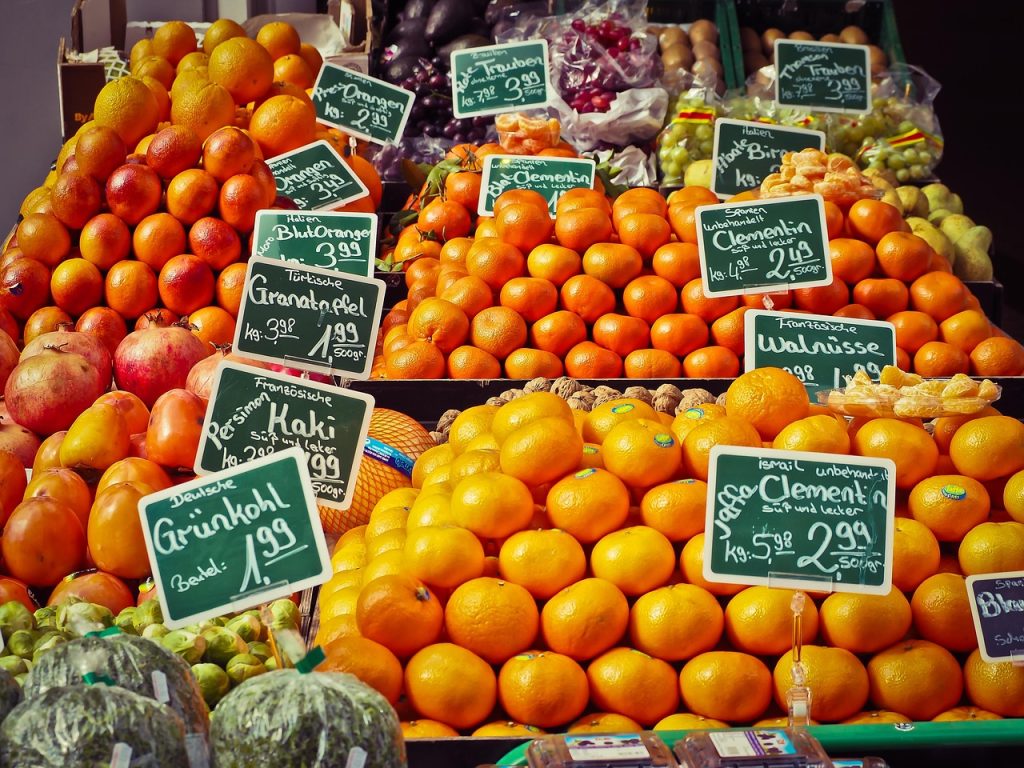
The Federal Government has announced plans to support Nigerian farmers following concerns that the recent decline in food prices is pushing some commodities below production costs, threatening the profitability of farming and the long-term sustainability of food production.
The Minister of Finance and Coordinating Minister of the Economy, Wale Edun, disclosed the government’s position while speaking at the launch of the Nigerian Economic Summit Group (NESG) 2026 Macroeconomic Outlook Report in Lagos.
According to the minister, while declining food prices have provided much-needed relief to millions of Nigerian households struggling with the high cost of living, the situation has created a new challenge for agricultural producers who are now facing shrinking profit margins.
“There is a point now to help the farmers because prices have come below, in some cases, their costs, and that is being addressed very urgently in order to ensure that we encourage continued investment in food production,” Edun stated.
A New Challenge Emerges
For much of the past two years, food inflation dominated economic discussions across Nigeria. Rising prices of rice, maize, beans, tomatoes, onions and other staples placed enormous pressure on consumers and contributed significantly to the country’s inflation crisis.
However, recent improvements in food supply, easing foreign exchange pressures, increased market arrivals and government interventions have contributed to a significant moderation in food prices.
Official figures show that food inflation declined sharply to 10.84 percent year-on-year in December 2025, compared to 39.84 percent recorded in December 2024.
While consumers have welcomed lower food prices, farmers are increasingly expressing concern that market prices for some commodities no longer reflect the realities of production costs.
Across many farming communities, producers continue to grapple with expensive fertilizer, rising transportation costs, labour shortages, insecurity, irrigation expenses and the high cost of mechanisation.
For many farmers, the cost of producing food remains significantly higher than it was just a few years ago.
The Risk of Discouraging Production
Agricultural economists warn that when market prices fall below production costs, farmers may reduce cultivation, abandon certain crops or delay investments in future farming seasons.
This could create a dangerous cycle where short-term price relief eventually leads to reduced production, lower supply and another round of food inflation.
The challenge facing policymakers is therefore finding a balance between protecting consumers from high food prices while ensuring farmers remain profitable enough to continue producing.
A sustainable food system requires both affordable food for consumers and reasonable returns for producers.
Without profitability, farmers may struggle to repay loans, purchase improved inputs or invest in productivity-enhancing technologies.
Nigeria’s Agricultural Transition
The development highlights a broader reality within Nigeria’s agricultural sector.
For decades, policy discussions have largely focused on increasing production. Today, experts argue that equal attention must be paid to market systems, price discovery, storage infrastructure, commodity exchanges and value addition.
Many farmers still sell produce immediately after harvest when prices are lowest because they lack access to storage facilities, processing centres and market intelligence.
As a result, they often receive the smallest share of the value generated across the food supply chain.
Strengthening agricultural markets and improving access to real-time price information may become increasingly important as Nigeria seeks to maintain food security while improving rural incomes.
Beyond Stabilisation
Speaking on the broader economy, Edun stated that Nigeria has entered a new phase of economic management focused on consolidation rather than crisis response.
According to him, reforms implemented over the past two years have contributed to greater macroeconomic stability, improved foreign exchange management, stronger reserves and growing investor confidence.
He emphasized that the government’s priority is to protect these gains while translating them into improved living standards for Nigerians.
The minister noted that the 2026 budget would focus on food security, electricity supply, infrastructure development, housing, social protection and job creation.
He also reiterated the government’s commitment to improving revenue generation, widening the tax base and maintaining a pro-poor tax framework that protects essential food items and small businesses.
Why Farmers Matter
Agriculture remains one of Nigeria’s largest employers and contributes significantly to national economic output.
Millions of smallholder farmers depend on farming as their primary source of income, while agricultural production remains critical to food security, inflation management and rural development.
Industry stakeholders have repeatedly emphasized that any decline in farm profitability could have far-reaching consequences for national food systems.
As policymakers celebrate the easing of food inflation, attention is increasingly turning toward ensuring that farmers remain economically viable.
The coming months will likely determine whether Nigeria can successfully maintain affordable food prices while preserving incentives for agricultural investment and production.
For many farmers, the government’s promised intervention could prove crucial in ensuring that today’s price relief does not become tomorrow’s production crisis.
Commodity.ng Insight: The current situation demonstrates why agricultural success should not be measured solely by falling food prices. A healthy agricultural economy requires both affordable food for consumers and profitable markets for farmers. As Nigeria moves into a new phase of agricultural development, greater emphasis will be needed on market intelligence, commodity pricing transparency, storage infrastructure, value addition, and data-driven decision-making to ensure farmers can remain productive while consumers continue to benefit from stable food prices.
Discover more from Commodity Nigeria
Subscribe to get the latest posts sent to your email.



I have been searching for a casino that actually pays out on time and this place definitely delivers. Customer support was super helpful when I had a quick question and the game selection is top notch. Will definitely be coming back for more weekend sessions. agam69login
I just had to share how much fun I have every single day on this platform. The interface feels so welcoming like an old friend checking in on you. Deposits go through smoothly and I love how quickly payouts reach my account. If you are looking for a trustworthy spot to unwind with some classic slots and live tables this is it. Trust me you will be hooked from the very first login. ecuabetecuadorapp