
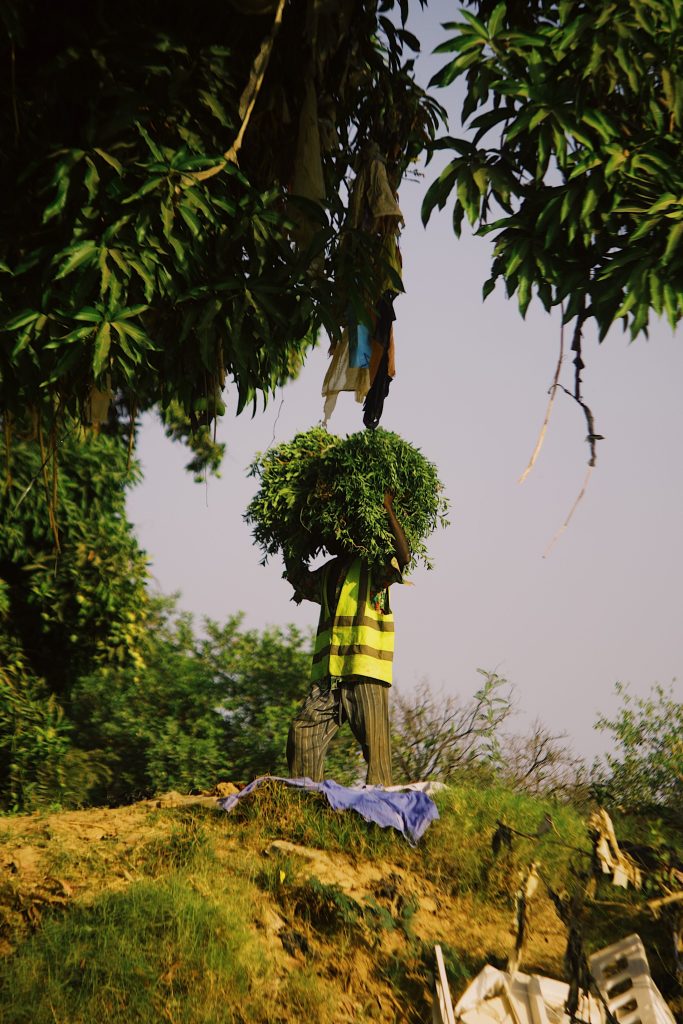
The Slow Disappearance of the Nigerian Farmer and Why It Should Concern Everyone
Nigeria’s food security challenge is increasingly becoming a farmer survival challenge.
Across many agricultural communities, particularly in northern Nigeria, farming is becoming a difficult and uncertain venture. Rising production costs, insecurity, market instability, climate-related challenges, and policy uncertainty are creating an environment where many farmers are questioning whether agriculture remains economically viable.
While discussions around food inflation often focus on consumer prices, far less attention is paid to the growing pressures facing those responsible for producing the nation’s food. Yet the sustainability of Nigeria’s agricultural sector ultimately depends on the ability of farmers to remain profitable and productive.
Agriculture remains the primary source of livelihood for millions of Nigerians. In states such as Kano, Kaduna, Katsina, Zamfara, Sokoto, Kebbi and Jigawa, farming supports rural economies, provides employment and serves as the foundation of household incomes.
However, many producers are operating under increasingly difficult conditions.
One of the major concerns raised by farmers is the rising cost of agricultural inputs. The depreciation of the naira has significantly increased the prices of fertilizers, agrochemicals, improved seeds, irrigation equipment, machinery parts and other essential farm inputs.
Many farmers report spending substantially more on cultivation than they did just a few years ago. The cost of transportation, mechanisation and irrigation has also risen sharply due to higher fuel and energy prices.
As production expenses continue to increase, profit margins are becoming increasingly compressed.
At the same time, insecurity continues to disrupt farming activities across several agricultural belts. In parts of northern Nigeria, concerns over banditry, kidnapping and rural violence have reduced access to farmlands and discouraged investment in agricultural expansion.
For many farming households, security considerations now influence decisions about when, where and how much land to cultivate.
The challenge extends beyond production. Farmers also face uncertainty in commodity markets. Price volatility often makes it difficult to predict returns on investment, particularly for staple crops such as maize, rice, millet and sorghum.
While government interventions aimed at improving food availability and reducing inflation are often welcomed by consumers, producers frequently express concerns about the long-term impact of policies that may affect market competitiveness and profitability.
Many stakeholders argue that achieving food security requires balancing the interests of consumers seeking affordable food with the need to ensure farmers remain economically viable.
Agricultural experts warn that when farming becomes consistently unprofitable, producers naturally reduce investment, cultivate less land, or leave the sector altogether. Such outcomes can eventually reduce domestic food production and increase dependence on imports.
Historical experiences from several developing countries demonstrate the risks associated with neglecting domestic agricultural production. Countries that failed to adequately support local farmers often experienced long-term declines in production capacity and increased vulnerability to external food supply shocks.
Nigeria possesses many of the ingredients required for agricultural success, including vast arable land, diverse agroecological zones, a large domestic market and an experienced farming population. However, unlocking this potential requires sustained investment and policy consistency.
Industry stakeholders continue to advocate for measures such as improved rural security, affordable agricultural financing, increased mechanisation, expanded irrigation infrastructure, better storage facilities, stronger extension services and transparent agricultural policies.
There is also growing recognition that food security cannot be achieved solely through emergency interventions. Long-term agricultural growth requires creating an environment where farmers can plan, invest and operate with confidence.
As Nigeria seeks to strengthen food production and reduce food inflation, the welfare of farmers will remain central to the country’s agricultural future.
A nation that expects food security must first ensure the sustainability of those who produce its food. Protecting farmers is not simply an agricultural objective; it is an economic, social and national priority.
Commodity.ng Insight
The most important question for policymakers today is not whether food prices are high, but whether farmers remain willing and able to produce enough food tomorrow.
When farmers face insecurity, rising costs and uncertain returns, production eventually declines. The consequences are often felt months later through lower harvest volumes, tighter supplies and higher market prices.
Nigeria’s food security debate frequently focuses on consumer affordability, but sustainable food systems require both affordable food and profitable farming. If either side of that equation is ignored, the entire system becomes vulnerable.
Key Risks to Watch
- Rising input costs reducing farmers’ profitability.
- Insecurity limiting access to farmlands.
- Reduced cultivation due to uncertainty.
- Lower investment in agriculture by young people.
- Increased dependence on food imports.
Bottom Line
The future of Nigerian agriculture depends not only on increasing production but on ensuring that farming remains a viable business. Farmers cannot be expected to feed the nation while continuously absorbing the costs of insecurity, inflation and market uncertainty. Protecting the farmer is ultimately protecting Nigeria’s food security.
Discover more from Commodity Nigeria
Subscribe to get the latest posts sent to your email.



Heard some buzz about 8okgame so I gave it a shot. Pretty solid selection of games, and the bonuses ain’t bad either. Worth a look if you’re hunting for a new spot, mate: 8okgame