
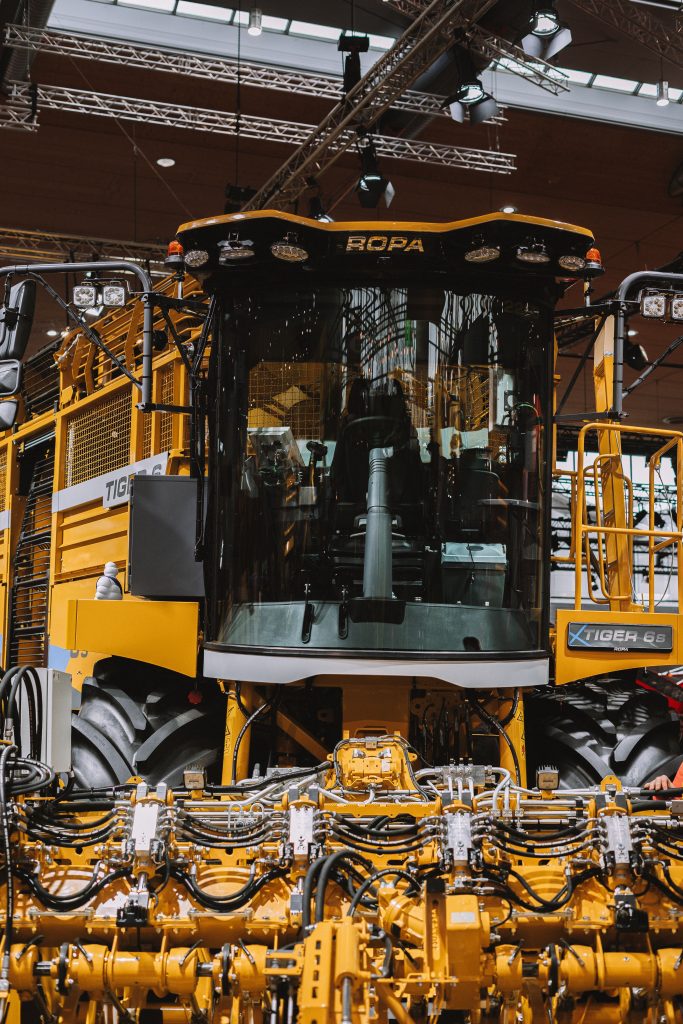
The Federal Ministry of Agriculture and Food Security (FMAFS) has expressed confidence that the proposed National Policy on Agricultural Mechanisation will provide a strategic framework for modernising Nigeria’s agricultural sector and boosting productivity nationwide once approved.
Speaking during a two-day policy validation workshop held in Ilorin, Kwara State, the Permanent Secretary of the ministry, Marcus Ogunbiyi, described the policy as a product of extensive consultations involving experts and key stakeholders across the agricultural value chain.
Represented by the Director of the Federal Department of Agricultural Mechanisation, Sule Majeed, Ogunbiyi said the policy is designed to create sustainable pathways for agricultural mechanisation and address longstanding challenges limiting agricultural productivity in the country.
According to him, Nigeria’s current mechanisation level remains significantly below global standards. He revealed that the country operates at approximately 0.27 horsepower per hectare, far below the Food and Agriculture Organization’s recommended benchmark of 1.5 horsepower per hectare.
He further noted that more than 78 percent of farm activities in Nigeria are still powered by manual labour, while animal power contributes about 15 percent. Mechanical equipment accounts for only seven percent of total farm power usage.
The heavy dependence on labour-intensive farming methods, he said, has contributed to low productivity, poor yields, high post-harvest losses, and limited capacity to meet the food demands of Nigeria’s rapidly growing population.
Ogunbiyi explained that the policy seeks to move Nigerian agriculture from largely subsistence-based production to a modern, commercially viable, and globally competitive sector.
He stated that the framework is built around sustainability, inclusiveness, and innovation, with the goal of reducing the burden of manual labour, creating wealth, strengthening food security, and making agriculture more attractive and profitable for Nigerians.
Also speaking at the event, the Executive Director of the National Centre for Agricultural Mechanisation (NCAM), Abdulgafar Kamal, described mechanisation as a critical pillar for achieving food security, agro-industrial development, and sustainable rural livelihoods.
Kamal noted that the policy would serve as a roadmap for expanding farmers’ access to mechanisation services, promoting local manufacturing and assembly of agricultural equipment, supporting skills development, and creating employment opportunities, particularly for young people.
He added that the framework would also encourage environmentally sustainable mechanisation practices while improving efficiency across the agricultural value chain.
The validation workshop attracted participants from state ministries of agriculture, the Nigeria Customs Service, the Standards Organisation of Nigeria, the All Farmers Association of Nigeria (AFAN), and other key stakeholders.
Commodity.ng Insight / Digest
The proposed National Policy on Agricultural Mechanisation could become one of the most significant reforms in Nigeria’s agricultural sector if effectively implemented.
Nigeria’s mechanisation deficit remains a major obstacle to increasing food production. With nearly 80 percent of farming activities still dependent on manual labour, farmers struggle to cultivate large areas efficiently, resulting in low yields, high production costs, and significant post-harvest losses.
The government’s focus on expanding access to tractors, harvesters, processing equipment, and mechanisation services is particularly important as Nigeria seeks to improve food security and reduce dependence on food imports.
However, the success of the policy will depend less on policy documents and more on implementation. Key issues such as affordability of machinery, access to financing, maintenance support, spare parts availability, and rural infrastructure must be addressed for mechanisation to reach smallholder farmers who produce the majority of Nigeria’s food.
The emphasis on local manufacturing and assembly of agricultural equipment could also create new investment opportunities while reducing reliance on imported machinery and foreign exchange.
For commodity markets, improved mechanisation has the potential to increase production volumes of major crops such as maize, rice, soybean, cassava, and wheat, helping stabilize supply and moderate food inflation over the long term.
Bottom Line: Nigeria’s agricultural future cannot be powered by manual labour alone. If properly executed, the mechanisation policy could boost productivity, improve farmer incomes, strengthen food security, and accelerate the country’s transition toward commercial agriculture.
Discover more from Commodity Nigeria
Subscribe to get the latest posts sent to your email.


I switched over from another site and the difference is night and day. The live sports coverage is top notch and the casino lobby is super easy to navigate. I really like how they handle bet settlements and how responsive the help desk is during big match days. Solid platform with genuine value for both casual and serious players. Give it a go ecbovada