How Nigerian Farmers Can Reduce Post-Harvest Losses and Make More Money from Their Produce
Nigeria has enormous agricultural potential, yet millions of farmers struggle to earn a reasonable income from the food they produce. Across the country, farmers cultivate maize, tomatoes, rice, onions, cassava, pepper, vegetables and other valuable commodities, but a significant portion of this produce is lost before it reaches consumers.
For many farmers, the problem is not simply how much they produce. It is how much of that production they can successfully preserve, transport, process and sell.
A farmer may spend months cultivating tomatoes, only to lose a substantial quantity because there is no nearby storage facility or reliable buyer. Another may harvest maize successfully but sell at a very low price because of poor storage, inadequate market information or pressure to raise cash immediately.
These challenges reduce farmers’ incomes, increase food prices, discourage agricultural investment and contribute to food insecurity.
If Nigeria wants to build a productive and commercially sustainable agricultural sector, reducing post-harvest losses must become a national priority.
Understanding the Post-Harvest Challenge
Post-harvest losses refer to the reduction in the quantity or quality of agricultural produce between harvesting and final consumption or processing.
These losses can occur at different stages of the agricultural value chain, including harvesting, sorting, packaging, transportation, storage, processing and marketing.
For perishable commodities such as tomatoes, onions, peppers and leafy vegetables, poor handling and inadequate refrigeration can lead to rapid deterioration. For grains such as maize, rice, sorghum and millet, inadequate drying and storage can expose produce to insects, rodents, moisture and mould.
The consequences extend beyond the farmer’s immediate financial losses. When large quantities of food are wasted, the available supply in the market declines, consumers may face higher prices and the country loses resources that could have supported food processing and exports.
Post-harvest losses also discourage farmers from expanding production. Why should a farmer increase output when there is no assurance that the additional harvest can be preserved or sold profitably?
This is one of the reasons agricultural development must focus on the entire value chain rather than production alone.
Solution 1: Invest in Affordable Storage Facilities Close to Farming Communities
One of the most practical ways to reduce post-harvest losses is to improve access to storage facilities.
Many smallholder farmers harvest their produce without having access to suitable storage infrastructure. As a result, they are often forced to sell immediately, sometimes at prices significantly below what they expected.
Nigeria needs more community-based storage facilities strategically located near major farming clusters.
For grain-producing communities, this could include properly ventilated warehouses, hermetic storage bags, silos and moisture-controlled storage facilities. For perishable produce, appropriate cold rooms and refrigerated storage systems can help extend shelf life.
However, storage infrastructure must be designed around the commodities farmers actually produce. A warehouse suitable for maize cannot automatically serve as an appropriate storage facility for fresh tomatoes.
Government agencies, agricultural cooperatives, private investors and development organisations can collaborate to establish shared storage facilities that farmers access at affordable rates.
A cooperative storage model would allow farmers to share infrastructure costs rather than each farmer having to build an individual facility.
Solution 2: Expand Small-Scale Processing in Rural Communities
Nigeria loses valuable economic opportunities when agricultural produce is sold without sufficient processing or value addition.
Instead of transporting all harvested produce in its raw form, farming communities should be encouraged to establish small and medium-scale processing facilities.
For example, tomatoes can be processed into paste, puree and dried products. Cassava can be converted into garri, flour and starch. Maize can be processed into flour, animal feed and other food products. Fruits can be converted into juice, pulp and dried products.
Processing provides farmers with alternative markets when fresh produce becomes difficult to sell.
It also creates employment opportunities for young people, women and entrepreneurs within rural communities.
The government can support this approach by providing affordable equipment financing, technical training, electricity solutions and access to processing infrastructure.
Agricultural processing should not be viewed as an activity reserved for large manufacturing companies. Properly organised small-scale processing businesses can create significant value within farming communities.
Solution 3: Improve Transportation and Rural Infrastructure
Poor rural infrastructure remains one of the major obstacles to agricultural development in Nigeria.
Many farming communities are located far from major consumption centres. During the rainy season, some rural roads become difficult or impossible to navigate. Produce may spend several hours or even days travelling to markets.
For perishable commodities, delays can significantly reduce quality and selling prices.
Nigeria must prioritise the rehabilitation of rural access roads connecting farming communities to major markets, processing centres and distribution networks.
There is also a need for improved transportation systems specifically designed for agricultural produce. Proper crates, ventilated vehicles and refrigerated transportation can help reduce physical damage and deterioration.
Local governments and state governments should identify major agricultural production clusters within their jurisdictions and prioritise roads that connect those areas to commercial markets.
Agricultural infrastructure should be measured not only by the number of roads constructed but also by how effectively those roads connect farmers to buyers.
Solution 4: Give Farmers Access to Reliable Market Information
One of the most overlooked problems in Nigerian agriculture is the information imbalance between farmers and market participants.
Many farmers do not know the prevailing prices of their commodities in nearby markets, let alone prices in other states. They often depend on middlemen, traders or informal market networks to determine how much their produce is worth.
This creates an environment where farmers may sell below the prevailing market price simply because they lack reliable information.
Market intelligence can change this situation.
Farmers should have access to timely information about commodity prices, market demand, supply conditions, seasonal trends and available buyers.
For example, a maize farmer in Niger State who understands price movements in Abuja, Kano and Lagos can make more informed decisions about where and when to sell.
Similarly, a tomato farmer who knows that demand is improving in another market may be able to negotiate better prices or arrange transportation to a more profitable destination.
Digital agricultural platforms can help bridge this information gap by publishing market prices, connecting buyers with sellers and providing information about commodity availability.
This is where platforms such as Commodity.ng can contribute to a more transparent agricultural market.
Access to market information should be treated as an essential agricultural service, just like access to improved seeds, fertiliser and extension services.
Solution 5: Strengthen Farmers’ Cooperatives and Collective Marketing
Many Nigerian farmers operate independently, selling relatively small quantities of produce and negotiating with buyers individually.
This limits their bargaining power and makes it difficult to access larger commercial markets.
Farmers’ cooperatives can provide a practical solution.
Through collective organisation, farmers can aggregate their produce, negotiate better prices, access storage facilities and attract larger buyers.
For example, 100 farmers producing maize independently may each struggle to secure a favourable deal. However, when they organise and aggregate their harvest, they may be able to supply a large processor or commodity trader under a structured agreement.
Cooperatives can also improve access to agricultural finance because organised groups may find it easier to maintain production records, demonstrate supply capacity and negotiate with financial institutions.
However, cooperatives must be professionally managed. Transparent accounting, proper governance, clear membership rules and regular reporting are essential to prevent mismanagement.
Solution 6: Promote Better Harvesting and Handling Practices
Not all post-harvest losses require expensive infrastructure to prevent. Some can be reduced through better harvesting and handling techniques.
Farmers should be trained to harvest crops at the appropriate maturity stage, use suitable harvesting tools and avoid unnecessary physical damage.
Fresh produce should be sorted carefully to separate damaged or diseased items from healthy ones. Suitable packaging should be used to reduce bruising during transportation.
For grains, proper drying before storage is essential. Farmers should use appropriate moisture-testing methods and avoid storing grain that has not been adequately dried.
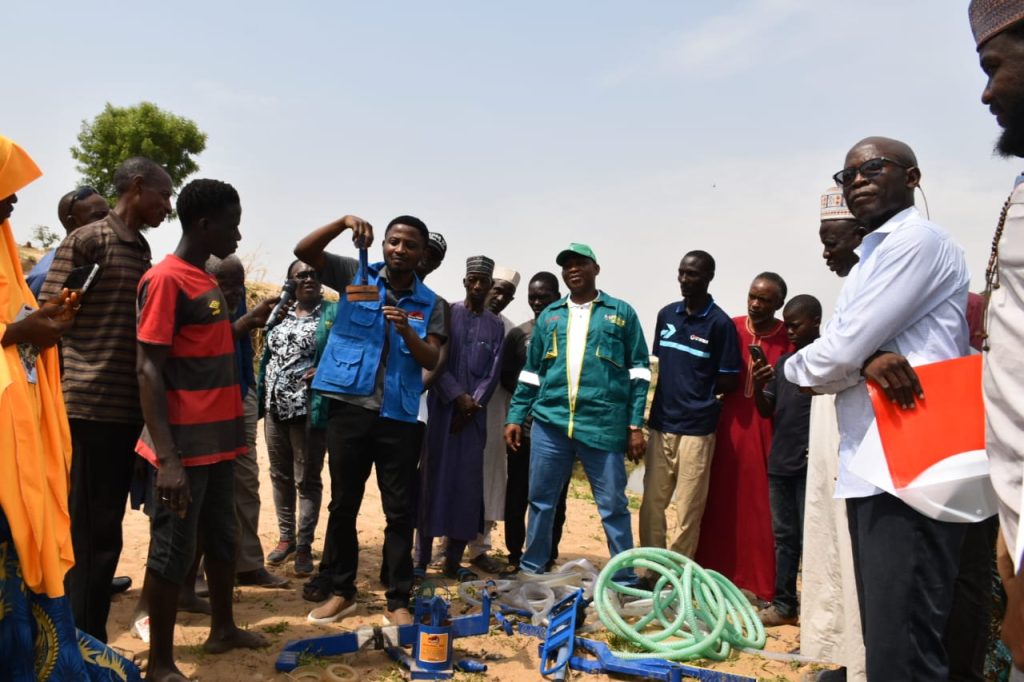
Agricultural extension services should provide practical demonstrations within farming communities rather than relying entirely on theoretical training.
Simple improvements in harvesting, sorting, drying and packaging can significantly improve the quality of produce reaching the market.
Solution 7: Expand Access to Agricultural Finance
Farmers often sell immediately after harvesting because they need money to repay loans, pay workers, purchase inputs or meet household expenses.
This financial pressure reduces their ability to store produce and wait for more favourable market conditions.
Access to affordable agricultural finance can help address this problem.
Financial institutions should develop products that recognise the seasonal nature of farming and provide suitable repayment arrangements.
Warehouse receipt financing is another opportunity. Under an appropriately regulated system, farmers or cooperatives can deposit eligible produce in certified warehouses and use the warehouse receipt as collateral to access financing.
This can reduce the pressure to sell immediately after harvest.
Government-backed credit guarantees, cooperative financing and partnerships with agricultural development institutions can also help improve access to finance.
However, agricultural finance must be supported by proper monitoring, transparent lending arrangements and realistic repayment structures.
Solution 8: Build Better Connections Between Farmers and Processors
A major weakness in Nigeria’s agricultural system is the disconnect between primary producers and industrial processors.
Food-processing companies need consistent supplies of agricultural raw materials, while farmers need dependable markets for their produce. Yet both sides often struggle to establish long-term commercial relationships.
Contract farming and structured off-take agreements can help bridge this gap.
Under a well-designed arrangement, a processor may agree to purchase a specified quantity of produce from farmers who meet agreed quality standards. The arrangement may also provide access to seeds, technical advice, financing or other production support.
Farmers benefit from a more predictable market, while processors gain improved visibility over their raw-material supply.
Such agreements must be transparent and fair. Contract terms should clearly specify quality requirements, quantities, pricing arrangements, delivery schedules and dispute-resolution procedures.
Developing these partnerships can help transform agriculture from largely informal trading into a more organised commercial system.
What Government Must Do
While farmers have an important role in reducing post-harvest losses, the scale of the challenge requires coordinated public and private investment.
Federal and state governments should prioritise agricultural infrastructure, rural roads, storage facilities, processing centres and extension services.
They should also create an enabling environment for private investment in agricultural logistics, cold-chain systems and commodity markets.
Agricultural research institutions should develop and promote affordable technologies that can be adopted by smallholder farmers.
Furthermore, government programmes should be evaluated based on measurable outcomes. It is not enough to distribute equipment or announce agricultural projects. The real question is whether farmers are experiencing lower losses, improved productivity and higher incomes.
Local governments also have an important role to play because they are closer to many farming communities and can help identify the most pressing infrastructure and market-access challenges.
What Individual Farmers Can Start Doing Today
Although large-scale investment is necessary, farmers do not need to wait for government intervention before taking practical steps.
They can begin by:
- Harvesting crops at the appropriate maturity stage.
- Sorting produce and separating damaged items.
- Using suitable packaging materials.
- Drying grains properly before storage.
- Exploring cooperative storage and collective marketing.
- Comparing prices across available markets before selling.
- Establishing relationships with processors and regular buyers.
- Keeping records of production costs, losses and sales.
- Exploring affordable processing options for surplus produce.
- Using digital platforms to obtain market information and identify commercial opportunities.
These measures may appear simple, but when adopted consistently, they can improve the quality of agricultural produce and strengthen farmers’ bargaining positions.
Conclusion: Nigeria Must Stop Measuring Agricultural Success by Production Alone
Nigeria’s agricultural transformation cannot be achieved simply by encouraging farmers to cultivate more land or produce more food.
A productive agricultural system must also be capable of preserving, processing, transporting and selling what farmers produce.
Reducing post-harvest losses is therefore not just a food-security intervention. It is an economic strategy that can increase farmers’ incomes, create rural employment, support agro-industrial development and attract private investment.
The country must move towards an agricultural model in which farmers are not abandoned after harvest. Storage facilities, processing industries, rural roads, agricultural finance, cooperatives and reliable market information must work together.
The ultimate objective should be simple: every additional unit of agricultural produce should create economic value rather than become another loss.
Commodity.ng Insight: The Value of Knowing Where and When to Sell
One of the most important tools available to a modern farmer is reliable market information.
Knowing how much a commodity sells for in different markets can help farmers decide when to sell, where to transport their produce and whether storage or processing is economically worthwhile.
Commodity.ng is built around this principle: making agricultural commodity prices and market intelligence more accessible to farmers, traders, processors and investors.
Reducing post-harvest losses requires more than physical infrastructure. It also requires a transparent market where producers can understand prices, identify demand and connect with potential buyers.
When farmers combine better production practices with storage, processing and market intelligence, agriculture becomes more than an activity of growing food. It becomes a more predictable and commercially sustainable business.
Nigeria’s farmers deserve to earn more from what they produce. Building the systems that make this possible must become a shared national responsibility.
Discover more from Commodity Nigeria
Subscribe to get the latest posts sent to your email.