
Stakeholders warn declining productivity could threaten food security, rural livelihoods, and industrial supply chains.
Nigeria’s cassava industry is facing growing challenges as farmers and agricultural stakeholders raise concerns over inadequate funding, weak policy implementation, and limited access to modern farming support systems, factors they say are threatening the future of one of the country’s most important agricultural commodities.
The concerns were highlighted during a large-scale farmer training programme held in Oyo State, where stakeholders warned that declining cassava yields and falling productivity are costing the nation millions of naira annually while weakening the competitiveness of the sector.
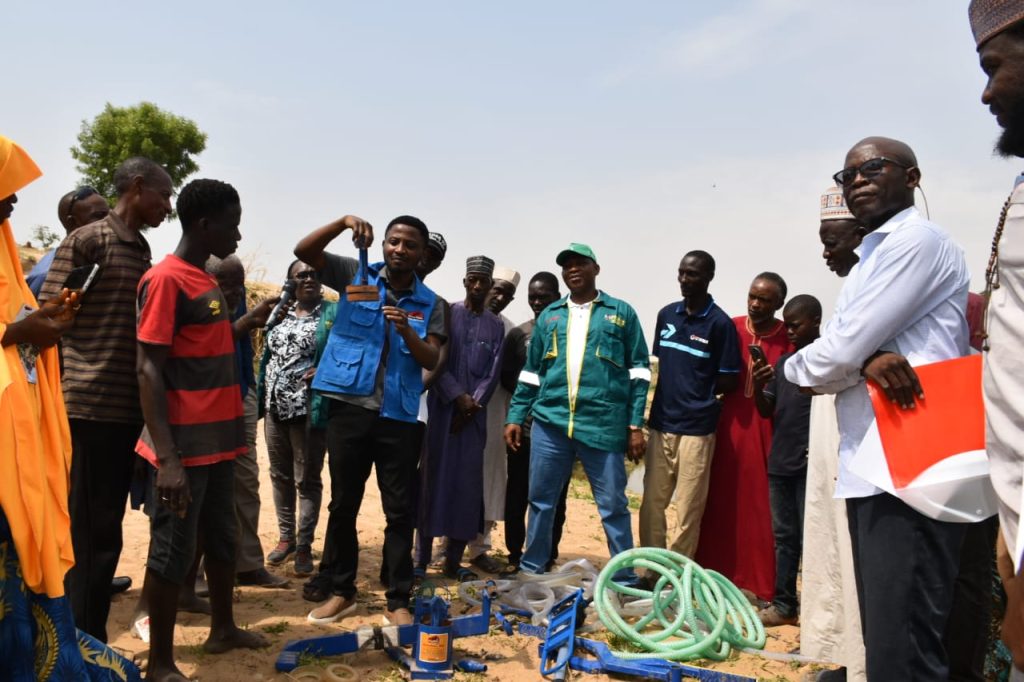
The programme, which attracted more than 6,000 farmers from across Oyo State, included practical training sessions and facility tours at the Fashola Agribusiness Industrial Hub and Iseyin. Participants explored strategies for improving cassava production, strengthening value chain efficiency, and increasing farmers’ profitability.
Despite Nigeria’s position as one of the world’s largest cassava producers, stakeholders noted that production growth has remained below potential due to persistent structural challenges confronting farmers.
Among the major concerns raised were poor access to pest and disease management systems, inadequate extension services, limited adoption of modern agronomic practices, climate-related production risks, and insufficient investment in agricultural infrastructure.
Several participants lamented that these challenges have discouraged many farmers from expanding production, while others have completely exited the sector due to rising operational costs and declining returns.
Stakeholders also criticized the inconsistent implementation of agricultural policies, arguing that existing programmes designed to support farmers have often failed to deliver meaningful impact at the grassroots level.
According to them, stronger policy execution could have significantly reduced the production challenges currently affecting cassava farming communities.
The training programme was organized by the African Agricultural Technology Foundation (AATF) in partnership with the National Root Crops Research Institute (NRCRI), Umudike, Abia State, with support from a German development organization.
Speaking during the event, Samuel Ogunleye, Project Coordinator at AATF, said the initiative was designed to equip farmers with modern production techniques while enhancing their ability to access profitable markets.
He explained that the programme targets cassava farmers across all 33 local government areas of Oyo State and has already recorded significant participation across key agricultural zones, including Ido, Ibarapa, and Iseyin.
According to Ogunleye, farmers are being trained on improved agronomic practices, modern processing methods, and market-oriented production strategies aimed at increasing yields and boosting income.
He further noted that the presence of a cassava processing facility in Iseyin presents an opportunity to reduce post-harvest losses, improve value addition, and create stronger market linkages for farmers.
Also speaking at the event, Adeyemi Olojede, Team Lead at the National Root Crops Research Institute, highlighted the critical role of agricultural research in improving productivity and addressing emerging challenges within the cassava sector.
However, he expressed concern over what he described as years of inadequate funding for agricultural research institutions across the country.
According to Olojede, many research centres have struggled to access sufficient government funding in recent years, forcing researchers to rely on external partnerships and limited support networks to sustain innovation and technology development.
He warned that continued neglect of agricultural research could slow the development of improved cassava varieties, weaken disease management efforts, and reduce the sector’s ability to adapt to climate-related challenges.
Stakeholders at the forum also called for stronger collaboration between government agencies, research institutions, and the Organised Private Sector (OPS) to accelerate innovation, improve access to quality inputs, and strengthen the cassava value chain from production to processing and export.
They stressed that urgent intervention is required to prevent further declines in productivity and preserve Nigeria’s leadership position in global cassava production.
The participants urged federal and state governments to increase investment in agricultural research, strengthen extension services, improve access to financing, and accelerate infrastructure development to support sustainable growth within the sector.
They warned that failure to act could have significant consequences for food security, rural employment, industrial raw material supply, and economic development.
Commodity.ng Insight
Cassava remains one of Nigeria’s most strategic agricultural commodities, serving as both a staple food crop and a critical industrial raw material used in the production of starch, ethanol, flour, sweeteners, animal feed, pharmaceuticals, and other value-added products.
As demand continues to grow from both food and industrial users, sustaining productivity has become increasingly important for maintaining market stability and supporting rural livelihoods.
The concerns raised by farmers point to deeper structural issues affecting Nigeria’s agricultural sector. Limited research funding, weak extension systems, and inadequate policy implementation continue to restrict the adoption of improved technologies capable of increasing yields and reducing production costs.
For commodity markets, declining cassava productivity could lead to tighter supply conditions, increased raw material costs for processors, and higher prices for cassava-based products across the value chain.
Strengthening research institutions, expanding farmer training programmes, improving access to quality planting materials, and promoting private-sector investment in processing infrastructure will be critical to unlocking the full potential of Nigeria’s cassava economy.
With the right policy support and sustained investment, cassava has the potential to become not only a food security crop but also a major driver of industrial growth, export earnings, and rural economic development.
Discover more from Commodity Nigeria
Subscribe to get the latest posts sent to your email.