
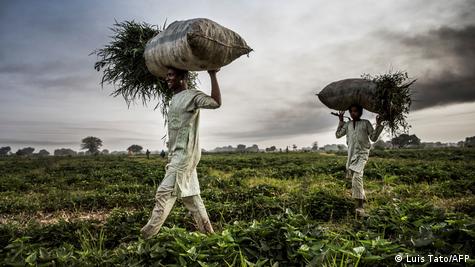
Ongoing security challenges in parts of the country are affecting agricultural activities, raising concerns about food production.
Commodity.ng Insight:
This highlights a critical structural risk in Nigeria’s food economy. Agriculture is location-dependent, and insecurity directly translates into supply shocks. When farming zones become unsafe, production declines immediately—driving inflation and increasing reliance on imports.
Farmers in affected areas say they are unable to access their farmlands due to fear of attacks, leading to reduced output.
Commodity.ng Insight:
This is effectively a “production shutdown” scenario at the grassroots level. Even when inputs are available, insecurity blocks access to land, meaning yields drop not due to capacity, but due to mobility constraints. This creates hidden food shortages that may not immediately reflect in official data.
Some communities have reported abandoning farming altogether, while others operate under strict limitations.
Commodity.ng Insight:
Long-term abandonment of farming is more dangerous than seasonal disruption. It signals structural displacement of agricultural labour, which can take years to recover. When communities exit farming, land often becomes underutilized or shifts to non-food uses, tightening future supply further.
Security analysts note that the situation could have far-reaching implications for food supply and rural livelihoods.
Commodity.ng Insight:
This is a classic case of agriculture-security interdependence. Food systems collapse when rural stability weakens. Beyond supply, rural income, employment, and local markets also shrink—creating a ripple effect that extends into urban food prices and inflation.
They call for coordinated efforts to restore safety and rebuild confidence among farmers.
Commodity.ng Insight:
Coordination is key here because fragmented responses—security alone without agricultural policy support—rarely work. Restoring confidence requires both physical security (protection of farmlands) and economic assurance (credit, insurance, input support). Without that dual approach, farmers remain risk-averse and production recovery stays slow.
Discover more from Commodity Nigeria
Subscribe to get the latest posts sent to your email.



Alright, gotta give props to the jili711 app. Smooth as butter, man. Makes betting on my mobile a breeze. Download it now jili711 app!