

Data Collection Will Transform Nigeria’s Agricultural Sector
ABUJA, Nigeria — Accurate and reliable agricultural data will play a defining role in transforming Nigeria’s agricultural sector, improving food security, attracting investment, and increasing farmers’ productivity, according to Ibrahim Muhammed (IBM Bangis), Co-founder of Commodity.ng.
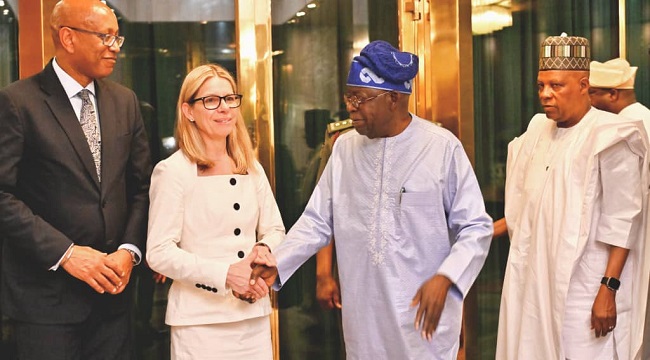
Bangis made the remarks during a podcast titled “Nigeria and Agriculture”, following his participation in a high-level agricultural programme held at the Transcorp Hilton, Abuja, on 18 July 2026. The event brought together senior government officials, development partners, agribusiness leaders, financial institutions, researchers and farmers to discuss strategies for accelerating agricultural transformation in Nigeria. Among the dignitaries in attendance were Vice President Kashim Shettima and the Minister of Agriculture and Food Security, Senator Abubakar Kyari.
Speaking during the podcast, Bangis said Nigeria possesses enormous agricultural potential but continues to lose significant opportunities because of poor data collection and inadequate information systems.
“One of the biggest challenges facing agriculture in Nigeria is not the lack of fertile land or hardworking farmers. It is the lack of reliable data. Without accurate information, governments cannot plan effectively, investors cannot make informed decisions, financial institutions become reluctant to lend, and farmers themselves struggle to maximise productivity.”
According to him, agriculture is increasingly becoming a data-driven industry across the world, with successful farming nations relying heavily on real-time information to guide production, manage risks and strengthen food systems.
Data is the Foundation of Modern Agriculture
Bangis explained that every successful agricultural economy depends on credible data to understand what farmers are producing, where crops are grown, expected harvest volumes, market demand, weather patterns, input requirements and supply chain movements.
He noted that while Nigeria has invested substantially in agricultural interventions over the years, many programmes have failed to achieve their full potential because policymakers often work with incomplete or outdated information.
“If we don’t know how many maize farmers exist in a particular state, how much rice is expected during harvest, or where production shortfalls are likely to occur, then planning becomes guesswork instead of strategy.”
He added that reliable agricultural statistics would enable governments to deploy resources more efficiently while reducing waste and duplication.
Better Data Will Attract More Investment
The Commodity.ng co-founder observed that access to quality data is one of the primary factors considered by investors before committing capital to agriculture.
According to him, local and international investors require dependable market intelligence before financing production, processing facilities, storage infrastructure or export businesses.
“Capital flows where confidence exists. Investors need numbers, not assumptions. They want to understand production trends, commodity prices, consumption patterns, export opportunities and potential risks before investing millions of dollars.”
He argued that a transparent agricultural data ecosystem would significantly improve Nigeria’s attractiveness as an investment destination.
Empowering Farmers Through Information
Bangis stressed that data collection should not only serve government institutions but also empower farmers to make better production decisions.
He explained that farmers who have access to timely information on weather forecasts, commodity prices, pest outbreaks, soil conditions and market demand are better positioned to increase productivity and improve profitability.
According to him, modern agriculture is no longer based solely on experience but increasingly relies on information and technology.
“The farmer who has access to accurate information today has a competitive advantage over the farmer who relies only on tradition.”
Digital Agriculture is the Future
Bangis advocated greater adoption of digital technologies across Nigeria’s agricultural value chain.
He highlighted the role of satellite imagery, artificial intelligence, drones, mobile applications, Geographic Information Systems (GIS), digital farm mapping and remote sensing in improving agricultural planning and monitoring.
He also called for stronger collaboration between government agencies, private technology companies, research institutions and agribusiness platforms to develop comprehensive agricultural databases.
Commodity.ng’s Vision
Speaking on the role of Commodity.ng, Bangis said the platform was established to improve transparency within Nigeria’s commodity markets by providing farmers, traders, processors, exporters and investors with reliable market information.
He explained that access to real-time commodity prices and market intelligence helps stakeholders make more informed business decisions while reducing information asymmetry across agricultural markets.
“Our vision at Commodity.ng is simple. We want data to become one of the most valuable agricultural inputs in Nigeria. When farmers can access reliable market information, everyone benefits—from producers and processors to exporters and consumers.”
Strengthening Food Security
Bangis further stated that better agricultural data would strengthen Nigeria’s food security by enabling early identification of production gaps, improving emergency planning and reducing the impact of market disruptions.
He noted that governments would be able to forecast food shortages earlier, coordinate interventions more effectively and improve national grain reserve management.
According to him, accurate information would also support climate adaptation by helping farmers respond more effectively to changing weather conditions.
A Call for National Collaboration
He urged federal and state governments, development organisations, research institutions, universities, financial institutions and private agribusinesses to prioritise agricultural data collection as a national development strategy.
Bangis said Nigeria has the resources to become one of Africa’s leading agricultural economies but emphasised that sustainable growth would require evidence-based decision-making supported by credible information.
“Data should become the backbone of Nigeria’s agricultural transformation. Countries that dominate global agriculture are not necessarily those with the largest landmass—they are the ones that understand their farms through data. If Nigeria invests seriously in agricultural data systems, we will improve productivity, attract investment, strengthen food security and unlock the full economic potential of our agricultural sector.”
He concluded by encouraging young Nigerians to embrace technology and innovation, describing data science, digital agriculture and agricultural intelligence as some of the fastest-growing opportunities within the modern agribusiness ecosystem.
Discover more from Commodity Nigeria
Subscribe to get the latest posts sent to your email.


À garder. Van Gogh Free AI Video Generator sur . Van Gogh Free AI Video Generator