
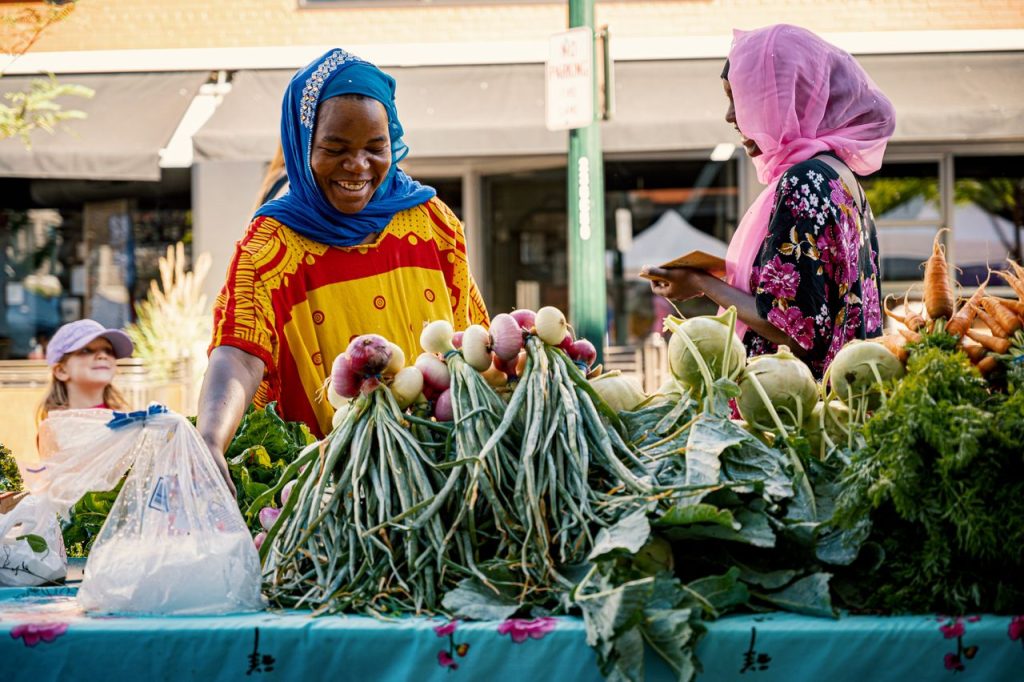
Women Farmers Identify Insecurity, Poor Infrastructure as Major Barriers to Agricultural Growth
Women farmers across Nigeria have called for urgent action to address the growing challenges hindering their participation and productivity in agriculture, identifying insecurity, poor infrastructure, limited access to finance, inadequate training, and insufficient farm inputs as some of the biggest obstacles confronting female farmers.
Despite playing a crucial role in food production and rural livelihoods, many women say they continue to face systemic barriers rooted in cultural stereotypes that portray agriculture as a male-dominated occupation. According to them, these perceptions have contributed to inadequate support for women-led agricultural enterprises and limited opportunities to thrive within the sector.
Speaking in an interview, the Chief Executive Officer of Arcom Treasures, Aolat Idowu-Agbelekale, said although farmers generally face numerous difficulties, women experience additional challenges because of gender bias and the absence of an enabling environment for agricultural production.
She observed that many people still regard farming as a profession better suited to men, leaving women farmers with less recognition, fewer resources, and limited institutional support.
Idowu-Agbelekale, who is also a coconut processor and a founding member of the National Coconut Producers, Processors and Marketers Association of Nigeria (NACOPPMAN), described insecurity as one of the most pressing threats to agricultural activities, particularly for women operating in rural and conflict-affected communities.
According to her, incidents of bandit attacks, kidnappings, and violence targeting farming communities have become increasingly common, forcing many farmers to abandon their farmlands and reducing agricultural output. She noted that women are often among the most vulnerable victims of these attacks, with some losing their lives or livelihoods.
She also highlighted Nigeria’s poor transport infrastructure as another major constraint, explaining that bad road networks contribute significantly to post-harvest losses by delaying the movement of fresh produce from farms to markets.
She cited instances where trucks transporting vegetables from northern Nigeria to southern markets became stranded on deteriorating highways, resulting in the spoilage of commodities such as carrots, onions, cucumbers, and potatoes worth billions of naira.
According to her, such losses have become increasingly common and continue to threaten the survival of farming households.
Beyond infrastructure challenges, Idowu-Agbelekale stressed that many women farmers remain excluded from modern agricultural technologies and mechanisation. While agriculture continues to advance globally through improved equipment and innovative production methods, she said many female farmers in Nigeria still rely on traditional tools such as hoes and cutlasses due to limited access to mechanised equipment and extension services.
She added that inadequate training on modern farming practices, climate-smart agriculture, and post-harvest management has further reduced productivity and increased the physical demands of farming.
Access to finance also remains a significant concern, she said, noting that many women struggle to obtain affordable loans, grants, and other financial support needed to expand their agricultural businesses.
Even where financing opportunities exist, she explained, stringent conditions, high interest rates, and lengthy application procedures discourage many smallholder farmers from accessing the funds.
She further pointed to the emotional and financial pressures confronting farmers, referencing reports of a pepper farmer who reportedly took his own life after being unable to repay an agricultural loan, highlighting the growing mental health challenges associated with financial hardship in farming communities.
Idowu-Agbelekale also expressed concern over the low adoption of agricultural insurance among smallholder farmers. According to her, many farmers are either unaware of available insurance schemes or unable to afford the premiums, leaving them exposed to production risks, crop failures, and natural disasters.
She noted that the absence of reliable off-takers also forces many farmers to independently manage production, marketing, and sales, making it more difficult to operate profitable farming businesses.
She called on the Federal Government and relevant stakeholders to implement practical policies that improve the welfare of farmers, particularly women, while ensuring that agricultural interventions reach intended beneficiaries.
Among her recommendations were improved rural infrastructure, better access to grants and incentives, stronger security for farming communities, and measures to eliminate illegal levies imposed on farmers transporting produce along major highways.
She also advocated greater investment in farmer education through training programmes focused on Good Agricultural Practices (GAP), value addition, and modern production techniques to improve competitiveness and increase farm incomes.
In addition, she encouraged greater support for local production and agro-processing to reduce dependence on imported products and strengthen Nigeria’s agricultural value chains.
According to her, empowering women farmers goes beyond supporting food production, as they also contribute significantly to employment, rural development, and economic growth.
Her appeal comes at a time when Nigeria’s agricultural sector continues to grapple with the combined effects of insecurity, climate change, rising production costs, and infrastructure deficits, all of which threaten national food security. Stakeholders believe that addressing the unique challenges faced by women farmers will not only improve agricultural productivity but also contribute significantly to sustainable economic development and long-term food security.
Discover more from Commodity Nigeria
Subscribe to get the latest posts sent to your email.



Solid write-up — learned a lot. Worth trying Pixwit — for all-in-one AI video.. Pixwit