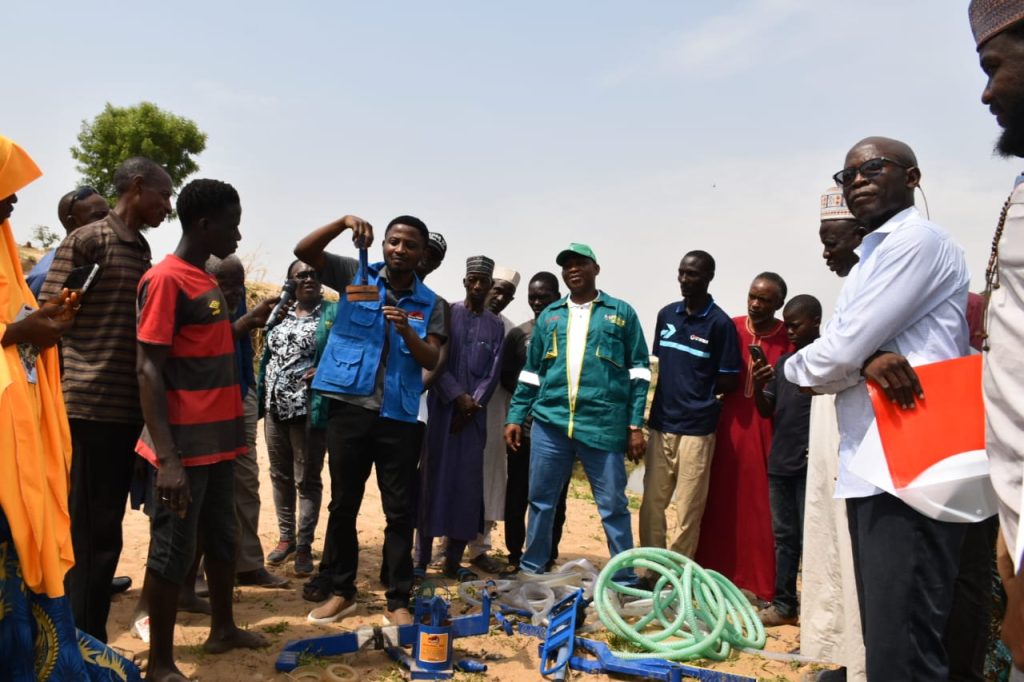
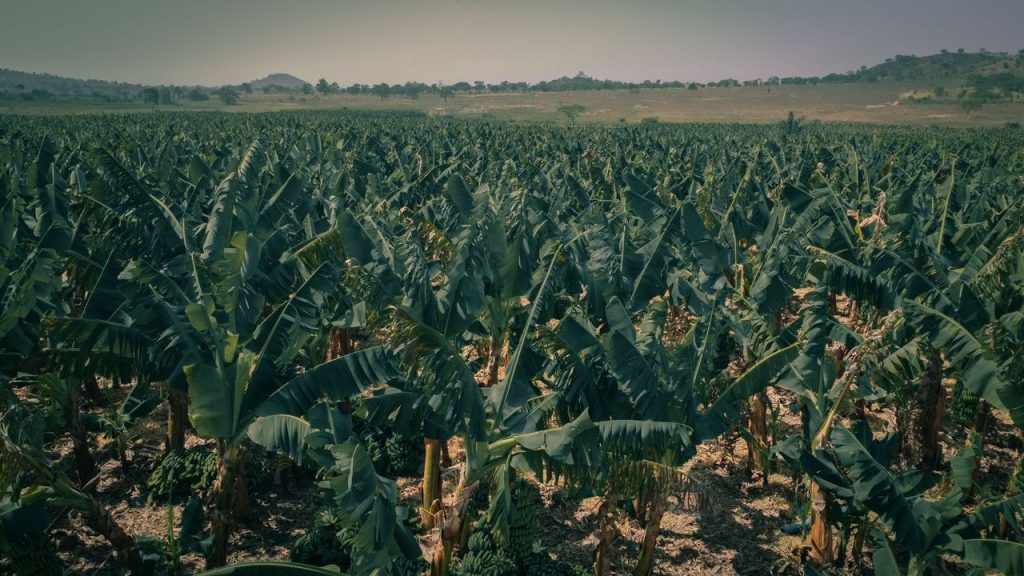
Nigeria's Agricultural Crisis: The Urgent Reforms Needed to Rescue the Sector and Secure the Nation's Food Future
Insecurity, rising production costs, poor infrastructure, inadequate financing and the absence of reliable agricultural data continue to undermine Nigeria’s agricultural potential. Addressing these structural challenges is critical to food security, economic diversification and national development.
Nigeria’s agricultural sector stands at a critical crossroads. Despite its enormous agricultural potential, vast arable land, favourable climatic conditions and large domestic market, the country continues to grapple with food insecurity, rising food prices, low agricultural productivity and an inefficient agricultural value chain.
Agriculture remains one of the most important sectors of the Nigerian economy, supporting millions of livelihoods and providing raw materials for industries. Yet, its capacity to drive economic growth, create employment, reduce poverty and guarantee food security remains significantly constrained by longstanding structural challenges.
The problem is not simply that Nigeria produces insufficient food. It is also that the systems supporting agricultural production, financing, storage, transportation, processing and marketing remain inadequate.
From insecurity in farming communities to the increasing cost of agricultural inputs, weak rural infrastructure, limited access to finance and poor market intelligence, the challenges facing the sector are interconnected and require comprehensive reforms.
If Nigeria is serious about achieving sustainable food security and economic diversification, agricultural transformation must become one of its most urgent national priorities.
1. Insecurity: The growing threat to agricultural production
One of the most pressing challenges facing Nigerian agriculture is insecurity.
Across several agricultural communities, particularly in parts of the North-West, North-East and North-Central regions, farmers have experienced disruptions arising from banditry, kidnapping, communal conflicts and other security challenges.
The consequences are far-reaching. Farmers abandon their farmlands, agricultural investments become exposed to risks, farming activities are disrupted and food supply chains experience significant interruptions.
Insecurity also affects the availability of agricultural labour, increases transportation costs and discourages investment in rural communities.
Agricultural development cannot thrive in an environment where farmers are uncertain about their safety. Protecting farming communities, rural markets and food transportation routes must therefore become an essential component of Nigeria’s national security strategy.
Government must strengthen rural security mechanisms, improve intelligence gathering and establish effective collaboration between security agencies, state governments and local communities.
2. Rising production costs and declining profitability
The increasing cost of agricultural production has become a major concern for Nigerian farmers.
The prices of fertilisers, improved seeds, pesticides, machinery, fuel, labour and transportation have placed considerable pressure on agricultural businesses, particularly smallholder farmers who operate with limited financial resources.
The challenge is that higher production costs do not necessarily translate into higher earnings for farmers. In many cases, farmers face a difficult combination of expensive inputs and unpredictable market prices.
This creates uncertainty around profitability and discourages expansion.
Agricultural reform must therefore focus on reducing production costs through improved access to affordable inputs, mechanisation, irrigation, efficient distribution systems and appropriate financing mechanisms.
Government interventions should also be designed around the actual economics of farming, taking into consideration the cost of production across different commodities, geographical locations and agricultural seasons.
3. Poor storage facilities and post-harvest losses
Nigeria continues to lose valuable agricultural produce because of inadequate storage, poor transportation networks, insufficient processing facilities and weak cold-chain infrastructure.
Perishable commodities such as tomatoes, onions, fruits, vegetables and fish are particularly vulnerable to post-harvest deterioration.
This situation creates a damaging contradiction: while consumers struggle with high food prices, farmers and traders simultaneously lose significant quantities of produce that could have contributed to food availability and economic value.
Post-harvest losses reduce farmers’ earnings, discourage production, weaken agricultural investment and contribute to food supply instability.
Addressing this challenge requires deliberate investment in modern warehouses, processing facilities, refrigerated transportation, aggregation centres and rural road infrastructure.
Nigeria must begin to measure agricultural success not only by how much food is produced but also by how much is successfully stored, processed, transported and delivered to consumers.
4. The agricultural financing gap
Access to affordable and appropriate financing remains a significant obstacle to agricultural development.
Many smallholder farmers lack the collateral, credit history, financial records and institutional relationships required to access conventional bank financing.
Agriculture also presents unique financing challenges because production cycles are seasonal, revenue generation is uncertain and investments may take months or years to generate returns.
Financial institutions are often reluctant to provide credit without reliable information about farmers, their production capacity, farm locations, expected yields and market opportunities.
Nigeria needs a more inclusive agricultural financing framework that recognises the unique characteristics of the sector.
This should include stronger agricultural insurance, digital farmer identification, value-chain financing, credit guarantees, cooperative financing arrangements and innovative partnerships between financial institutions and agricultural businesses.
The objective should be to make agricultural financing accessible, commercially viable and sustainable.
5. The agricultural data crisis: A major obstacle to transformation
Perhaps one of the most underestimated challenges facing Nigerian agriculture is the absence of a comprehensive, reliable and accessible agricultural data infrastructure.
Agriculture is an information-intensive industry. Decisions about what to plant, when to plant, how much to produce, where to sell and when to enter the market depend heavily on accurate and timely information.
Unfortunately, many agricultural stakeholders in Nigeria continue to make critical business decisions without adequate access to reliable market intelligence.
Consider a farmer producing maize in Kaduna who has no reliable information about prevailing prices in Kano, Abuja, Lagos or other major consumption markets.
A processor may struggle to identify locations with sufficient raw material supplies, while an investor may overlook profitable agricultural opportunities because reliable production and market information is unavailable.
These information gaps create market inefficiencies, increase business risks and weaken the bargaining power of farmers.
Nigeria needs a comprehensive agricultural intelligence system that integrates information from farms, local markets, commodity exchanges, research institutions, weather stations, processors and transportation networks.
Such a system should provide regularly updated information on:
- Commodity prices across local, state and national markets.
- Agricultural production volumes and geographical distribution.
- Demand and supply patterns across major commodities.
- Farm input prices and production costs.
- Weather forecasts, rainfall patterns and climate risks.
- Transportation costs, storage capacity and market accessibility.
- Agricultural investment opportunities and market trends.
This information must be made accessible to farmers, traders, processors, financial institutions, policymakers and investors.
Digital agricultural platforms can play a significant role in delivering this intelligence through websites, mobile applications, SMS services and other accessible communication channels.
Reliable data can help farmers negotiate better prices, enable businesses to identify profitable markets, support government planning and improve investment decisions.
Ultimately, agricultural data should be treated as critical national infrastructure, just like roads, electricity and telecommunications.
6. Climate change and the vulnerability of agricultural communities
Climate change presents another significant threat to Nigeria’s agricultural future.
Unpredictable rainfall, flooding, prolonged dry spells, rising temperatures, soil degradation and changing planting seasons are increasingly affecting agricultural productivity.
The consequences are particularly severe for smallholder farmers who depend heavily on rainfall and have limited access to irrigation facilities and modern agricultural technology.
Nigeria must prioritise climate-smart agricultural practices, irrigation development, improved seed varieties, soil management, agricultural research and accessible weather information services.
Farmers need reliable, location-specific climate information to make informed decisions about planting seasons, crop selection and farm management.
Climate adaptation must become an integral part of agricultural planning rather than an occasional intervention.
7. Weak infrastructure and the rural development deficit
Agricultural productivity is closely connected to the quality of infrastructure available in rural communities.
Poor rural roads, inadequate electricity, limited irrigation facilities, insufficient storage infrastructure and weak telecommunications networks increase the cost of agricultural operations.
In many farming communities, transporting agricultural produce to major markets remains expensive and inefficient.
This limits market access, increases post-harvest losses and reduces the profitability of agricultural investments.
Infrastructure development must therefore be approached as an agricultural reform priority.
Federal, state and local governments should prioritise rural roads, electricity, irrigation systems, water infrastructure, digital connectivity and strategically located agricultural processing centres.
Improving rural infrastructure will not only support agriculture but also stimulate economic activities, create employment and improve living standards in farming communities.
8. Policy inconsistency and weak institutional coordination
Nigeria has introduced several agricultural policies, programmes and intervention schemes over the years. However, inconsistent implementation, overlapping institutional responsibilities and frequent changes in policy direction have limited the effectiveness of many interventions.
Agriculture requires long-term planning and policy stability.
Investments in irrigation, processing facilities, plantations, storage infrastructure and agricultural technology often require several years before generating substantial returns.
Investors therefore need a predictable policy environment that encourages long-term commitment.
There is also a need for stronger coordination between federal and state governments, agricultural research institutions, development agencies, private-sector operators and farmer organisations.
Agricultural policies must be supported by clear implementation frameworks, measurable targets, transparent reporting and regular performance assessments.
The success of agricultural reform should be measured by improvements in productivity, farmers’ incomes, food availability, investment levels and the efficiency of agricultural value chains.
9. Limited private-sector participation and agricultural innovation
Government alone cannot transform Nigerian agriculture.
While government has an important responsibility to provide security, infrastructure, policy direction and an enabling business environment, private-sector participation is essential for developing an efficient and competitive agricultural economy.
There are enormous opportunities for investment in agricultural technology, mechanisation, processing, logistics, storage, commodity trading, digital marketplaces and agricultural financing.
Technology companies can improve market access and information delivery. Financial institutions can develop appropriate financing products. Processors can create demand for agricultural produce, while logistics companies can improve the movement of food across the country.
Government should therefore create an environment that encourages innovation, entrepreneurship and commercially sustainable agricultural solutions.
Agriculture must increasingly be positioned as a viable business and investment destination capable of attracting capital, technology and skilled professionals.
The way forward: Five critical reforms Nigeria cannot afford to ignore
Addressing these challenges requires a coordinated national strategy built around measurable objectives.
Five areas deserve immediate attention:
First, agricultural security: Protect farming communities, farmlands, rural markets and food transportation routes.
Second, production and infrastructure: Reduce the cost of farming through affordable inputs, mechanisation, irrigation, rural roads and improved access to electricity.
Third, post-harvest management: Invest in modern storage facilities, processing infrastructure, warehouses and cold-chain systems.
Fourth, agricultural data and intelligence: Develop an integrated national agricultural information infrastructure that provides reliable market prices, production data, weather information and investment intelligence.
Fifth, financing and private-sector investment: Strengthen agricultural credit systems, insurance, investment incentives and partnerships between government and private enterprises.
These reforms must be implemented within a coordinated framework that recognises the interconnected nature of agricultural production, markets, financing and consumption.
Conclusion: Nigeria must move from agricultural potential to agricultural transformation
Nigeria’s agricultural future will depend on its willingness to confront the structural challenges that have prevented the sector from reaching its full potential.
The country cannot achieve sustainable food security through emergency food imports, temporary subsidies and fragmented agricultural interventions alone.
It must build a system that supports farmers, rewards productivity, reduces market inefficiencies, attracts investment and ensures that agricultural produce moves efficiently from farms to consumers.
More importantly, the transformation of Nigerian agriculture must be guided by reliable information, technology, innovation and evidence-based policymaking.
A modern agricultural economy cannot operate effectively without knowing what is being produced, where it is being produced, how much it costs to produce and where market opportunities exist.
The opportunity before Nigeria is enormous. Agriculture can become a stronger engine of employment, industrialisation, export growth, rural development and economic diversification.
However, achieving this requires a fundamental shift in priorities.
Nigeria does not merely need to produce more food. It needs to build a smarter, more productive, better-connected and data-driven agricultural system.
The time has come to make agricultural reform a national development priority rather than another item on the government’s policy agenda.
Discover more from Commodity Nigeria
Subscribe to get the latest posts sent to your email.