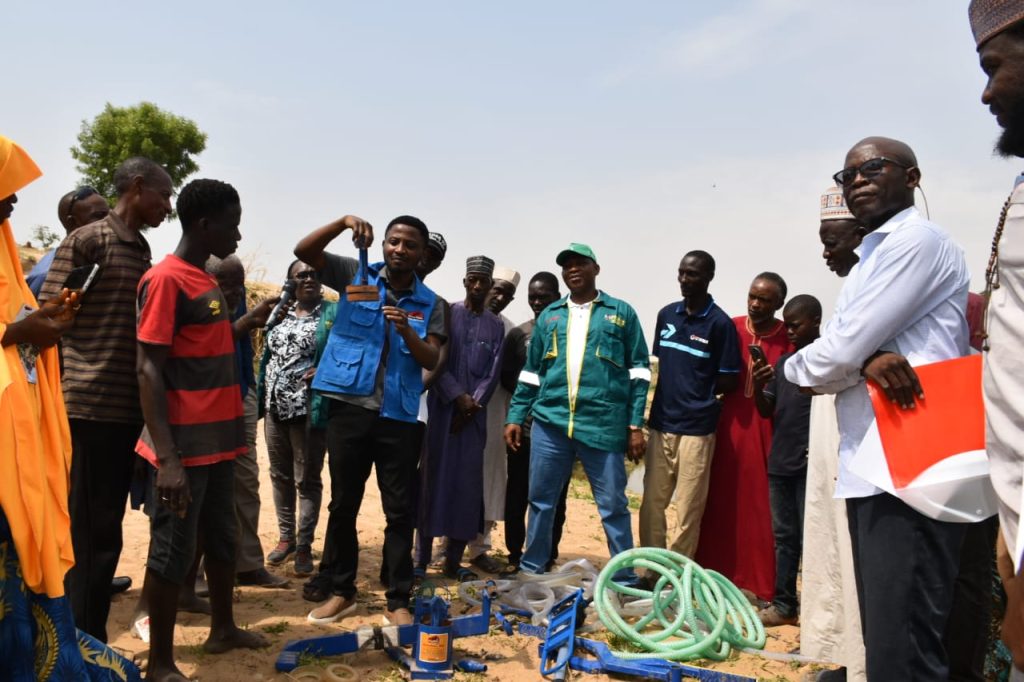

Nigeria’s agricultural sector is entering a new era driven not only by tractors, fertilizers, and improved seeds, but increasingly by data, automation, and artificial intelligence (AI). As the country battles food insecurity, climate change, rising production costs, and a rapidly growing population, AI is emerging as one of the most promising tools for improving agricultural productivity and resilience.
Agriculture remains one of Nigeria’s most important economic sectors, contributing significantly to GDP and supporting millions of livelihoods across rural communities. Yet farmers continue to face major challenges including erratic weather patterns, pest outbreaks, poor access to extension services, post-harvest losses, and limited access to market information. AI is helping to address many of these longstanding problems through smarter decision-making and better resource management.
From Guesswork to Data-Driven Farming
For decades, many Nigerian farmers have relied on experience and intuition to make farming decisions. Today, AI-powered systems are changing that reality.
Using satellite imagery, drone technology, machine learning, and soil sensors, farmers can now receive valuable insights on:
- Soil health and fertility
- Crop performance
- Pest and disease detection
- Water requirements
- Yield forecasting
- Weather predictions
Instead of applying fertilizer uniformly across an entire field, farmers can now identify specific areas that require treatment. This improves efficiency, reduces waste, and lowers production costs.
AI-powered precision agriculture allows farmers to produce more with fewer resources while minimizing environmental impact.
AI Is Expanding Agricultural Advisory Services
One of the biggest challenges in Nigerian agriculture is the shortage of extension officers.
Millions of farmers operate without access to timely expert advice on crop management, pest control, disease outbreaks, or market opportunities.
AI is helping bridge this gap.
Digital advisory platforms can now provide personalized recommendations to farmers through mobile phones, SMS services, USSD platforms, chatbots, and voice-based systems in local languages.
For example, Nigerian agritech company Crop2Cash has supported over 500,000 farmers across multiple states by providing digital services, financial inclusion, climate-smart farming information, and advisory support. The company also delivers weather-based recommendations and connects farmers to improved inputs.
This means farmers no longer need to wait for periodic visits from extension agents before accessing critical information.
Fighting Climate Change with Predictive Intelligence
Climate change remains one of the greatest threats to agriculture in Nigeria.
Floods, droughts, heatwaves, and unpredictable rainfall continue to reduce yields and increase production risks.
AI helps farmers prepare for these challenges through predictive analytics.
By analyzing weather patterns, historical climate data, and satellite observations, AI systems can:
- Forecast rainfall patterns
- Predict drought conditions
- Warn of flood risks
- Recommend optimal planting periods
- Suggest climate-resilient farming practices
These early warning systems enable farmers to make informed decisions before disasters occur.
Detecting Crop Diseases Before They Spread
Plant diseases and pest infestations cause billions of naira in agricultural losses annually.
Traditionally, farmers often identify diseases only after significant crop damage has occurred.
AI-powered image recognition tools can now detect disease symptoms at an early stage.
Using smartphone cameras, drones, or remote sensing technology, farmers can receive instant diagnosis of crop health problems and recommendations for treatment.
Early detection helps reduce losses, improve yields, and protect food supplies.
Improving Access to Agricultural Finance
Access to finance remains a major obstacle for smallholder farmers.
Many financial institutions consider agriculture too risky because of limited data about farmers’ production history and repayment capacity.
AI is helping financial institutions make better lending decisions.
Machine learning models can analyze:
- Farm size
- Historical production records
- Satellite imagery
- Weather data
- Transaction history
This enables lenders to assess risk more accurately and extend financial services to farmers who were previously excluded from formal credit systems.
As a result, more farmers can access loans, insurance, and production inputs.
Smarter Market Intelligence
Many Nigerian farmers still struggle with market inefficiencies.
A lack of timely information often results in poor pricing decisions, post-harvest losses, and exploitation by intermediaries.
AI-powered market intelligence systems can help farmers track:
- Commodity prices
- Demand trends
- Supply patterns
- Buyer opportunities
- Regional market movements
This allows producers to make better decisions regarding when, where, and how to sell their products.
Strengthening National Food Security
Nigeria continues to face food security concerns driven by population growth, insecurity, climate challenges, and rising production costs.
Artificial intelligence provides policymakers with valuable insights for planning and intervention.
Governments and development agencies can use AI to:
- Monitor food production levels
- Forecast shortages
- Track crop performance nationwide
- Identify vulnerable communities
- Improve resource allocation
The ability to anticipate food shortages before they occur could significantly improve national food security planning.
Challenges Slowing AI Adoption
Despite its potential, AI adoption in Nigerian agriculture still faces several barriers:
- High technology costs
- Limited internet connectivity in rural areas
- Low digital literacy
- Poor access to smartphones and smart devices
- Data quality limitations
- Inadequate rural infrastructure
Addressing these challenges will require stronger collaboration between government, agritech companies, research institutions, telecom operators, and development partners.
Commodity.ng Insight
The future of Nigerian agriculture will increasingly be determined by data rather than intuition.
The countries that dominate global food production over the next decade will not necessarily be those with the largest farmlands, but those that make the smartest use of information.
For Nigeria, artificial intelligence presents an opportunity to move from reactive farming to predictive farming. Farmers can make better decisions before planting, during production, and after harvest. Agribusinesses can better understand markets, financial institutions can assess risks more accurately, and policymakers can design more effective interventions.
However, AI alone will not solve Nigeria’s agricultural challenges. Technology must be supported by improved infrastructure, better financing, stronger extension systems, mechanisation, irrigation, and reliable agricultural data.
The greatest value of AI lies not in replacing farmers but in helping farmers become more productive, profitable, and resilient in an increasingly uncertain world.
As Nigeria seeks to feed a growing population and strengthen its economy, artificial intelligence may prove to be one of the most important tools shaping the future of agriculture.
Discover more from Commodity Nigeria
Subscribe to get the latest posts sent to your email.