
Nigeria Seeks Stronger Partnership with Israel in Agriculture, Security and Technology
The Federal Government has reaffirmed its commitment to strengthening bilateral relations with Israel, particularly in critical sectors such as agriculture, security, defence, healthcare, education, technology and innovation, as part of efforts to accelerate Nigeria’s socio-economic development.
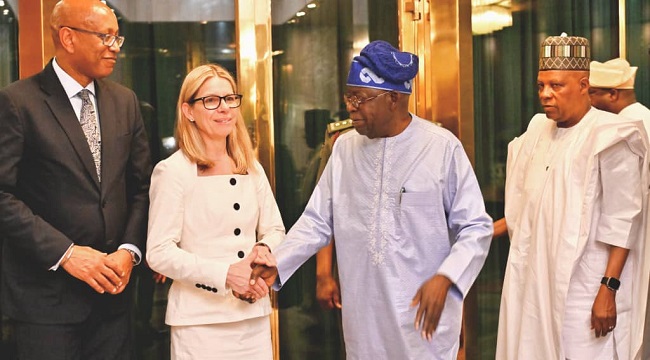
This was disclosed by the Secretary to the Government of the Federation (SGF), George Akume, during a meeting with the Israeli Ambassador to Nigeria, Michael Freeman, in Abuja.
Akume highlighted Nigeria’s enormous potential for growth, pointing to its vast arable land, youthful population, abundant natural resources and strategic position within Africa. He noted that with the right partnerships, investments and policies, Nigeria has the capacity to become a leading force in food production, technology, healthcare delivery and educational development.
The SGF also reflected on his previous visits to Israel, expressing admiration for the country’s achievements in agriculture, healthcare, education and technological advancement despite operating under challenging environmental conditions.
According to him, Israel’s success demonstrates how innovation, strategic planning and effective implementation can drive national development, even in difficult circumstances.
Speaking during the meeting, the Israeli Ambassador, Michael Freeman, described Nigeria as a country blessed with immense opportunities and significant economic potential. He noted that both nations share several similarities and can benefit greatly from stronger cooperation in key development sectors.
Freeman highlighted Israel’s transformation of vast desert areas into highly productive agricultural zones through advanced irrigation systems, water management technologies and modern farming techniques.
He expressed Israel’s readiness to collaborate with Nigeria in strengthening its agricultural sector, increasing food production and helping the country unlock its potential as a major exporter of agricultural commodities.
According to the ambassador, achieving meaningful agricultural transformation requires not only access to technology but also strong political will, policy consistency and effective implementation of development programmes.
Freeman further noted that Nigeria and Israel face similar security challenges, particularly terrorism and organised criminal activities, which continue to pose threats to economic growth and national stability.
He stressed the need for greater international cooperation in tackling security threats and sought to identify specific areas where Israel could support Nigeria’s efforts. These include military training, cybersecurity, intelligence gathering, border surveillance, tracking illicit financial flows and enhancing tactical operations.
Also speaking during the engagement, the Special Adviser to President Bola Tinubu on Homeland Security, Major General Adeyinka Famadewa (Rtd), acknowledged the similarities in the security challenges confronting both countries.
He observed that Israel has developed sophisticated security systems, advanced intelligence capabilities and cutting-edge technologies that could support Nigeria’s efforts to strengthen national security.
Famadewa emphasized the importance of intelligence sharing, capacity building and specialised training programmes to improve Nigeria’s security architecture and enhance its ability to respond effectively to emerging threats.
The meeting reflects ongoing efforts by the Nigerian government to deepen international partnerships capable of supporting agricultural transformation, technological advancement, economic diversification and improved national security.
Stakeholders believe that stronger collaboration between both countries could create opportunities for knowledge transfer, innovation, investment and capacity development in sectors critical to Nigeria’s long-term growth and development.
Commodity.ng Insight / Digest
The proposed partnership between Nigeria and Israel could have significant implications for Nigeria’s agricultural sector, particularly in the areas of irrigation, precision farming, greenhouse agriculture and climate-smart food production.
Israel is globally recognised for turning arid land into highly productive agricultural zones through technology and innovation. For Nigeria, where farming remains largely rain-fed and vulnerable to climate change, access to such expertise could help improve productivity and support year-round farming.
The discussions also highlight the growing connection between agriculture and security. Persistent insecurity across major food-producing regions has become one of the biggest threats to Nigeria’s food supply chain. Any collaboration that improves rural security could have a direct positive impact on agricultural production and food availability.
What This Means for Commodity Markets
- Potential adoption of advanced irrigation systems could increase crop yields.
- Improved agricultural technology may support commercial farming and exports.
- Stronger security cooperation could help protect farming communities and agricultural investments.
- Increased productivity may help stabilize food supplies and moderate food inflation over time.
- Opportunities may emerge for investment in agribusiness, food processing and agricultural technology.
Bottom Line: While the discussions signal promising opportunities for cooperation, the true measure of success will be how effectively both countries translate agreements into practical projects that improve food production, strengthen security and create economic opportunities for Nigerians.
Discover more from Commodity Nigeria
Subscribe to get the latest posts sent to your email.