
Nigeria Launches Climate-Smart Agriculture Partnership to Boost Resilience, Productivity
The Federal Government has launched the Climate-Smart Agribusiness Partnership for Resilience (CSAPR) Project, a new initiative designed to improve climate resilience and increase agricultural productivity across Nigeria.
The project is being implemented through a collaboration involving the International Fund for Agricultural Development (IFAD), the Special Agro-Industrial Processing Zones (SAPZ) Programme, and the Nigerian Meteorological Agency (NiMet). It seeks to integrate Climate Information Services (CIS) into agricultural value chains, providing farmers, agribusinesses, and investors with timely weather and climate information to support better decision-making, reduce production risks, and enhance yields.
Speaking at the official launch in Abuja, the Director-General and Chief Executive Officer of NiMet, Prof. Charles Anosike, described the initiative as a key component of President Bola Tinubu’s Renewed Hope Agenda, noting that reliable weather, climate, and water information is essential for achieving sustainable agriculture and strengthening national food security.
He explained that access to accurate climate intelligence would help farmers, financial institutions, processors, insurers, agribusinesses, and investors make informed decisions, safeguard investments, and reduce losses caused by unpredictable weather conditions.
Prof. Anosike further stressed the importance of translating climate data into localized and practical advisories that farmers can easily understand and apply, while calling for stronger collaboration between the public and private sectors to expand access to climate information services across the country.
He reaffirmed NiMet’s commitment to supporting the project through its Seasonal Climate Prediction, agrometeorological bulletins, early warning systems, impact-based forecasts, and digital climate advisory platforms.
Also speaking at the event, the Permanent Secretary of the Federal Ministry of Agriculture and Food Security, Dr. Marcus Ogunbiyi, described the initiative as a major step toward developing a more productive, inclusive, and climate-resilient agricultural sector.
According to him, the project will strengthen collaboration among government agencies, development partners, financial institutions, private sector players, and farmer organizations to promote climate-smart agribusiness opportunities, improve access to financing, and enhance farmers’ livelihoods.
Dr. Ogunbiyi commended NiMet, IFAD, the Gates Foundation, and other development partners for supporting climate-smart agriculture initiatives, urging stakeholders to sustain their collaboration to maximize the project’s impact.
Similarly, IFAD Country Director, Ms. Dede Ekoue, praised the Federal Ministry of Agriculture and Food Security for its leadership and acknowledged NiMet’s technical role in developing the project.
She noted that the initiative would encourage financially sustainable public-private partnerships capable of integrating Climate Information Services into agricultural value chains, helping farmers and agribusinesses adapt to changing climate conditions while improving productivity, resilience, and investment opportunities.
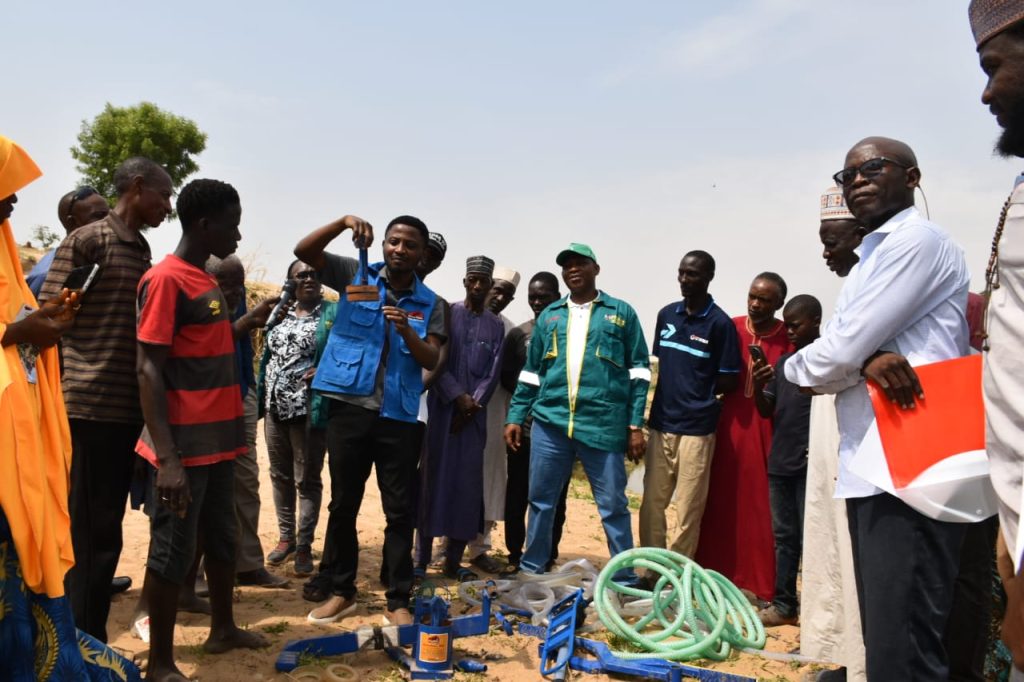
Representing the National Programme Coordinator of the SAPZ Programme, officials disclosed that the project has already recorded early progress, including the installation of automated weather stations in Ogun and Kano States, the rollout of climate information dissemination activities, and the distribution of digital devices to leaders of farmer organizations to improve access to timely weather advisories.
The CSAPR Project is funded by the Gates Foundation and implemented by the Federal Ministry of Agriculture and Food Security through the SAPZ Programme, with technical support from IFAD and NiMet. The initiative is expected to strengthen climate resilience, improve food security, and support sustainable livelihoods for smallholder farmers through nationwide adoption of climate information services.
Commodity.ng Insight
The CSAPR Project represents a significant shift from reactive farming to data-driven agriculture in Nigeria. While access to quality seeds and fertilizers remains important, timely weather intelligence is increasingly becoming a critical agricultural input. Farmers who receive localized climate forecasts can make better decisions on planting dates, irrigation, fertilizer application, and harvesting, reducing losses caused by floods, droughts, and erratic rainfall.
For commodity markets, wider adoption of Climate Information Services could improve production planning, stabilize seasonal supply, and reduce the price volatility often experienced in staple commodities such as maize, rice, sorghum, soybean, and millet. More predictable harvests would also provide greater confidence for processors, commodity traders, financial institutions, and investors seeking to participate in Nigeria’s agricultural value chains.
However, the long-term success of the initiative will depend on how effectively climate advisories reach smallholder farmers in local languages, the reliability of digital infrastructure in rural communities, and sustained collaboration between government agencies and private-sector partners. If these challenges are addressed, the project could become a key driver of climate-resilient agriculture, improved food security, and a more stable commodity market in Nigeria.
Discover more from Commodity Nigeria
Subscribe to get the latest posts sent to your email.