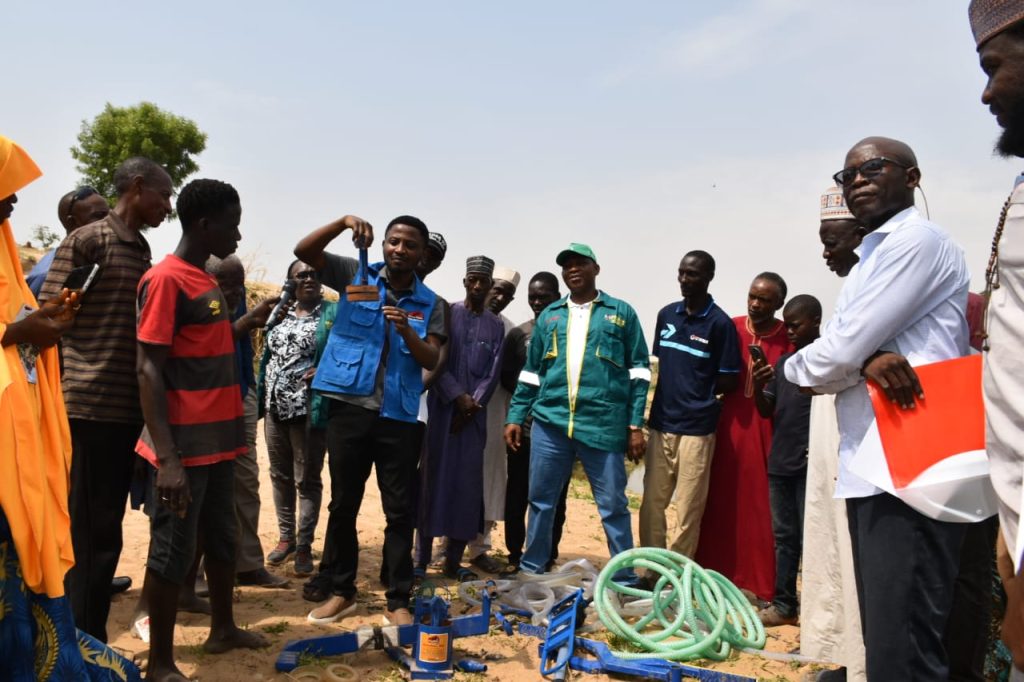

The Edo State Government has officially launched the 2026 farming season, urging farmers across the state to adopt modern agricultural practices, improved inputs, and innovation-driven methods to boost productivity and strengthen food security.
🚜 Government Emphasis: Early Planting and Modern Inputs
Speaking at the flag-off event held at the State Agric Hub, the Commissioner for Agriculture and Food Security, Dr. Jerry Uwangue, stressed the importance of:
- Timely planting
- Use of improved seeds and fertilisers
- Adoption of agrochemicals and mechanised tools
- Improved farm management practices
He noted that coordinated early planting and quality input usage significantly improve crop yields and food availability.
Commodity.ng Insight:
This reflects a growing policy shift toward input-driven productivity growth rather than land expansion. For farmers, this means future competitiveness will depend less on farm size and more on access to certified inputs and modern agronomic practices.
🌱 Policy Direction: Agriculture as Economic Backbone
The Commissioner reaffirmed the state government’s commitment to positioning agriculture as the backbone of Edo’s economy, aligned with the Governor’s SHINE Agenda focused on:
- Economic growth
- Food sufficiency
- Rural livelihood improvement
He also emphasized the need for farmers to adopt innovation and resilience in farming practices.
Commodity.ng Insight:
This signals a broader trend across Nigerian states: agriculture is being repositioned as a structured economic sector rather than subsistence activity. This opens opportunities for:
- Agribusiness investment
- Input supply chains
- Mechanisation services
- Farm advisory tech platforms
🧑🌾 Institutional Support: Extension Services and Farmer Education
The government also called on local councils and agricultural extension officers to intensify farmer outreach and education across communities.
According to the Permanent Secretary, Mrs. Rebecca Osedebamen Bamaiyi, the program serves as a platform for:
- Farmer engagement
- Access to improved inputs
- Training on modern farming techniques
- Agribusiness networking
Commodity.ng Insight:
Strong extension systems remain one of the most critical—but underdeveloped—drivers of agricultural productivity in Nigeria. Strengthening this layer could significantly reduce yield gaps between research and real-world farm output.
📊 Market Implication: What This Means for Food Production
If effectively implemented, the initiative could lead to:
- Higher crop yields across major staples
- Improved input adoption rates
- Better coordination of planting cycles
- Increased market supply stability
Commodity.ng Insight:
For commodity markets, increased adoption of improved inputs typically leads to:
- Short-term rise in input demand (seeds, fertilisers, agrochemicals)
- Medium-term increase in output supply
- Potential stabilization or downward pressure on food prices if adoption scales effectively
However, the key risk remains implementation efficiency and farmer access to inputs at the right time.
📈 Commodity.ng Outlook
- Edo’s 2026 farming season launch signals stronger state-led agricultural coordination
- Growth opportunity for input suppliers and mechanisation providers
- Long-term potential for higher productivity if adoption barriers are removed
- Success depends heavily on extension reach and affordability of inputs
🧭 Bottom Line
Edo State’s 2026 farming season launch reflects a clear shift toward modern, input-intensive agriculture aimed at boosting yields and food security. While the policy direction is strong, real impact will depend on how effectively innovation, financing, and extension services reach farmers on the ground.
Discover more from Commodity Nigeria
Subscribe to get the latest posts sent to your email.