
Agricultural experts are calling on Nigerian farmers to adopt climate-smart agriculture (CSA) and sustainable soil management practices to safeguard food production amid the growing impacts of climate change.
The call came during a Climate-Smart Agriculture and Agroecology Training Workshop for rural women farmers, organised by the International Centre for Environmental Health and Development (ICEHD) under its Grassroots-Driven Climate Action by Rural Women Farmers in Nigeria initiative. The two-day programme, held at the Lagos Water Corporation in Iju, drew over 100 participants from across the South-West.
Training Focuses on Practical, Sustainable Farming
The workshop equipped participants with practical skills in soil improvement, organic farming, and productivity enhancement. Farmers learned to produce compost and organic pesticides using locally available materials such as vegetable waste, neem leaves, garlic, dry grass, and animal dung. They were also introduced to efficient irrigation techniques, including solar-powered systems and drip irrigation.
Representing the Lagos State Ministry of Environment and Water Resources, Permanent Secretary Omobolaji Gaji highlighted the state’s growing exposure to flooding, heavy rainfall, rising temperatures, and coastal erosion, all of which threaten agricultural production. He noted that climate-smart agriculture and agroecology are critical tools for enhancing productivity and reducing climate-related losses, adding that Lagos is prioritising climate resilience through community-led initiatives that strengthen local food systems.
Soil Health and Modern Techniques
Olayinwole Onasanyan, member of the Soil Science Society of Nigeria and retired Permanent Secretary, stressed the importance of modern soil management. Tropical soils often lack organic matter, he explained, making a balanced approach to soil fertility essential.
“My message to farmers is clear: start practicing climate-smart agriculture, precision farming, and sustainable techniques. Combining organic and inorganic fertilizers is key to maintaining soil health, the foundation of agricultural productivity,” Onasanyan said. He also urged the government to enhance extension services, provide targeted subsidies, and invest in small-scale irrigation and research.
Highlighting women’s crucial role, he added, “About 70% of agricultural processes are carried out by women. Educate and empower a woman, and you empower a nation.”
Empowering Women Farmers
Dr. Ndudi Bowei, Consulting Partner at ICEHD, said the workshop was designed to equip women with practical skills to adapt to climate change. Women, she explained, are disproportionately affected due to their central role in food production and close interaction with natural resources.
The initiative, running for over four years across Nigeria, is supported by partners including the Rose of Sharon Foundation, AWDF, and ACJM. Participants received farm implements and inputs, including solar-powered irrigation pumps, sprinklers, compost, organic pesticides, and seeds at no cost. They were also encouraged to form cooperatives, enhancing their economic capacity and collective voice.
“The goal is to improve household food security, promote climate resilience, and bridge economic gaps between men and women in agriculture,” Dr. Bowei said.
Hands-On Learning
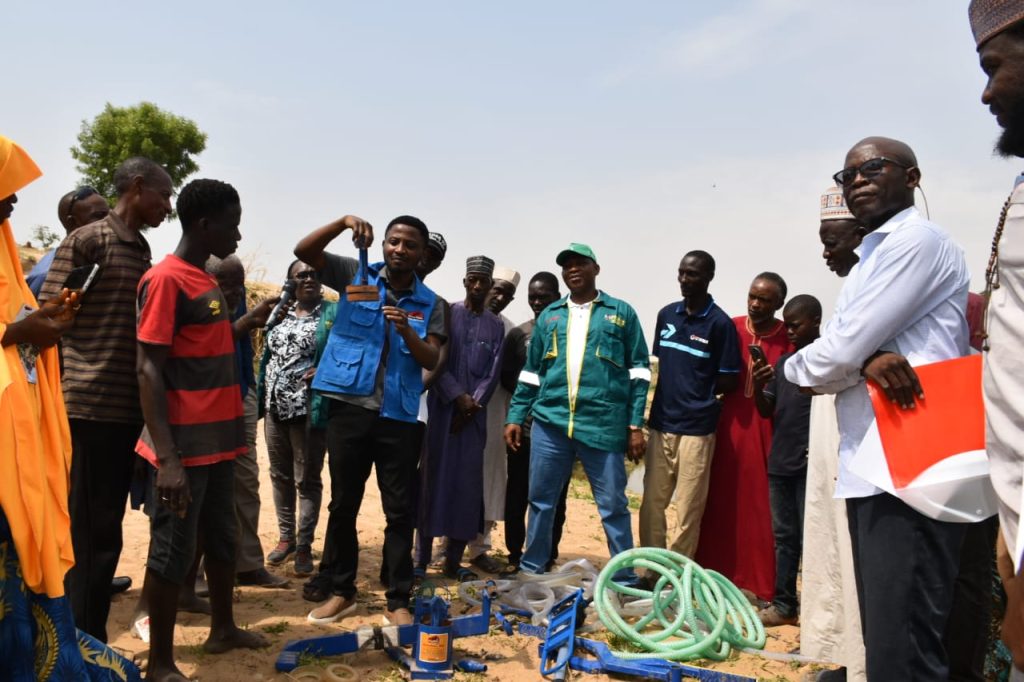
On the second day, participants engaged in technical and practical sessions. Agronomist Durojaiye Olusegun led lectures on vegetable cultivation, pest management, and disease control. Dr. Bukola Toyin Sadiku of the Lagos State Agricultural Development Authority (LSADA) demonstrated composting and organic pesticide production using local materials.
Selected representatives from Iju, Epe, Ikorodu, and the Rose of Sharon Widows group were trained on assembling and operating solar-powered irrigation pumps to support year-round farming.
The programme concluded with the distribution of agricultural tools and equipment, including garri processing machines, fish kilns, knapsack sprayers, irrigation canes, sprinklers, organic pesticides, compost, and seeds. Participants expressed gratitude, noting that the training would significantly improve farming practices, increase productivity, and boost economic opportunities.
Discover more from Commodity Nigeria
Subscribe to get the latest posts sent to your email.