
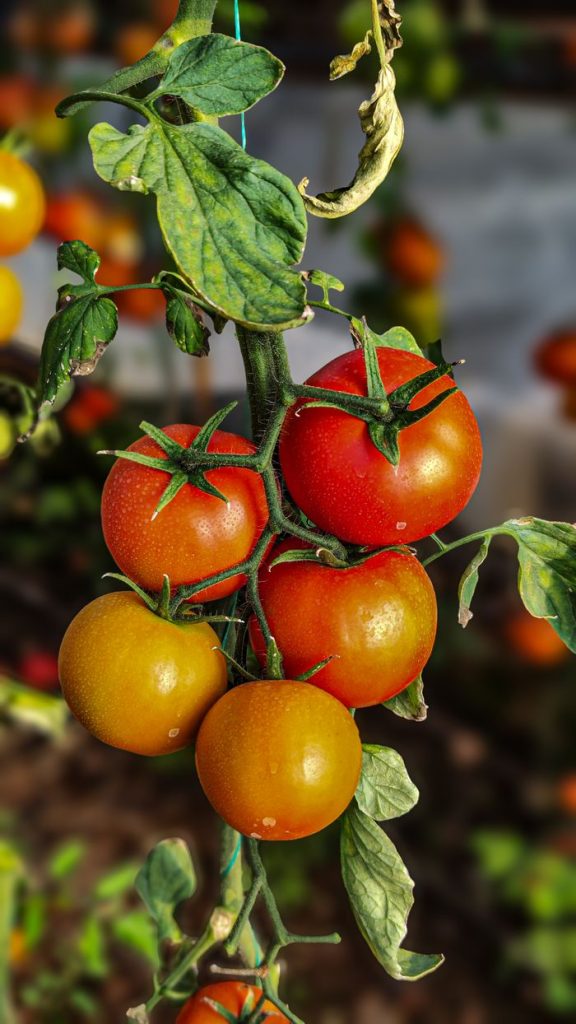
How to Grow Tomatoes in Nigeria: A Practical Guide to Tomato Farming, Cost, Yield and Profit
Tomato is one of the most important vegetables in Nigeria. It is a staple ingredient in Nigerian homes and is used extensively in stews, soups, sauces, jollof rice, restaurants and food processing. Beyond its importance on the dining table, tomato supports thousands of farmers, traders, transporters, wholesalers, retailers and processors across the country.
For farmers, however, tomato is both an opportunity and a challenge. The crop can generate attractive returns when production is well managed, but it is highly perishable and vulnerable to pests, diseases, weather conditions, transportation problems and sudden changes in market prices. This means that successful tomato farming requires more than simply planting and harvesting. Farmers need to understand production, costs and, importantly, the market.
This guide explains how to grow tomatoes successfully in Nigeria and how farmers can approach tomato production as a profitable agribusiness.
Why Tomato Farming Matters in Nigeria
Nigeria has a large and growing market for tomatoes because of the country’s strong demand for fresh vegetables and tomato-based food products. Tomatoes are consumed almost every day in many Nigerian households, creating a relatively consistent market for the crop.
Tomato production is particularly important in northern Nigeria, where irrigation has allowed farmers to cultivate the crop extensively during the dry season. States such as Kano, Kaduna, Katsina, Jigawa, Plateau, Bauchi, Sokoto, Kebbi, Zamfara, Gombe, Benue and Nasarawa are among the areas associated with significant tomato production.
The crop also creates opportunities beyond farming. A tomato harvested on a farm may pass through several hands before reaching the final consumer. Aggregators purchase from farmers, transporters move the produce to major markets, wholesalers distribute it, retailers sell it to consumers, while processors convert tomatoes into products such as paste, puree and sauces.
This makes tomato more than a vegetable crop. It is an important part of Nigeria’s agricultural value chain.
How to Grow Tomatoes Successfully
Successful tomato production starts with selecting the right location and variety. Tomatoes perform best in warm environments with adequate sunlight, fertile and well-drained soil, and reliable access to water. Before planting on a commercial scale, farmers should ideally conduct a soil test to understand the condition of the soil and determine its nutrient requirements.
The choice of seed is equally important. Farmers should use quality seeds from reputable suppliers and select varieties suited to their location, season and intended market. Important characteristics to consider include yield potential, maturity period, fruit quality, shelf life and tolerance or resistance to diseases common in the production area.
Tomatoes are commonly started in a nursery before being transplanted into the main field. The nursery should be well drained, protected from animals and supplied with adequate moisture. Once the seedlings are strong enough, they can be carefully transplanted into prepared beds or ridges. Transplanting during the cooler parts of the day can help reduce stress on young plants.
Good water management is critical throughout the growing season. Tomatoes need sufficient moisture during establishment, flowering and fruit development, but excessive watering can create problems such as root diseases and nutrient leaching. Where economically viable, irrigation systems such as drip irrigation can improve water efficiency and provide farmers with greater control over production, particularly during the dry season.
Nutrient management should also be based on the crop’s requirements and the condition of the soil. Tomatoes require nutrients such as nitrogen, phosphorus and potassium, alongside secondary and micronutrients. Rather than applying fertiliser blindly, farmers should use soil testing and appropriate agronomic advice to develop a nutrient programme. Excessive nitrogen, for example, can encourage excessive leaf growth without delivering the desired fruit production.
Farmers must also monitor the crop regularly for weeds, pests and diseases. Aphids, whiteflies, thrips, caterpillars and other pests can damage plants directly or spread diseases. Tomato diseases such as bacterial wilt, fungal diseases and viral infections can also cause serious losses. Early detection, good farm hygiene, crop rotation, appropriate spacing and responsible pest management can significantly reduce these risks.
Where and When to Grow Tomatoes
One of the biggest advantages of tomato farming in Nigeria is the opportunity to produce the crop during different periods of the year. However, production timing should depend on the location, water availability, weather conditions and expected market conditions.
Dry-season tomato farming is particularly important in northern Nigeria because irrigation makes it possible to produce tomatoes when rainfall is limited. This can create attractive commercial opportunities, but farmers must also consider the cost of irrigation, pumping, labour and other inputs.
Rainy-season production can reduce irrigation requirements, but excessive rainfall can increase disease pressure, cause waterlogging and make transportation more difficult. Farmers therefore need to consider both agronomic and market conditions when deciding when to plant.
The best production decision is not necessarily to plant when everyone else is planting. Farmers who understand seasonal supply patterns and market demand may be able to identify periods when production and prices are more favourable.
Cost, Yield and Profitability of Tomato Farming
The cost of tomato farming varies considerably from one location to another. Land preparation, seeds, nursery establishment, fertiliser, pesticides, labour, irrigation, transportation, packaging and harvesting can all contribute significantly to total production costs.
For this reason, farmers should prepare a detailed budget before planting rather than relying on assumptions.
A simple profitability calculation is:
Profit = Total Revenue − Total Cost
Total revenue is determined by the quantity of tomatoes sold and the price received.
For example, if a farmer spends ₦2 million producing and marketing a crop and sells 10,000 kilograms of tomatoes, the break-even price would be ₦200 per kilogram. Any sustained selling price above that level creates room for profit, while selling below it can result in a loss.
Yield is another major factor. A farmer with high production costs may still make a loss even with a good harvest if market prices collapse. Similarly, a farmer with moderate yields may achieve good returns if production costs are controlled and the crop is sold into a strong market.
This is why tomato farming should be approached as a business. Farmers need to keep records of their expenditure, monitor yields, understand their cost per kilogram and know the price they need to achieve before going to market.
Tomato Markets and How to Sell
One of the most important decisions in tomato farming is where and how to sell the crop.
Farmers can sell to local traders, wholesalers, aggregators, retailers, restaurants, hotels, supermarkets and food processors. Some commercial farmers may also establish direct relationships with large buyers.
Because tomatoes are highly perishable, farmers cannot afford to ignore the market until harvest. Ideally, potential buyers and market channels should be identified before production begins.
Price can vary significantly between the farm gate and major consumption markets. However, transporting tomatoes to another market is not automatically more profitable. Farmers must consider transportation costs, market fees, losses during transit and the price they are likely to receive.
Post-harvest handling is therefore extremely important. Tomatoes should be harvested carefully, sorted and packaged appropriately to reduce bruising and physical damage. Poor handling can turn good-quality produce into unsellable or low-value produce within a short period.
This is one of the major challenges facing Nigeria’s tomato value chain. Increasing production alone will not solve the problem if farmers continue to lose significant quantities between the farm and the consumer.
Challenges and Common Mistakes
Tomato farming comes with significant risks. Weather conditions can affect yields, while pests and diseases can destroy crops. Farmers may also face rising input costs, inadequate irrigation infrastructure, poor roads, limited storage facilities and unstable market prices.
One common mistake is choosing seeds based only on price. A cheaper seed may not necessarily produce a cheaper crop if it delivers poor germination, low yields or weak disease tolerance.
Another mistake is planting without understanding the market. A farmer may produce an excellent harvest but still struggle financially if thousands of other farmers harvest at the same time and prices fall sharply.
Poor record keeping is another problem. Without proper records, farmers may believe they are making money when they are actually underestimating labour, transportation, irrigation or other hidden costs.
Farmers should also avoid treating pest and disease problems only after they become severe. Regular monitoring and early intervention are usually much more effective than waiting until a significant portion of the farm has been affected.
The Future of Tomato Farming in Nigeria
The future of tomato farming in Nigeria will depend not only on producing more tomatoes but on building a more efficient value chain.
There is significant potential in irrigation, improved seeds, mechanisation, better extension services, cold-chain infrastructure, processing and stronger market linkages. Processing is particularly important because it can provide an alternative market for tomatoes that may otherwise be lost because of perishability.
Technology can also play a greater role. Farmers increasingly need access to reliable information about weather, input costs, market prices, production techniques and demand.
The opportunity is therefore not simply to grow more tomatoes. It is to reduce production costs, improve productivity, reduce post-harvest losses and connect farmers to better markets.
Frequently Asked Questions
Is tomato farming profitable in Nigeria?
Yes, tomato farming can be profitable, but profitability depends on yield, production costs, timing and selling price. Farmers should calculate their expected costs and break-even price before investing.
Can tomatoes be grown during the dry season?
Yes. Dry-season tomato production is common in areas with reliable irrigation. However, farmers must account for the additional cost of water, pumping and irrigation infrastructure.
Which states are suitable for tomato farming?
Tomatoes can be grown in many parts of Nigeria. Northern and North-Central states such as Kano, Kaduna, Katsina, Jigawa, Plateau, Bauchi, Kebbi, Sokoto, Zamfara, Benue and Nasarawa are important production areas.
How can tomato farmers reduce losses?
Farmers can reduce losses through careful harvesting, proper sorting, better packaging, improved transportation, shade, appropriate storage and access to processing markets.
What is the most important thing to know before starting tomato farming?
Do not focus only on production. Understand the entire business—from seed selection and production costs to expected yield, market demand, selling price and post-harvest handling.
Commodity.ng Insight
Tomato farming demonstrates one of the biggest lessons in modern agriculture: production and market intelligence must work together.
A farmer needs to know not only how to produce tomatoes but also when to plant, how much production will cost, what the market is doing, where demand is coming from and what price is required to remain profitable.
This is where Commodity.ng comes in.
By providing commodity prices, market intelligence and agricultural information, Commodity.ng aims to help farmers, traders, processors, investors and other participants make better decisions across Nigeria’s agricultural economy.
The future of tomato farming in Nigeria will not be determined by how many tomatoes we produce alone. It will be determined by how efficiently we produce, preserve, transport, market and add value to them.
For farmers, the goal should not simply be a bigger harvest. The goal should be a more profitable harvest.
Discover more from Commodity Nigeria
Subscribe to get the latest posts sent to your email.



Great article, thanks for sharing! For GPT Image 2 generate and edit I recommend Luna Lisa Alpha: . Luna Lisa Alpha