
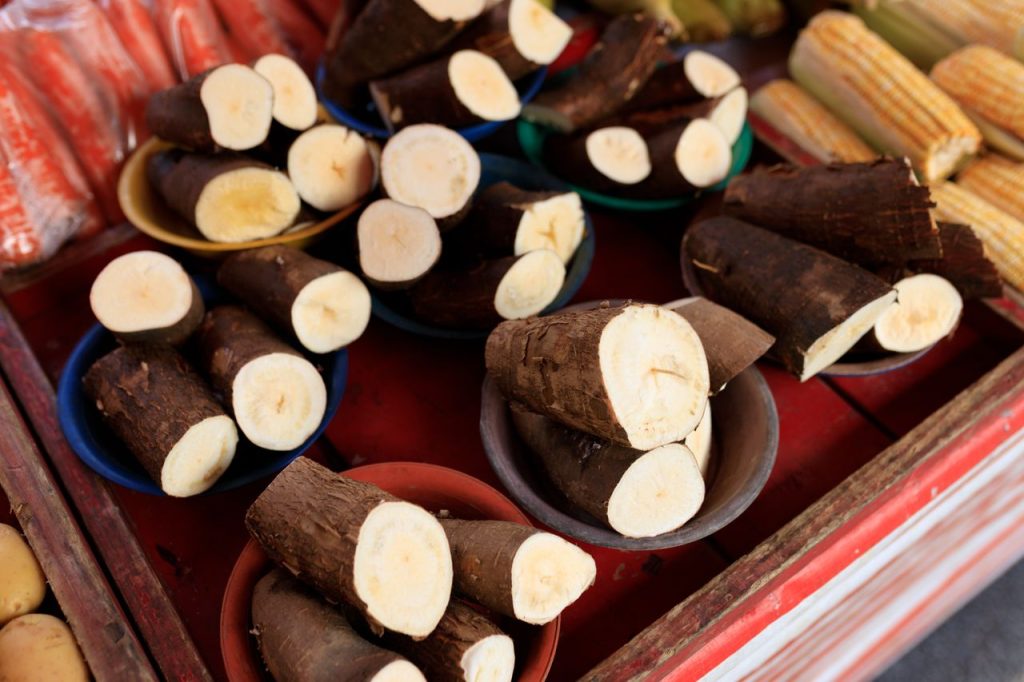
How to Grow Cassava in Nigeria: A Practical Guide to Cassava Farming, Cost, Yield and Profit
Cassava is one of Nigeria’s most important agricultural commodities and one of the crops with the deepest connections to the country’s food, industrial and rural economies. It is consumed in many forms, including garri, fufu, lafun and other traditional foods, while its starch, flour, chips and other derivatives are used in food processing and industrial applications.
For millions of farmers, cassava provides an important source of food and income. Unlike highly perishable crops such as tomato, cassava can remain in the soil for an extended period, giving farmers some flexibility over when to harvest. However, cassava farming is not automatically profitable. The quality of planting materials, land preparation, weed management, harvesting costs, processing options and market prices can all determine whether a farmer makes a profit.
This guide explains how to grow cassava successfully in Nigeria and how farmers can approach cassava as a commercial agribusiness rather than simply a subsistence crop.
Why Cassava Farming Matters in Nigeria
Cassava has a particularly important position in Nigeria’s agricultural economy because it serves both food and industrial markets. Nigerian households consume cassava in several traditional forms, while processors convert the crop into products such as garri, high-quality cassava flour, starch and chips.
This creates opportunities across the entire value chain. A cassava farmer is connected not only to consumers but also to processors, aggregators, traders, transporters, food manufacturers and industrial users.
National agricultural data consistently identifies cassava as one of Nigeria’s major crops. More recent National Bureau of Statistics data also shows cassava remains widely cultivated among Nigerian farming households.
The commercial opportunity becomes even more interesting when cassava is viewed beyond the fresh root. Value addition can transform a relatively bulky agricultural commodity into products with different markets, shelf lives and price structures.
For Commodity.ng, this makes cassava particularly important because it demonstrates how production, processing and commodity markets are interconnected.
How to Grow Cassava Successfully
Successful cassava production starts with choosing suitable land and healthy planting materials. Cassava can adapt to a wide range of soil conditions, but it generally performs better in fertile, well-drained soils. Waterlogged fields can create problems for root development and increase the risk of deterioration.
Farmers should select healthy stems from suitable, high-performing varieties. The choice of variety should depend on the location, expected maturity period, disease pressure and intended market. A farmer producing cassava primarily for garri may have different requirements from a farmer supplying a starch or flour processor.
Land preparation should provide favourable conditions for root development. Depending on the soil and local farming system, cassava may be planted on ridges, mounds or relatively flat land. The objective is to create a suitable root environment while allowing effective drainage and field management.
Planting should generally be timed around the beginning of reliable rainfall in rain-fed production areas. Adequate moisture is important for establishing the cuttings, particularly during the early stages of growth. In areas where irrigation is available, farmers have greater flexibility, although the cost of irrigation must be incorporated into the production budget.
Spacing is also important. Cassava plants require adequate room to develop their roots and canopy. The appropriate spacing depends on the variety, soil conditions, planting system and whether the farmer intends to intercrop cassava with other crops.
One of the biggest management challenges is weed control. Cassava grows relatively slowly during its early stages, allowing weeds to compete aggressively for sunlight, nutrients and water. Farmers should therefore control weeds early and consistently rather than waiting until the field becomes heavily overgrown.
Nutrient management is equally important. Although cassava is often described as a crop that can grow on relatively poor soils, repeated cultivation without replacing nutrients can gradually reduce soil fertility and productivity. Farmers should consider soil testing, organic matter management, crop rotation and appropriate fertiliser use where necessary.
Farmers should also monitor their fields for pests and diseases. Cassava can be affected by various insect pests and diseases, including problems that damage leaves, stems or roots. Using healthy planting materials, maintaining field hygiene, monitoring the crop and selecting appropriate varieties can help reduce these risks.
Where and When to Grow Cassava
Cassava is cultivated across a large part of Nigeria, particularly in the southern and Middle Belt regions. It is capable of adapting to different environments, which is one reason it has become such an important crop in the country.
States across the South-West, South-East, South-South and North-Central zones have significant cassava production. The crop is also grown in parts of northern Nigeria where environmental conditions and water availability are suitable.
The planting period depends largely on rainfall. Farmers in rain-fed areas should plant when there is enough moisture to support establishment rather than relying solely on a fixed calendar date.
Cassava is generally considered a relatively resilient crop, but this does not make it immune to climate risks. Prolonged drought, excessive rainfall, flooding and changing weather patterns can affect establishment and productivity.
This is increasingly important for commercial farmers. Access to weather information can help farmers make better decisions about planting dates, field preparation and crop management.
Cost, Yield and Profitability of Cassava Farming
Cassava can appear relatively inexpensive compared with some crops, but commercial production involves several costs that farmers need to account for carefully.
Major expenses can include land acquisition or rent, land preparation, planting materials, planting labour, weeding, fertiliser and crop protection, harvesting, transportation and processing.
Labour can become one of the largest expenses, particularly where farmers rely heavily on manual land preparation, weeding and harvesting. Mechanisation can improve efficiency where appropriate, although farmers must compare machinery costs with the expected benefits.
Profitability can be calculated using a simple formula:
Profit = Total Revenue − Total Cost
Total revenue depends on the quantity of cassava harvested and the price received. Farmers should be careful when estimating revenue because the weight and quality of roots can vary significantly.
For example, a farmer who spends ₦1.5 million on production, harvesting and transportation and eventually sells cassava worth ₦2.4 million would have an estimated gross profit of ₦900,000 before accounting for any additional costs not already included.
The figures are only an illustration. Actual production costs, yields and cassava prices vary significantly by location, farming method and season.
Farmers should also calculate their break-even price:
Break-Even Price = Total Cost ÷ Quantity Sold
This tells the farmer the minimum average price required to recover production and marketing costs.
Record keeping is therefore extremely important. Farmers should record the cost of planting materials, labour, fertiliser, transportation, harvesting and processing. Without these records, it is difficult to know whether the farm is genuinely profitable.
Harvesting, Processing and Marketing
One of cassava’s major advantages is that it does not have to be harvested immediately at the same time as many highly perishable vegetables. Depending on the variety and production objectives, farmers can leave mature cassava roots in the ground for some time. However, delaying harvest indefinitely can affect root quality and expose the crop to pests, diseases and other losses.
Harvesting is labour-intensive and can be expensive, particularly on large farms. The roots must be carefully removed from the soil to minimise damage.
Fresh cassava roots are highly perishable after harvesting. This makes the connection between farmers and processors particularly important. Farmers who have reliable access to nearby processing facilities may have better options for marketing their harvest.
Cassava can be processed into several products, including garri, cassava flour, starch, chips and other derivatives. Processing can increase shelf life and create additional value while reducing the pressure to sell fresh roots immediately after harvest.
This is one of the most important commercial opportunities in the cassava sector. Instead of thinking only about “How much can I sell my cassava for?”, farmers and agribusinesses should also ask “What product can this cassava become, and who is willing to buy it?”
The market therefore extends from traditional food markets to industrial users and processors.
Challenges and Common Mistakes
One of the biggest mistakes in cassava farming is treating the crop as if it requires little management simply because it is relatively hardy. Cassava can survive under difficult conditions, but commercial farmers seeking high yields need good planting materials, proper spacing, effective weed control and appropriate soil management.
Poor-quality planting materials can significantly reduce productivity. Farmers should therefore avoid using weak or diseased stems simply because they are readily available.
Another common mistake is underestimating the cost of harvesting and transportation. Cassava roots are bulky and transportation can represent a significant percentage of the total marketing cost, particularly when farms are located far from processors or major markets.
Farmers should also consider the location of processing facilities before establishing large commercial farms. A high-yielding farm can still face profitability problems if the cost of moving the harvested roots to the buyer is excessive.
Poor market planning is another risk. Farmers who wait until harvest to search for buyers may have limited negotiating power, particularly when many producers are harvesting at the same time.
Finally, farmers should avoid exhausting the soil through continuous cassava cultivation without appropriate soil fertility management. Long-term productivity depends on maintaining the health of the land.
The Future of Cassava Farming in Nigeria
Cassava has significant potential to become an even more important commercial commodity in Nigeria because its opportunities extend well beyond fresh consumption.
There is considerable room for growth in processing, particularly in products such as high-quality cassava flour, starch, chips and other industrial derivatives. These markets can create opportunities for farmers, processors, manufacturers and investors.
Better links between farmers and processors could also transform the sector. When farmers have clearer information about what processors need, including quantity, quality and delivery requirements, they can make more commercially informed production decisions.
Mechanisation is another important opportunity. Improvements in land preparation, planting and harvesting could reduce labour requirements and make large-scale production more efficient.
Storage and processing infrastructure will also remain important. The National Bureau of Statistics’ household data illustrates the significant role processing already plays in cassava’s use and marketing compared with several other major crops.
The future of cassava farming should therefore be about more than increasing production. It should focus on productivity, processing, market access and value addition.
Frequently Asked Questions
Is cassava farming profitable in Nigeria?
Cassava farming can be profitable when farmers achieve good yields, manage production costs and have reliable markets. Profitability varies according to location, variety, production system, yield and selling price.
How long does cassava take to mature?
The maturity period depends on the variety, production environment and intended use. Some varieties mature earlier than others, so farmers should follow the recommended maturity period for the specific variety they plant.
Which states are suitable for cassava farming?
Cassava is cultivated across many parts of Nigeria, particularly in the South and North-Central regions. Suitability depends on soil, rainfall, temperature and local production conditions.
What can cassava be used for?
Cassava can be consumed directly or processed into products such as garri, fufu, high-quality cassava flour, starch, chips and other food and industrial products.
Is cassava better sold fresh or processed?
There is no universal answer. The better option depends on market prices, processing costs, available equipment, transportation and buyer demand. Processing can increase value and shelf life but also requires additional investment and technical capacity.
How can cassava farmers increase profitability?
Farmers can improve profitability through quality planting materials, good weed management, efficient labour use, appropriate soil fertility management, reduced transportation costs, access to processors and better market information.
Commodity.ng Insight
Cassava represents one of Nigeria’s clearest opportunities to move from agricultural production to agricultural value creation.
The real opportunity is not simply in growing cassava. It is in building a connected value chain where farmers can produce efficiently, processors have reliable supplies, manufacturers have access to quality raw materials and consumers have access to competitively priced products.
For farmers, this means understanding the market before planting. What is the current price of fresh cassava? Where are the major buyers? What are processors willing to pay? What will transportation cost? Would processing into garri, flour, starch or chips create greater value?
These are business questions—not just farming questions.
This is where Commodity.ng can play an important role.
By providing commodity prices, market intelligence and agricultural information, Commodity.ng aims to help farmers, traders, processors and investors better understand Nigeria’s commodity markets and make more informed decisions.
The future of cassava in Nigeria is not simply about producing more roots.
It is about producing better, processing smarter, reducing losses and connecting farmers to the markets where the greatest value can be created.
For the Nigerian farmer, the goal should not merely be to harvest cassava.
The goal should be to capture more value from every hectare.
Discover more from Commodity Nigeria
Subscribe to get the latest posts sent to your email.



Bermanfaat. Coba WanVideoGen: — image-to-video dan multimodal. WanVideoGen
Been playing here for a couple of months and the consistency is exactly what I was looking for. Live chat is available around the clock and they actually resolve issues right away. If you want a trustworthy place to relax and play, visit m788casino today.
I have tried quite a few platforms over the years but this one stands out for its reliability. Transactions are fast and the VIP rewards actually make you feel valued. It really feels like a cozy lounge where everyone knows your name. Join the experience at boa777vip
Well explained and practical. I’ve had good results with H3MaxAI () for image-to-video shots. H3MaxAI
Clear and useful tips here. One browser transcription studio I use is MAI Transcribe 2: . MAI Transcribe 2